No products in the cart.

Let's be real—that messy desk isn't just a physical problem, it's a mental one. Stacks of textbooks, tangled chargers, and scattered notes can make even starting an assignment feel overwhelming. But what if I told you that reclaiming your study space is the single best thing you can do to fuel your focus, creativity, and academic success?
This isn't about creating a picture-perfect desk. It's about building a launchpad for your brain.
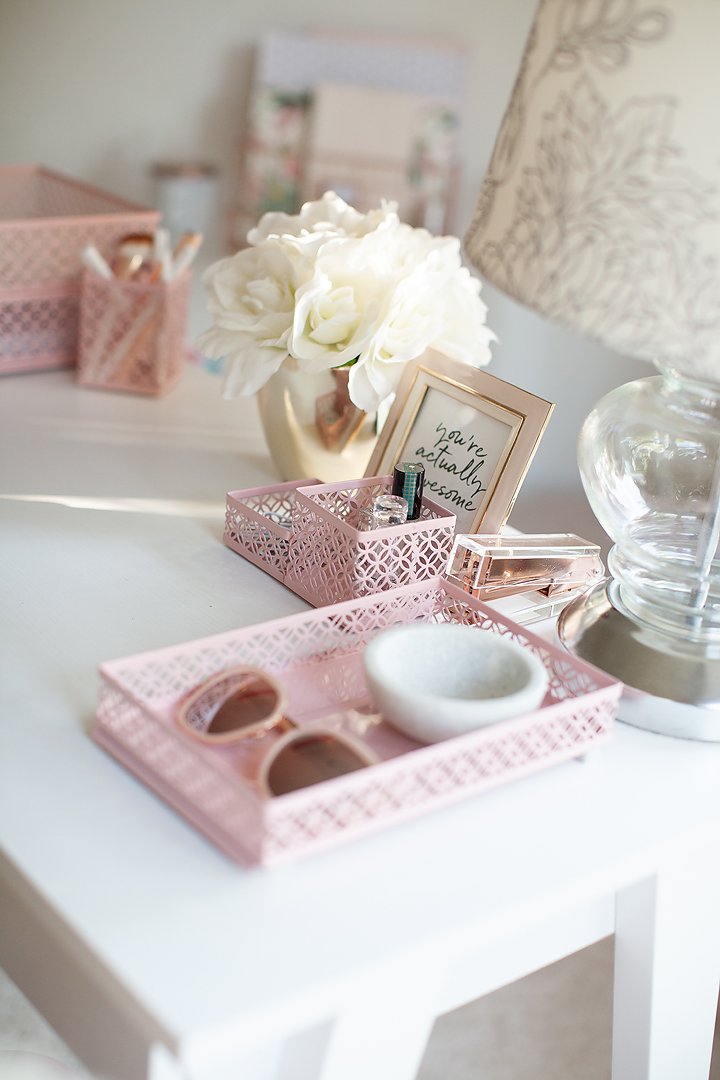
The push for better student desk organization is more than just a passing trend. Think about this: the global education furniture market hit a staggering USD 10,727.5 million in 2023. Why? Because schools and universities are realizing that modular, adaptable, and organized setups directly impact learning. The takeaway is simple: a well-designed space supports better concentration and performance.
You can bring that same high-impact philosophy right to your own desk.
Forget complicated systems. The secret to cutting through the chaos lies in a powerful, three-part blueprint: Assess, Declutter, and Zone. This isn't a rigid, one-size-fits-all plan. It’s a flexible framework you can adapt to create a system that truly works for you.
Assess: First, take an honest look at your desk right now. What’s working and what’s driving you crazy? Pinpoint the biggest sources of clutter and the things that constantly slow you down.
Declutter: This is more than a quick tidy-up. It's about making conscious decisions about what deserves to take up your most valuable real estate.
Zone: Once you’ve cleared the clutter, it’s time to give every inch of your desk a purpose. You’ll create an intuitive layout where everything has a designated home, so you can grab what you need without a second thought.
"An organized space creates an organized mind. By intentionally designing your study area, you’re not just cleaning up; you're setting the stage for deeper focus and more effective learning."
This simple approach helps you shift from being reactive—always hunting for a pen or that one important paper—to being proactive, with an environment that actively supports your goals. Best of all, this blueprint works anywhere, whether you have a spacious home office or just a tiny corner in a dorm room.
And if you're looking for even more inspiration, be sure to check out our complete guide on home office organization ideas.
Ready to build your productivity powerhouse? Let's get started.
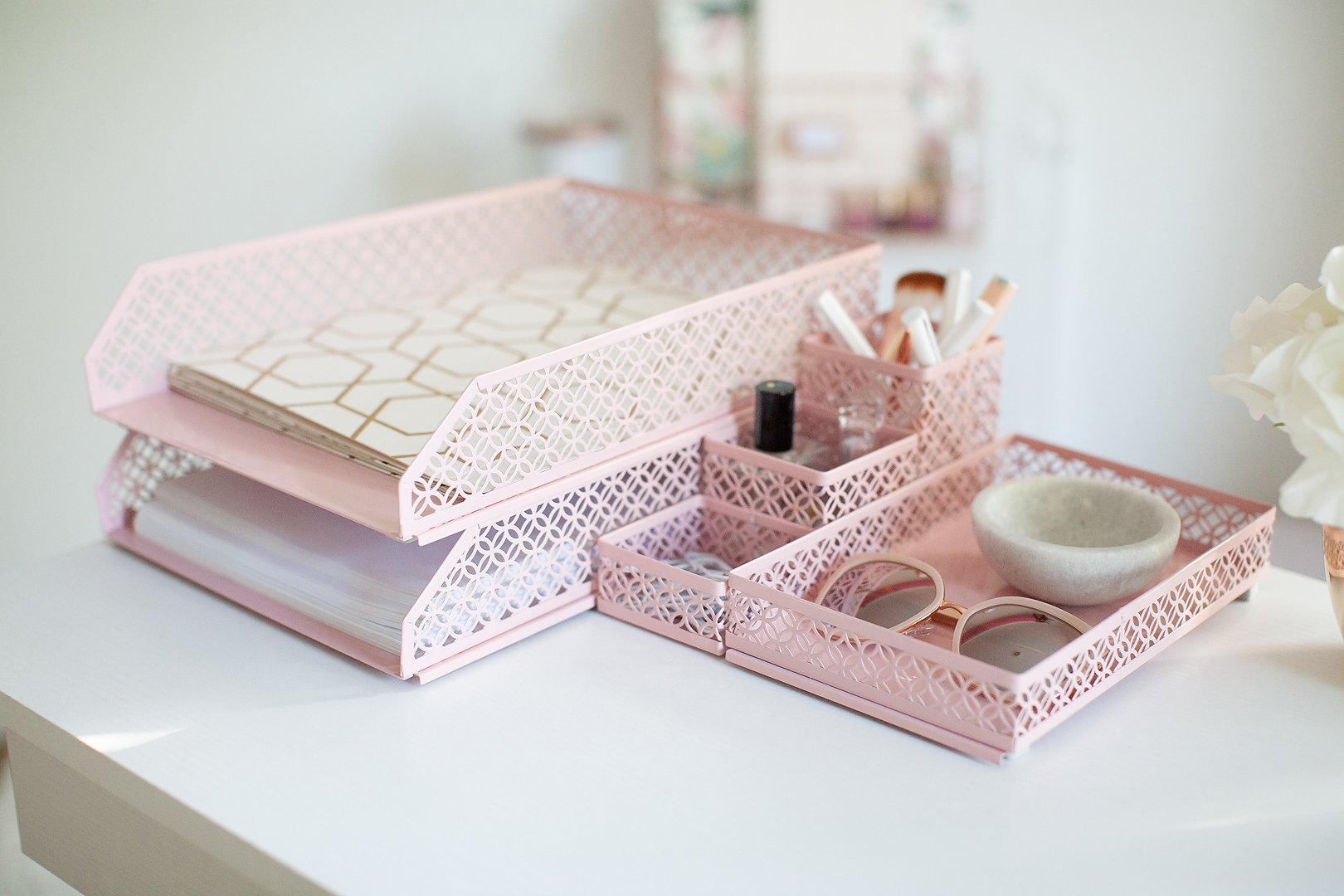
Before you buy a single organizer or label one folder, you have to simplify. A truly effective study space isn't about finding a perfect spot for everything you own—it’s about thoughtfully choosing only the essentials to keep in the first place. This is where decluttering comes in, and it's your secret weapon against the mental noise a messy desk creates.
The mission is simple: be decisive. Start by taking every single thing off your desk and sorting it all into three piles. This isn't just about tossing out trash; it’s about making sure every item that earns a spot in your study zone actually has a purpose. Honestly, this methodical approach is one of the most powerful student desk organization ideas you'll ever use.
This sorting method is brilliant because it forces you to be real about how you use (or don't use) each item. Don't second-guess yourself; just go with your gut.
Keep on Desk: These are your daily drivers, the non-negotiables. We're talking about your laptop, your current notebook, a cup with your go-to pens, and maybe your planner. This pile should feel surprisingly small!
Store Nearby: This is home for things you need often, just not every single day. Think textbooks for other classes, extra notebooks, that stapler you use once a week, or research materials for your next big paper. Keep them close, but off your immediate workspace.
Remove or Digitize: This is the "everything else" pile. Old graded papers, campus flyers, pens that have seen better days, and duplicate supplies all go here. For any papers you absolutely must keep, try a scanning app on your phone. Creating digital copies is a game-changer for freeing up physical space.
When you intentionally clear your desk, you’re doing more than just tidying up. You're setting the stage for focus. A minimalist desk sends a signal to your brain that it’s time to concentrate on the task at hand, not the chaos around it.
Creating a functional workspace isn't just a good idea—it’s a growing movement. The desk accessories market is expected to jump from USD 14.5 billion in 2024 to USD 20.3 billion by 2033. Why the boom? Because schools and students know that an organized desk is a cornerstone of success.
Once you’ve sorted your piles, it’s time to deal with the hidden clutter. Tangled cords are a huge source of visual mess, so check out this ultimate guide to cable management for your desk to get those wires under control. And if you’re working with a tight space, our guide on https://www.blumonaco.com/blogs/content/small-office-organization-ideas has even more tips.
Now that you have a clean slate, you're finally ready to build a system that truly works for you.
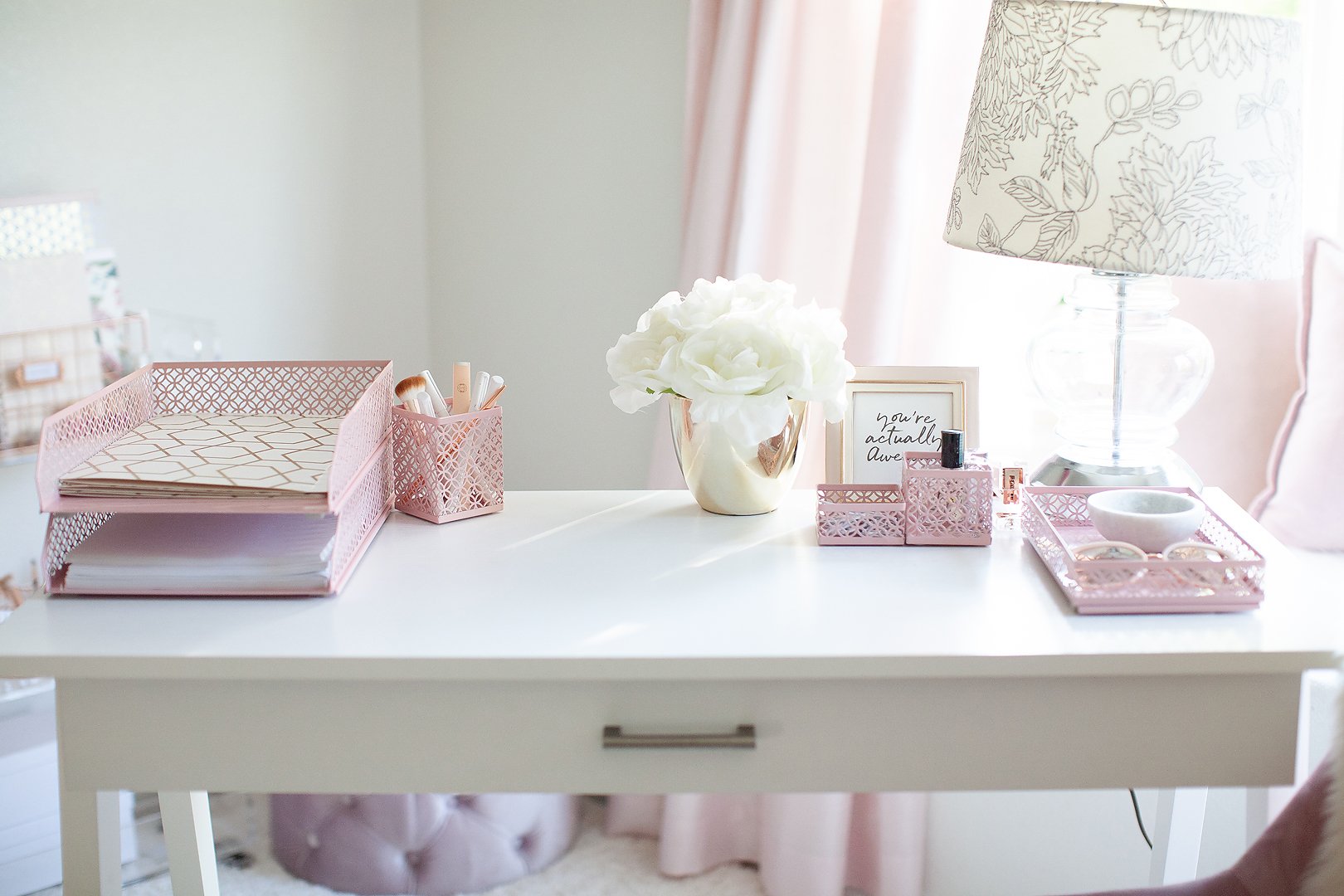
Okay, you’ve cleared the clutter and now you’re looking at a beautifully blank canvas. This is where the magic really happens. We’re going to turn that empty space into a high-performance workspace using a simple but incredibly powerful technique called zoning.
Zoning is all about assigning a specific purpose to each part of your desk. It’s one of my favorite student desk organization ideas because it builds a system that works with you, not against you. The goal is to create dedicated spots for everything so you can grab what you need without even thinking. You’ll be amazed at how much mental energy you save when you’re not constantly hunting for a highlighter or your phone charger.
Let’s start with command central. This is where all your tech lives—your laptop or monitor and all their essential sidekicks. The mission here is to keep everything powered up and connected without getting tangled in a web of cords.
Pick a spot, usually the center or back of your desk, to be the permanent home for your main device. Pro tip: a laptop stand is a lifesaver. Not only is it better for your posture, but it also creates this awesome little pocket of storage underneath for your keyboard or a slim notebook. I also swear by a simple desktop charging station to keep your phone and tablet in one place, juiced up, and ready to go.
Now for the fun part. Let’s carve out a space for all the non-digital stuff: writing, brainstorming, and sketching out ideas. Think of this as your Analog Corner, a hands-on zone that keeps your most-used creative tools right where you need them. This is where you can really let your personal style shine.
Writing Tools: A great-looking pen cup is a must. Fill it with your favorite pens, markers, and pencils so you’re never left scrambling when inspiration strikes.
Paper Goods: Keep your main planner or notebook here. A chic little sticky note holder is also perfect for jotting down those brilliant, fleeting thoughts.
By physically separating your digital and analog tools, you’re creating powerful mental boundaries. Trust me, reaching for a real pen instead of opening yet another browser tab can be a game-changer for staying focused during a deep study session.
Finally, every student needs a Reference Area. This zone is for the books and papers you look at often but don't need front-and-center all day. It’s the perfect home for your go-to textbook for that tough class, a binder with your current notes, or a sleek paper tray for incoming assignments and syllabi.
A vertical file sorter will completely change your life here. It keeps important documents upright and easy to see, preventing them from turning into a sprawling pile that takes over your entire desk. When these materials have their own contained zone, you can pull them out in a second and, just as importantly, put them away easily. This keeps your main workspace clear, leaving you with nothing but room for focus.
When your desk surface feels more like a postage stamp than a workspace, the only way to go is up. Seriously, learning to use your vertical space is the biggest game-changer for any student, especially if you're navigating a cramped dorm room or a tiny bedroom. It's all about getting clever with space-saving storage to reclaim your territory and make your desk feel twice as big.
Forget those sprawling piles of paper. The goal here is to get anything that isn't essential for what you're doing right now off your primary work surface. Think of your walls as untapped real estate just waiting to be used.
A simple wall-mounted organizer is one of the most effective student desk organization ideas because it instantly moves mail, syllabi, and important notes out of your way while keeping them in sight. For a quick, stylish fix, something like a wall-mounted letter holder with a note clip can immediately free up that precious desk space.
Once you’ve gone vertical, it’s time to get strategic with what’s left. Stackable letter trays are an absolute lifesaver for managing papers for different subjects. Instead of five separate piles creating chaos, you suddenly have one neat, vertical tower.
In the same way, a small desktop shelf or a monitor stand can literally double your usable surface area. This creates a perfect little nook underneath to tuck away your planner or keyboard when you need room to write.
And don't forget the space below your desk! It’s so often overlooked, but it's the perfect spot for things you don't need to grab every five minutes.
Under-Desk Cart: A small rolling cart is perfect for holding textbooks, extra supplies, or project materials. Just wheel it out when you need it and tuck it away when you're done.
Magazine Files: These are brilliant for taming floppy notebooks and binders. Line a few up on the floor right beside your desk for an instant, orderly library.
By thinking in three dimensions—up, down, and stacked—you transform your desk from a flat surface into a dynamic, multi-layered command center. It’s about making every single inch work for you.
This focus on efficiency isn't just a dorm room hack; it's a reflection of a huge shift happening in schools everywhere. The global school furniture market is projected to soar to USD 8.88 billion by 2033, with storage units themselves growing at an impressive 9.3% compound annual growth rate.
Schools are swapping out bulky, old-school furniture for compact, smarter solutions to make room for modern tech. It just goes to show how critical an organized desk is in today's hybrid learning world. You can discover more about the EdTech statistics driving this trend and see how it’s shaping study habits.
An organized desk shouldn't feel cold or generic. It should feel like yours. This is the fun part, where we move past just being tidy and start injecting your personality into the space. A desk that actually reflects who you are becomes more than a place to cram for exams—it becomes your personal command center, a spot that actually makes you want to sit down and get to work.
Believe it or not, transforming your desk from a bland surface into an inspiring hub is easier than you think. It really just comes down to a few thoughtful choices about color, texture, and the little things that make you smile. The whole point is to build an environment that feels energizing every single time you pull out your chair.
One of the fastest ways to make your desk look instantly pulled together is to pick a coordinated color palette. You don't have to be an interior designer! Just sticking to two or three complementary colors for your main accessories—like your pen holder, file organizer, and trays—ties the whole space together. It’s a simple trick that creates a surprisingly big visual impact, making everything feel intentional and calm.
For example, a matching Blu Monaco desk set in a cool aqua can create a serene, focused atmosphere. Or, if you want something a bit more grown-up, accessories in a chic gold or classic black can make your space feel more sophisticated. This isn't just about making things look good; your environment genuinely affects your drive. A space you love is a space you'll actually want to use.
The image below breaks down some smart storage strategies, which are the secret foundation for a beautifully styled desk.
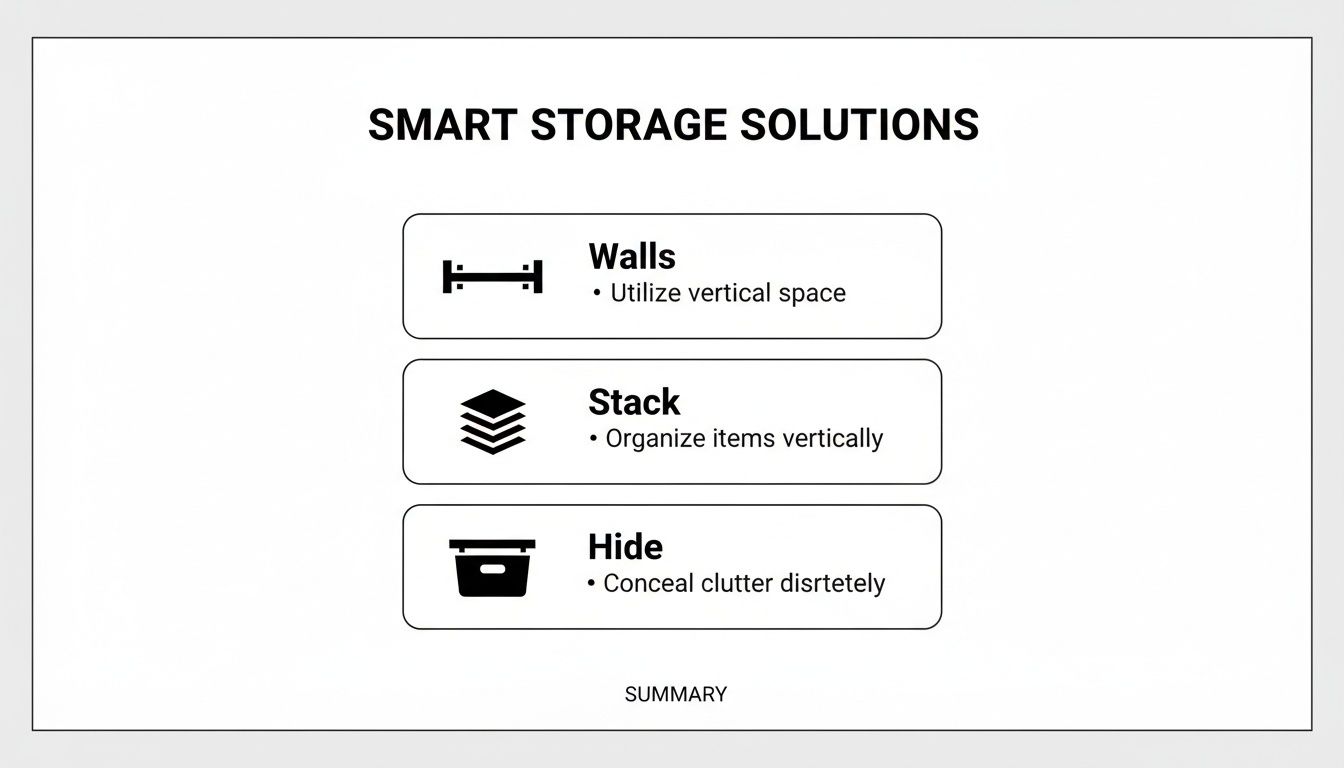
When you use your walls, stack things vertically, and hide away the less-than-pretty essentials, you clear the way for the personal touches that make your desk feel like home.
Not sure where to start with colors and styles? Don't worry. Most people fall into a few key design "vibes." Figuring out which one speaks to you can make choosing accessories a whole lot easier.
| Desk Style | Key Elements | Blu Monaco Collection |
|---|---|---|
| The Minimalist | Clean lines, neutral colors (black, white, gray), uncluttered surfaces. | Classic Black Mesh |
| The Glam Academic | Metallic accents, chic patterns, a touch of luxury. | Elegant Gold Wire |
| The Creative | Bright, playful colors, fun patterns, inspiring decor. | Vibrant Aqua |
| The Naturalist | Earthy tones, natural materials like wood or bamboo, plants. | Warm Rose Gold |
Use this table as a starting point. Once you identify your vibe, you can confidently pick out pieces that you know will work together beautifully.
Okay, you’ve got your beautiful, color-coordinated foundation. Now it’s time to add the things that truly inspire you. The trick is to be selective so you don't accidentally create new clutter. One of the best student desk organization ideas for styling is to lean on the "Rule of Three."
"Arrange decorative items in small groups of three. An odd number is more visually appealing and dynamic to the eye than an even number, creating a look that feels curated rather than chaotic."
Try grouping a small framed photo of your friends, a favorite mug that now holds your pens, and a tiny succulent. This little trio adds a ton of personality without taking over your entire workspace.
Here are a few other ideas to get you started:
Bring in Nature: A small, low-maintenance plant can seriously boost your mood and focus. If you need some ideas, check out this great list of the best indoor plants for offices that thrive in a desk environment.
Display Motivation: Find a cool postcard with a quote you love or use a small letter board to display messages that keep you going during those late-night study sessions.
Incorporate Texture: A small desk mat or a unique mousepad can introduce a new texture, define your main work zone, and add another layer of style.
When you combine a smart color strategy with a few meaningful personal items, you create a desk that is not only perfectly organized but also a true reflection of you. It becomes a space that doesn’t just hold your textbooks—it holds your ambition.
Even with the best game plan, little challenges always pop up when you're trying to create a study space that actually works. If you're wondering how to keep things from falling back into chaos or what to buy when you're on a student budget, you're not alone. Let's tackle some of the most common questions and get you some quick, practical answers.
Think of this as your go-to guide for sorting out those last few hurdles that can throw off a great system.
In a small space, consistency is your superpower. The real secret to staying organized for the long haul isn't one giant cleaning session before midterms. It's all about building small, daily habits that stop the clutter before it even starts.
My first piece of advice is to embrace the “one-touch” rule. The second you’re done with a notebook, pen, or textbook, put it away. Right then and there. Don't just set it down on the corner of your desk to deal with "later." This one habit prevents those little piles from turning into an avalanche of mess.
Next, get into the rhythm of a five-minute “desk reset” every evening. Before you call it a day, take five minutes to file loose papers, give the surface a quick wipe, and set out what you need for tomorrow. It feels like nothing at the time, but it makes a world of difference when you sit down to work the next morning. And always, always think vertically. Stackable trays and wall organizers aren't just nice-to-haves in a dorm; they're essential for keeping your desk surface clear for what matters.
When money is tight, you have to be strategic. Focus on versatile pieces that solve your biggest clutter problems first. You really don't need a dozen different organizers to make a big impact. Start with these three game-changers:
A Pen Holder: This is a non-negotiable. It instantly wrangles all those pens, pencils, and highlighters rolling around your desk.
A File or Magazine Sorter: Let's be honest, loose papers and notebooks are probably enemy number one. A simple vertical sorter tames that beast immediately.
A Multi-Compartment Tray: This is your secret weapon for all the little odds and ends—sticky notes, paper clips, flash drives, lip balm—that would otherwise get lost in the shuffle.
Here's a pro tip from someone who's been there: buying a cohesive set is often cheaper than buying each piece separately. Plus, it gives your desk a polished, put-together look right from the start.
Ah, the dreaded cable spaghetti. It’s a modern-day struggle, but a manageable one. The strategy is simple: contain and conceal. Grab some simple cable ties or reusable velcro straps and bundle those cords together behind your desk. You’ll be shocked at what a huge visual difference this makes.
For the chargers you use every day, a dedicated desktop charging station can be a great investment. But if you're looking for a genius, nearly-free solution? Clip a few binder clips along the back edge of your desk. You can then thread your charging cables through the metal loops, keeping them perfectly in place and off the floor.
There’s a fine line between inspiring and distracting, right? The key is to be intentional with your decor. Instead of scattering ten random knick-knacks across your desk, choose just one or two things that genuinely lift your spirits.
A small plant can bring so much life and color to a space. A single framed photo of friends or a piece of art you love, mounted on the wall, adds personality without taking up a single square inch of desk space. Color is another powerful tool. A matching set of desk accessories in a shade that makes you feel good creates a sense of calm and control. It feels motivating, not messy.
Ready to turn your desk from a source of stress into a hub of inspiration? The right tools make all the difference. Explore the stylish and functional desk accessory collections from Blu Monaco to find the perfect pieces that match your vibe and conquer clutter for good at https://www.blumonaco.com.


