No products in the cart.

The best home office organization ideas are the ones that actually work for you—blending smart functionality with your own personal style. It’s all about creating a space that not only boosts your productivity but genuinely feels inspiring to be in.
This means finally clearing off your desk, making the most of your vertical space with wall organizers, setting up specific zones for different tasks, and picking out storage solutions you actually love looking at.
The massive shift to remote work has turned countless kitchen tables and spare rooms into bustling command centers. And let's be honest, it often brings a wave of clutter right along with it.
If you’re a professional, student, or creative who feels like your productivity is being held hostage by disorganization, this guide is for you. We're going to move beyond the same old generic tips and get into the nitty-gritty of creating a workspace that is not only tidy but truly energizing.
Think of it this way: a well-organized office is more than just a clean desk. It’s a powerful catalyst for focus, creativity, and well-being. This isn't about chasing some unrealistic, sterile version of perfection you see online. It’s about building a functional, beautiful space that empowers you to do your absolute best work.
The dedication to creating a better home office isn't just a passing phase; it's a massive cultural shift. The global home office furniture market was valued at an incredible USD 25.3 billion in 2024 and is projected to soar to USD 45.3 billion by 2034.
What's driving this? A workforce where a combined 73% of employees now prefer either fully remote or hybrid work arrangements. It's clear that a dedicated, organized home workspace has become a modern necessity. You can discover more insights about this growing market on Market.us.
A thoughtfully organized space does more than just look good—it reduces friction in your daily workflow, giving you back valuable time and mental energy to focus on what truly matters.
We’re going to tackle real-world challenges, from those endless paper piles to the tangled mess of tech, and set you on a path to a personalized system that truly reflects your style.
If you’re looking for a little visual motivation to get started, exploring different aesthetics can provide a wealth of home office inspiration to help you envision the possibilities. This guide will give you the practical, actionable steps to turn that vision into your reality.
Before you can build an inspiring workspace, you have to know what you’re working with. Think of it as creating a blueprint. A thoughtful workspace audit is the single most important first step you can take, turning a chaotic desk into a launchpad for your best work. This isn't just about tidying up; it's about making intentional decisions that will serve you every single day.
The most effective way to begin is with the 'clean slate' method. Take everything—and I mean everything—off your desk and out of the drawers and shelves around it. This move feels dramatic, but it forces you to consciously evaluate each item's purpose before it earns its spot back.
As you pick up each object, sort it into one of four simple piles. This framework is a lifesaver; it prevents that dreaded decision fatigue and makes the whole process feel completely manageable.
Essential Daily Use: These are your non-negotiables—the things you reach for without thinking. Your keyboard, monitor, mouse, and that one pen you absolutely love. These are the first items to claim their rightful place on your desk.
Store Nearby: This pile is for items you need regularly, just not every day. Think of your stapler, extra notebooks, or files for a specific project. These belong in an easy-to-reach drawer or on a shelf right beside you.
Digitize: What about that stack of old industry reports or a fishbowl full of business cards? It's time to let the paper go. Scan the important articles and contact info, and then recycle the physical copies with a clear conscience.
Discard or Donate: Let's be honest. Do you really need that collection of ten branded pens you got from a conference? Keep your two favorites and let the rest go. The same goes for dried-up highlighters and five-year-old paperwork.
This isn’t just about cleaning; it’s about curating. You're building a workspace that actively supports your goals, not one that just passively stores your stuff. Every item should justify its existence through its usefulness or the joy it brings.
This push for a better home environment is a huge trend. The residential organizing market now makes up 38.1% of the entire professional organizer industry, fueled by our collective desire to lower stress and find a better work-life balance. In fact, individuals are the largest client segment at 46.1%, which shows just how much people are willing to invest in creating a peaceful, functional home. If you're curious, you can learn more about professional organizer market trends and see how this movement is growing.
If you’re feeling stuck, this decision-tree flowchart can help you visualize the path from "I don't know where to start" to a beautifully organized space.
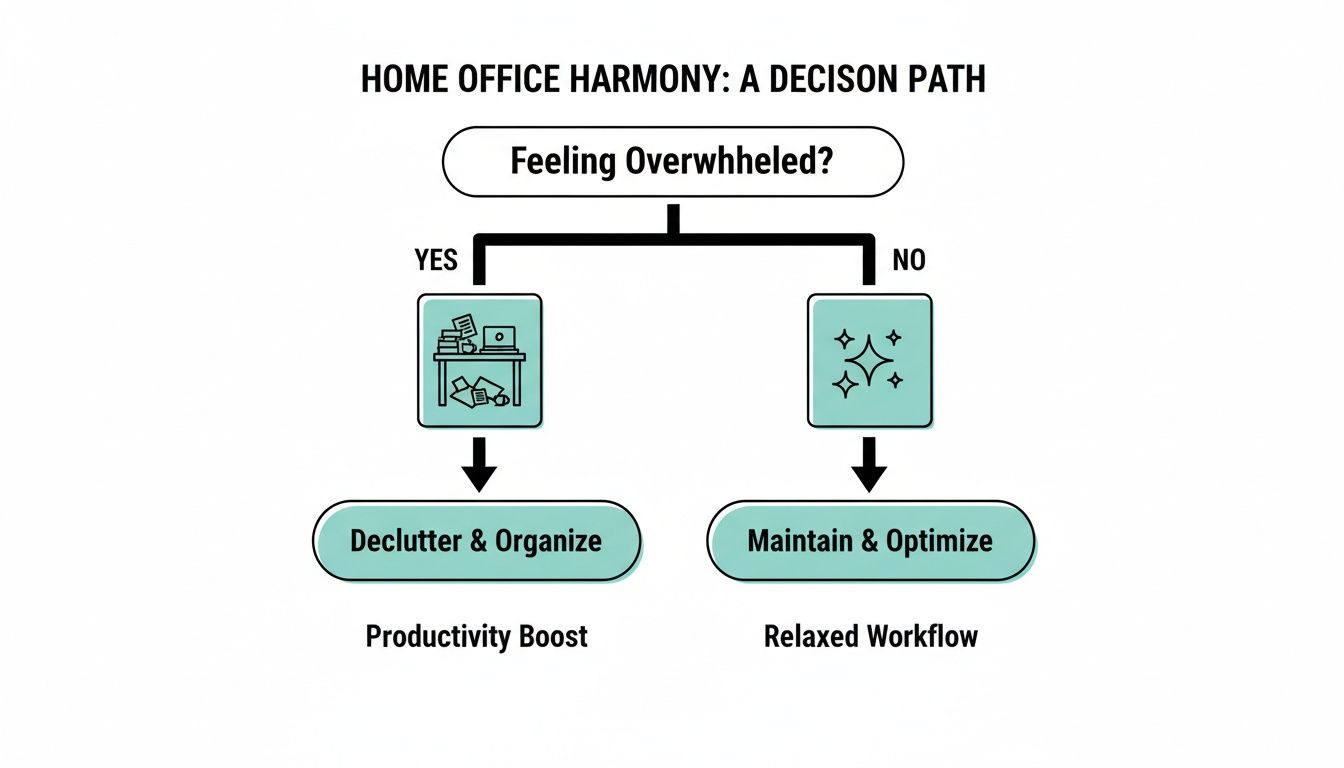
As the flowchart shows, the first step is always acknowledging that feeling of being overwhelmed. From there, it breaks down into clear, actionable steps for decluttering and organizing.
Finally, don't forget about the invisible mess. Digital clutter can be just as distracting as physical piles of paper. Spend just ten minutes cleaning up your computer's desktop, dragging files into logical folders, and unsubscribing from newsletters you never open. A streamlined digital world is the perfect complement to your newly organized physical space, creating a truly serene and powerful command center.
Ever notice how the best workspaces just flow? It’s not an accident. They feel intuitive, almost like they know what you need before you do. That’s the magic of creating functional zones—a simple but powerful way to turn your desk from a random surface into a productivity powerhouse. Instead of one big, chaotic pile of "stuff," you create dedicated areas for specific tasks.
When everything has a home, you stop wasting precious mental energy looking for that one sticky note or a critical file. The real goal here is to make your workflow so smooth that you never have to break your concentration.
The secret is to think about your desk like a set of concentric circles. The things you touch constantly should be closest to you, while everything else radiates outward. It’s a beautifully simple concept that forms the foundation of an incredibly efficient system.
Here are the three core zones to create:
The Core Work Zone: This is your prime real estate, the space directly in front of you. It should be reserved for only your most essential tools: your laptop or monitor, keyboard, mouse, and maybe a single notebook and your favorite pen. Nothing else gets to live here permanently.
The Reference Zone: Just an arm's reach away, this area holds materials for your active projects. Maybe it's a vertical file holder with client folders, a sleek letter tray for incoming documents, or a small stand for your planner. These are the things you need to see or grab a few times a day.
The Supply Zone: This is home base for everything else you need less often. Think of a nearby drawer, a set of desktop organizers, or the shelf right above your desk. This is where your stapler, extra pens, paper clips, and chargers belong.
The big idea behind zoning is as simple as it is effective: Keep what you use most, closest to you. This single change can slash your daily frustrations and give you back countless minutes that used to be lost to hunting and gathering.
Let’s see how this works in the real world. Imagine you're a teacher prepping lesson plans. Your laptop is front and center in your Core Zone. To your left, in the Reference Zone, you have a tiered tray system—the top is for papers that need grading, and the bottom holds blank worksheets. A drawer to your right is your Supply Zone, stocked with red pens, stickers, and a hole punch. Logical, right?
Or maybe you’re a freelance writer. Your Core Zone is just your laptop and a much-needed cup of coffee. A sharp-looking magazine file in your Reference Zone holds binders for each client, while the Supply Zone on a nearby shelf keeps your notebooks and research books tidy.
This zoning strategy is one of the most effective home office organization ideas because it’s not a one-size-fits-all solution. It bends and adapts to your profession and your space, letting you build a system based on your own movements and habits. This kind of thoughtful arrangement makes your environment work for you, not against you, creating a workspace that is truly your own.
Now for the best part. Once you’ve mapped out your workflow zones, it’s time to bring your space to life. Let’s be honest, functional organization is non-negotiable, but that doesn't mean it has to be dull. The right storage solutions can transform your office from a place you have to work into a place you want to be.
This is your chance to really let your personality shine. Think of your desk accessories not just as tools, but as the final, stylish touches that tie the entire room together.
Instead of grabbing a random assortment of organizers, think cohesively. Are you drawn to the warm, grounding feel of natural wood? Or does a modern pop of rose gold or teal get your creative energy flowing? Committing to a specific color palette or material is the secret sauce for achieving that polished, high-end look.
The idea is to create a visual language for your workspace. This doesn’t mean everything must be a perfect match—that can feel a bit sterile. Instead, you want things to feel like they belong in the same family. A unified look cuts down on visual noise, which in turn helps you feel calmer and more focused.
You can even mix and match textures within the same color family to add depth. For example:
For a Modern Glam Look: Try pairing a sleek gold paper tray with a wire mesh pen holder and a faux leather magazine file.
For a Minimalist Vibe: Combine crisp white ceramic organizers with light wood accents and clear acrylic holders.
When your tools look and feel good, even a simple act like grabbing a pen or filing a paper becomes a more enjoyable part of your day.
Your desk shouldn't just hold your work; it should inspire it. Selecting storage that reflects your personal style turns everyday organization into an act of self-expression.
While aesthetics are crucial for creating a space you love, function is still king. A gorgeous file sorter is completely useless if it can’t handle the reality of your paper flow. The sweet spot is finding that perfect blend of style and practicality.
To get started, think about the primary job you need each organizer to do. If you need some inspiration, browsing through different collections of desk organizers is a great way to see what's possible and match your style to your specific needs.
To help you narrow down the options, I've put together a quick guide comparing some of the most popular and effective tools.
A quick comparison of stylish and functional storage to help you select the right tools for your space and workflow.
| Organization Tool | Ideal for Maximizing | Pro Tip for a Cohesive Look |
|---|---|---|
| Vertical File Holder | Compact Spaces: Perfect for keeping active project files upright and accessible without taking up a large footprint on your desk. | Choose a metallic finish like rose gold or gold to add a touch of elegance to a small, minimalist desk setup. |
| Multi-Tiered Tray System | Heavy Paper Flow: Excellent for creating an inbox/outbox system or separating different types of documents that require frequent access. | Select a color that complements your desk, like a vibrant teal or classic black, to make it a statement piece. |
| Magazine File Holder | Bulky Items: Great for corralling catalogs, manuals, binders, and thicker notebooks, keeping them neat and preventing them from toppling over. | Group two or three matching holders together to create a visually strong, uniform block of color and organization on a bookshelf. |
| Desktop Drawer Unit | Small Supply Clutter: Ideal for hiding away small, loose items like paper clips, sticky notes, and charging cables, keeping your desktop clear. | Opt for a drawer unit in a neutral tone like white or wood to blend seamlessly into your desk setup, reducing visual distraction. |
At the end of the day, the best organizational systems are the ones that make you feel genuinely good about sitting down to work. When your environment is built with intention, your focus and creativity will follow.
When your desk starts to feel cramped, the only way to go is up. The walls around you aren't just for decoration; they're your secret weapon for reclaiming your workspace and building a truly functional, clutter-free command center. Learning to master vertical storage is one of the most powerful home office organization ideas out there.
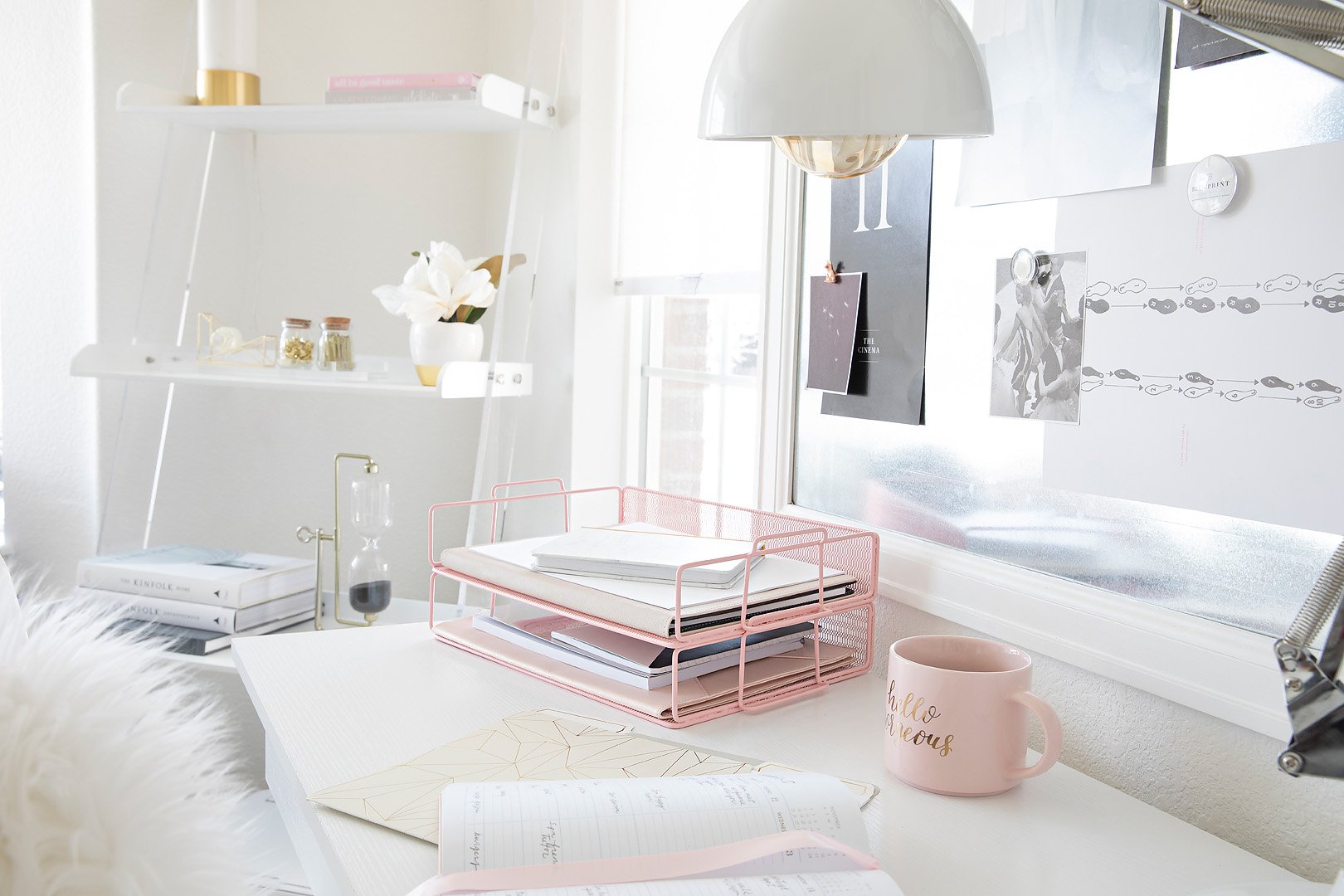
This isn’t just about haphazardly hanging a shelf or two. It’s about building a smart system that keeps everything you need in sight, within reach, and beautifully displayed. By taking your storage vertical, you give your desk space back to its most important job: deep, focused work.
Let's think beyond a simple bookshelf. The key is to find dynamic solutions that feel personal and actually fit the way you work, creating a backdrop that’s both inspiring and incredibly practical.
Here are a few of my favorite ways to make walls work harder:
Floating Shelves: These are fantastic for things you actually want to see. Think of your favorite motivational books, a couple of small plants, or stylish containers holding pens and paperclips. Placing them above your monitor naturally draws the eye upward and adds a touch of personality.
Pegboard Systems: If you love flexibility, this is for you. A pegboard is the ultimate chameleon of organization, holding everything from scissors and tape to small baskets for charging cables and adapters. A graphic designer could hang their go-to drawing tools, while a crafter could organize spools of thread.
Wall-Mounted File Organizers: This is the one change that will get that dreaded paper pile off your desk for good. Sleek and efficient wall mount organizers give a clear, designated home to incoming mail, active project folders, and documents waiting for your signature.
Your walls are a blank canvas for productivity. Use them to build a system that keeps your essentials in your line of sight but completely off your desk, clearing both your physical and mental space.
Placement is everything. Think about what you reach for most often during the day. Install that mail sorter or file holder within arm’s reach of your chair. The goal is to make it completely effortless to grab what you need without breaking your concentration. Your wall should feel like a natural extension of your desk, not a separate storage unit.
This mindful approach to outfitting a home office is part of a much bigger shift. The global home office spending market is projected to skyrocket from USD 32,288.11 million in 2025 to an incredible USD 144,263.65 million by 2035.
This isn't just about buying new desks; it reflects a deep understanding that an optimized, organized home workspace is a real investment in our professional success and personal well-being. You can discover more insights about home office market trends to see just how much this space is evolving.
You’ve done the hard work. You’ve purged the clutter, zoned your space, and created a workspace that feels like you. But how do you keep it that way?
The real victory isn't in the initial overhaul—it's in the small, consistent actions that keep your office a haven of productivity day after day. Think of it less as a chore and more as a simple ritual that protects your peace of mind.
The secret is to make staying organized so ridiculously easy that it becomes second nature. We're not talking about hours of weekly cleaning. We're talking about tiny, repeatable habits woven right into your workday, preventing that dreaded clutter-creep before it even starts.
Let’s turn maintenance from a headache into a habit. You don't have to do everything at once. Just pick one of these and see how it feels.
The 5-Minute End-of-Day Shutdown
This is, without a doubt, the single most impactful habit you can adopt. Before you close your laptop and call it a day, spend literally five minutes tidying up.
Give your desk a quick wipe-down.
Tuck pens, notebooks, and tools back into their designated spots.
Stack any stray papers neatly into your "inbox" or "to-file" tray.
Walking into a clean slate tomorrow morning is a gift you give your future self. It’s a game-changer.
The 15-Minute Weekly Wrap-Up
Set aside just 15 minutes every Friday afternoon to tackle the small things that have accumulated. This quick sweep stops minor messes from turning into a weekend project.
Clear out that "to-file" tray—scan what you need, shred what you don't.
Deal with any mail or documents that have piled up.
Do a quick digital declutter: clear your desktop and empty the downloads folder.
An organized space is a reflection of an organized mind. By dedicating a few minutes each day to reset your environment, you're also clearing your head, setting the stage for a focused and productive day tomorrow.
These little rituals are the glue that holds your whole system together. They ensure your workspace remains a reliable sanctuary where you can escape the chaos and do your absolute best work, every single day.
Even with the best intentions, organizing can feel a little overwhelming. Let's tackle some of the most common hurdles people face when trying to create a workspace they truly love.
You don't need a huge budget to make a huge impact. Honestly, the most powerful first step is completely free: a ruthless decluttering session. Get rid of what you don't need before you even think about buying storage for it.
Next, get creative with what you already have. That beautiful box from a gift can hold your sticky notes, and a few glass jars from the kitchen can make a surprisingly chic pen holder. When you are ready to invest, start with one high-quality piece that solves your biggest headache, like a great paper sorter. Building your perfect system piece by piece is not only more affordable but also lets you adapt as your needs change.
That tangled mess of wires under your desk? It's easier to conquer than you think. The entire game is about bundling them up and guiding them out of sight.
Adhesive cable clips are brilliant for running wires neatly along the back of your desk where no one can see them.
Velcro ties are your best friend for grouping all those cords snaking out from your computer into one tidy bundle.
A cable management box is the final boss of cord control. It's a simple, stylish box that hides your entire power strip and all the messy plugs.
Here’s a pro tip that will save you future headaches: take a minute to label both ends of your most important cords. You'll thank yourself later.
When your workspace is part of a shared area, creating clear boundaries is everything. A small, stylish area rug under your desk can visually separate your "office" from the rest of the room. A strategically placed bookshelf can also work wonders as a subtle divider.
The best trick? Choose storage with doors, drawers, or lids. A beautiful desktop file box or a small cabinet lets you literally "close up shop" at the end of the workday. This simple act helps your brain switch off and reclaims the space for relaxation.
Feeling inspired to create a workspace that’s not just organized, but beautiful? Explore the curated collections at Blu Monaco and discover the perfect pieces to make your home office a place you love to be. Visit us at https://www.blumonaco.com to find your style.


