No products in the cart.


Picture this: a workspace where every single tool is right where you need it, exactly when you need it. This isn't just about looking neat; it’s about creating a space that sparks creativity instead of stress. An organized desk is a powerful tool for eliminating friction, sharpening your focus, and giving your best ideas the room they need to grow.
Let's be honest, a cluttered desk is more than just a visual mess—it’s a mental one. It quietly chips away at your focus and drains your energy. Research has shown that visual disorganization can actually increase stress levels and make it harder to process information. Your creative hub can quickly turn into a source of anxiety. This guide is your roadmap to transforming that chaos into a calm, functional, and genuinely inspiring environment that supports your best work.

We're going to move beyond the usual, cookie-cutter advice. Think of this process less like a chore and more like designing a personal command center that’s perfectly tailored to your workflow.
That frantic search for a working pen or a specific folder isn't just a small hiccup in your day—it's a productivity killer. Those little moments of hunting for things add up, stealing valuable time and constantly breaking your concentration.
When you create a smart system for your office supplies, you're making an investment in your own efficiency and peace of mind. The whole point is to build a space so intuitive that your daily tasks feel seamless.
"Organization isn’t a one-time event—it’s a habit. The best systems are the ones that are so simple and intuitive they feel effortless to maintain, giving you back time and mental clarity every single day."
This isn't about chasing some impossible ideal of minimalist perfection. It's about making deliberate, practical choices that serve you. By the time we're done, you'll have everything you need to:
Declutter with purpose: Learn how to let go of what’s no longer useful to make room for what really matters.
Create intuitive systems: Design "zones" and storage solutions that match the way you actually work.
Choose accessories that inspire: Find pieces that reflect your style and make you feel genuinely excited to get to work.
Let’s reframe how we think about organizing office supplies. You're not just tidying up; you are curating an environment that fuels your ambition. You are setting the stage for deeper focus, smoother workflows, and a powerful sense of control over your day. And the best part? This process is all about you.
Whether you have a spacious home office, a busy classroom, or a tiny study nook, the core principles are the same. You'll learn how to assess your space, pinpoint your essential needs, and build a flexible system that evolves with you. The end result won't just be a clean desk—it will be a personal sanctuary that empowers you to think clearly and create freely, every single day.
Let’s be honest. Real organization doesn’t start with a trip to the container store. It starts with a brave, honest look at what you actually have. Before you even dream of stylish new bins, you need to create a clean slate. I mean it—pull every single thing off your desk, out of your drawers, and from your shelves.
This isn’t just a quick tidy-up. It’s a full-on reset. By emptying your space completely, you're not just moving clutter around; you're giving yourself the mental and physical room to build a system that genuinely works for you.
As you start pulling everything out, sort it all into four simple categories. This framework makes the decision-making process for every last paperclip and dried-out marker surprisingly easy.
Keep: These are your non-negotiables—the pens, notebooks, and tools you reach for every single day. No questions asked.
Relocate: This pile is for the wanderers. That coffee mug that belongs in the kitchen, the kids' toys, the book you meant to return to the living room shelf. Give them a home, just not here.
Donate: Got an extra stapler you never use? A pack of binders from a long-forgotten project? If they're still in good shape, let someone else put them to good use.
Discard: It's time to be ruthless. Toss the broken pens, the ink cartridges for a printer you don't own anymore, and the tangled mess of mystery cables. Shred that outdated paperwork. Let it go.
This is your chance to get rid of all the little things that cause tiny frustrations throughout your day. Releasing that promotional pen that never writes well or the stack of old business cards is surprisingly freeing.
Now, turn your attention to the 'Keep' pile. This is where you get strategic. Think about how you actually work, day in and day out. The essential tools for a graphic designer are a world away from what an accountant needs at their fingertips.
What do you reach for constantly? What do you only need once a week, or even once a month? Answering these questions is the secret to creating a setup that feels intuitive. It’s not just about what you need, but when you need it.
This isn't just about making your desk look good for a photo. Organizing is a powerful way to reclaim your time and mental clarity. Workers lose a shocking amount of time every day just looking for things, which adds up to weeks of lost productivity over a year. A well-organized desk has even been shown to improve focus by 17%. You can dig into more of the data on the impact of organization in this global market report from imarcgroup.com.
This whole process isn't about forcing yourself into some stark, minimalist box (unless that’s your thing!). It's about being intentional. By consciously deciding what earns a spot in your workspace, you’re building a foundation for focus and creativity—a true command center that helps you do your best work.
Now that you’ve done the hard work of clearing out the clutter, it’s time for the fun part: creating a system that actually makes sense for how you work. The most effective way I’ve found to do this is through zoning—a simple but powerful idea where you arrange things based on how often you actually reach for them.
Instead of seeing your desk as one giant surface, think of it as a collection of distinct neighborhoods, each with its own job. This simple shift in mindset is what stops the endless hunt for a pen or a paperclip. You’re essentially designing your space around your own habits, creating a smooth workflow where everything you need is right where you expect it to be.
The most valuable patch of land in your entire workspace is the area within arm's reach. This is your Prime Real Estate. It should be reserved exclusively for the tools you use all day, every day. Anything else is just a distraction waiting to happen.
What do you grab without even thinking? For most of us, that list is surprisingly short:
The one pen you always use.
Your daily planner or go-to notebook.
A phone stand to keep your screen in view.
Sticky notes for those fleeting thoughts.
The secret here is to be ruthless. Only the absolute essentials earn a spot. A stylish, multi-piece desk set, like the ones from Blu Monaco, can be a game-changer. It gives each of these core items a designated home, cutting down on visual noise and keeping your focus sharp.
This first step sets the stage for everything else.
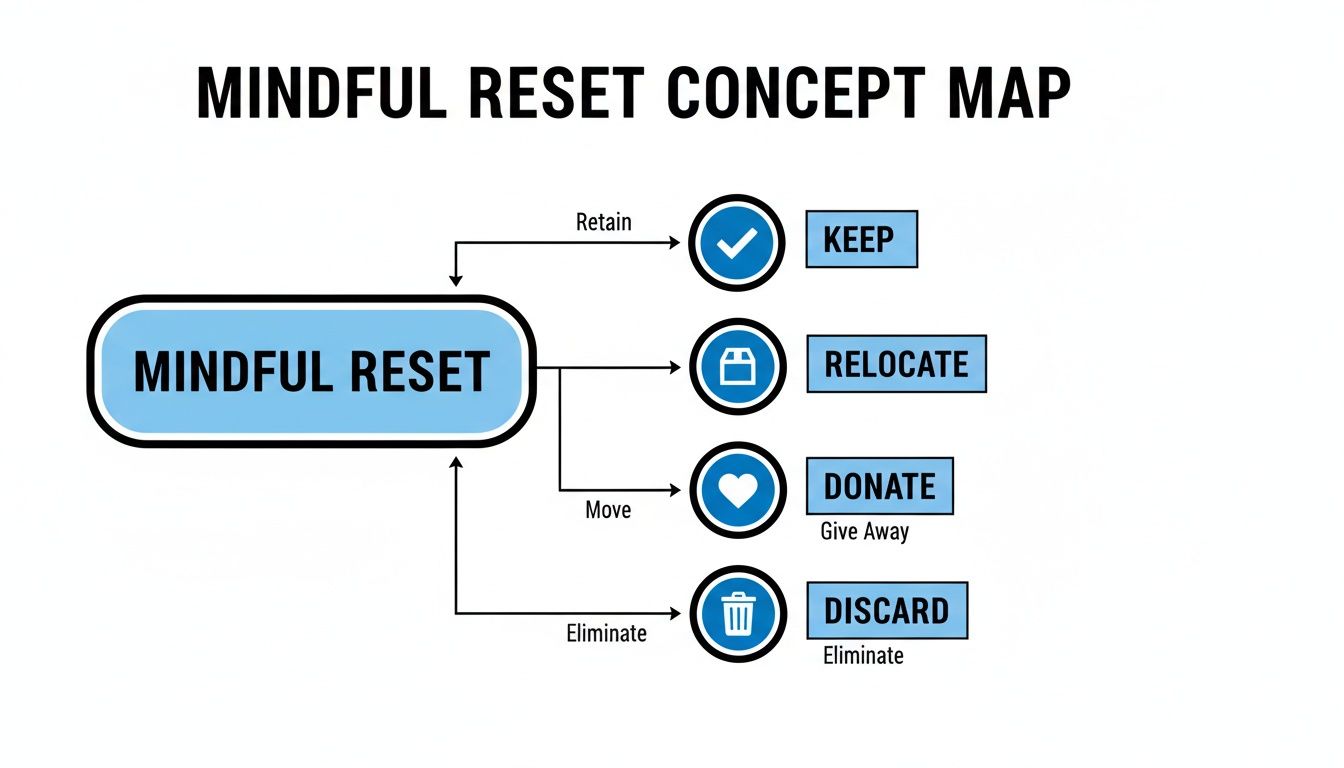
This process of keeping, relocating, donating, or discarding is what clears the path, letting you build a truly intentional workspace from the ground up.
Just beyond your immediate reach is your Supply Hub. This zone is home to items you use regularly, but not constantly—maybe a few times a week. The idea is to keep them close, but off your main work surface. Your top desk drawer or a shelf right beside you is perfect for this.
This is where you'll stash things like:
Staplers and scissors
Tape dispensers
Extra pens, highlighters, and markers
Paper clips and binder clips
Charging cables and portable batteries
Shallow drawer dividers are your best friend here. They stop that jumble of small items from becoming a chaotic mess, so you can grab what you need in a second. This is a cornerstone of an effective desk layout. Having a well-stocked hub also makes it incredibly easy to restock your prime zone when needed.
Finally, every office needs an Archive Zone. This is where you put everything you absolutely need to keep but rarely touch. Think filing cabinets, closet shelves, or even labeled bins tucked under your desk. The goal is to get these items out of sight and out of mind.
The Archive Zone is for your 'just-in-case' and 'once-in-a-while' supplies. Storing them separately declutters your mind just as much as it declutters your desk, freeing up your mental energy for the real work.
Things destined for the archive include bulk supplies—like reams of printer paper, extra ink cartridges, or boxes of envelopes. It’s also the right spot for old project files, tax documents, or reference materials you might need down the road. Minimalist magazine files or clearly labeled document boxes will keep everything tidy and easy to find on the rare occasion you need to pull something out.
As you map out these zones, remember that the arrangement of your larger items matters, too. For some great insights on this, especially if you're ever moving, check out these tips on organising office furniture.
By setting up these three simple zones, you're not just organizing supplies; you're building a workspace that actively supports you. It becomes an intuitive partner that helps you stay focused and productive, day in and day out.
Adapting the zoning method to different environments is key to its success. Whether you're in a corporate high-rise, a bustling classroom, or a cozy corner of your home, the principles remain the same—only the execution changes. This table breaks down how you can tailor these zones to fit your specific needs.
| Zone | Home Office Professional | Classroom Teacher | Student Study Nook |
|---|---|---|---|
| Prime Real Estate | Laptop, primary monitor, favorite pen, daily planner, and phone stand. | Whiteboard markers, lesson plan book, timer, and a cup for pens/pencils. | Laptop/tablet, primary textbook, a few essential pens, and a sticky note pad. |
| Nearby Supply Hub | Top desk drawer with stapler, scissors, extra pens, and charging cables. | A rolling cart with graded papers, daily handouts, art supplies (crayons, glue), and sanitizers. | A set of desktop drawers with highlighters, index cards, calculator, and USB drives. |
| Long-Term Archive | Filing cabinet with tax documents, project archives, and bulk supplies like printer paper. | A classroom closet with seasonal decorations, bulk craft supplies, and archived student work. | A bin under the bed or on a closet shelf with past semester notes, old textbooks, and bulk-fill paper. |
By customizing your zones, you create a system that feels completely natural for the work you do. It's about making your environment work for you, not against you, no matter what that environment looks like.
Let's talk about the fun part: picking out the storage. The right organizers do so much more than just hold your supplies. They're the final touch that transforms a merely functional desk into a space you genuinely love to be in. This is where practicality and personality finally get to meet.

Think of your organizers as the supporting cast in your daily productivity play. A sleek vertical sorter can instantly reclaim desktop space from those sprawling papers, while a beautiful letter tray can finally tame the beast of incoming mail and to-do lists. It’s all about creating a system that feels like it was made just for you.
Here’s a pro tip: let your supplies tell you what kind of storage they need. It’s tempting to buy a generic set of cute bins and hope for the best, but a more thoughtful approach will serve you much better in the long run.
For the little things: Tame the chaos of paper clips, binder clips, and push pins with sleek drawer dividers or small, modular trays. This one move can turn a junk drawer into a command center.
For your pens and markers: A stylish pen cup is a classic for a reason. Find one that fits your vibe and is tall enough to keep everything upright and ready to grab.
For paper and notebooks: Vertical file holders are an absolute game-changer. They prevent the dreaded paper pile-up by keeping documents upright and visible. If you're looking for ways to master your paper flow, you can learn how to effectively use desk paper trays in our detailed guide.
This deliberate pairing ensures every single item has a logical and accessible home, which is the secret to staying organized for good.
One of the most powerful moves you can make, especially if you’re working with a smaller desk or room, is to go vertical. Your desk surface is prime real estate—it’s for doing the work, not just storing the tools.
The right office shelving can be the foundation of a great setup, giving your binders and books a proper home. Floating shelves are fantastic for this, and they also give you a spot for a plant or a framed photo that makes you smile. Wall-mounted organizers or pegboards are brilliant for creating a custom hub for scissors, rulers, and other tools you need at arm's length.
This strategy does more than just clear your desk; it draws the eye upward, making the whole space feel larger and more open.
Now for the part that ties it all together: creating an aesthetic that energizes you every time you sit down to work. A coordinated set of accessories can make a massive impact here.
Choosing a matching set of organizers in a color or material you love isn't just for looks—it’s about creating visual harmony. This simple act reduces mental friction and fosters a sense of calm and control in your workspace.
Imagine a desk where every piece feels like it belongs. A Blu Monaco desk set in a striking gold, a calming teal, or a warm rustic wood finish can instantly give you that polished, put-together feeling. This isn’t just about looking good; it's about investing in a system that makes you feel good.
This sense of order has a real, measurable impact. The global office supplies market is set to hit USD 223.7 billion by 2035, which shows just how essential these tools are. Plus, studies reveal that a cluttered desk can slash your productivity by up to 20% because you're constantly wasting time hunting for things. For teachers and students, multi-piece sets are a lifesaver, organizing up to 80% of daily-use items to cut down retrieval time.
When you choose storage that not only functions perfectly but also reflects your personal style, you're doing more than just tidying up. You're curating an environment that supports your focus, fuels your creativity, and makes your work feel less like a chore and more like a calling.
Let's be honest: a beautifully organized workspace is incredible, but its magic can vanish the moment clutter starts creeping back in. The real victory isn't just the big overhaul; it's building a system so simple and intuitive that keeping it clean feels completely effortless. This is where you lock in your success, turning a one-time project into a lasting state of calm and focus.
The first step? No more mystery bins. Unlabeled drawers and anonymous boxes are just invitations for chaos. When you label everything clearly, you create a system you can navigate at a glance, making it just as easy to put something away as it is to find it.
You don't need a fancy, expensive label maker, either. Find a style that truly fits your workspace aesthetic.
Modern and Minimalist: Think clean and professional with embossed labels on simple black or white tape.
Warm and Rustic: For a more personal touch, try elegant handwritten tags tied onto baskets with a bit of twine.
Sleek and Removable: Chalkboard or dry-erase labels are perfect for storage that changes, giving you flexibility without sacrificing style.
The goal is consistency. When every container has a clear, visible purpose, you eliminate the guesswork that always leads to clutter.
This is probably the most powerful tool I can share for lasting organization. Instead of letting small messes snowball into a weekend-long cleanup project, build a "Five-Minute Reset" into your end-of-day routine. It’s a tiny investment of time that pays off massively in mental clarity.
Think of it as closing down your workspace with intention. Before you sign off, just take a few moments to put things back where they belong. Wipe down your desk, put your favorite pen back in its cup, and file away the day's loose papers.
This simple ritual stops the slow, steady creep of disorder in its tracks. It guarantees you’ll start every single morning with a clean slate, ready to dive into what truly matters.
While the daily reset tackles surface clutter, a "Weekly Tidy" keeps your whole system humming. Set aside just 15 minutes at the end of your week—Friday afternoon is perfect for this—to handle the slightly bigger tasks.
This is your chance to sort through that "Action" paper tray, file away documents you're done with, and restock your core supplies. Running low on sticky notes or staples? Add them to your shopping list right then and there. This little habit prevents that frustrating moment when you reach for an essential supply only to find an empty box. Staying on top of your inventory with a simple office supply checklist template makes this process incredibly efficient.
The impact of a well-maintained system goes way beyond just saving time. Research shows disorganized workers face 23% higher stress levels, but simple zone-based systems can slash search times by 50%. This productivity gain is a key reason the office supplies sector is valued at USD 166.7 billion in 2024—because effective organization delivers a real, measurable impact on daily output and well-being. Discover more insights about the office supplies market on alliedmarketresearch.com.
By making these small, repeated actions automatic, you’re not just organizing your desk once. You are building a sustainable system for enduring clarity and focus—creating a workspace that consistently supports your best work, day after day.
Even with the best intentions, organizing your office supplies can hit a few snags. Don't worry—most of these challenges are incredibly common, and I've seen them all. Here are the questions I hear most often, along with some practical, road-tested advice to help you fine-tune your system until it's both beautiful and effortlessly functional.
When you’re short on space, the answer is always to go vertical. The goal is to draw the eye upward and reclaim your valuable desk surface from all the little things that tend to gather there. This isn’t about cramming more in; it’s about making smart use of the often-forgotten real estate on your walls.
Take a look at the wall behind or beside your desk. Could you hang a couple of simple floating shelves? They’re perfect for holding binders, magazine files, or even a stylish cup for your pens. I'm also a huge fan of wall-mounted organizers or pegboards—they're brilliant for creating a custom command center for scissors, tape, and other tools you need close by but off your workspace.
Once you’ve tackled the walls, turn your attention back to the desktop itself.
Stackable letter trays are your absolute best friend for managing paper without letting it sprawl.
A desktop organizer with vertical slots is a game-changer for corralling notebooks and slim files.
Look for multi-functional accessories! Think of a monitor stand with built-in drawers or storage cubbies underneath. This one piece of gear not only puts your screen at a more comfortable height but also gives you a new home for small supplies.
Finally, make every inch of your drawers count. Don't just toss things in. Use modular drawer dividers to create a specific, custom-fit home for every little thing, from paper clips to charging cables. You'll be amazed at how much you can fit when nothing is wasted.
Paper is, hands down, the biggest source of clutter for most people. It piles up simply because we don't have an immediate, decisive plan for it. The secret to taming the paper beast is to create a simple processing system you can use the moment a document lands on your desk. Procrastination is the real enemy here.
I swear by a simple three-tray inbox system. Label each tray clearly: 'Action,' 'File,' and 'Scan.' This forces you to make a decision right away.
Action: This is for anything that needs you to do something, like a bill to pay, a form to sign, or a report to review for a meeting.
File: This tray is for documents you need to keep for your records but don’t need to act on, like paid invoices or reference materials for a project.
Scan: For papers you want to keep digitally but can shred afterward, such as receipts for expense reports or articles you want to save.
The most powerful move you can make is to stop paper before it even starts. Take a few minutes this week to switch to paperless statements for your bills and bank accounts. Use an app like Scannable to digitize business cards and notes on the go. Reducing the flow of physical paper is the ultimate decluttering hack.
Set aside just 15 minutes every Friday to completely clear these trays. It’s a small habit that prevents the dreaded paper pile-up and keeps your desk clear and your mind focused.
This is such a common frustration! It almost always comes down to one thing: visual clutter. You can have the most logical system in the world, but if your workspace looks chaotic, it will feel chaotic. The good news is that a few small, strategic tweaks can make a massive difference.
First, let's talk about cables. A tangled nest of wires for your monitor, laptop, and phone charger can make even the tidiest desk look like a mess. Simple fixes like inexpensive cable sleeves, adhesive clips, or an under-desk tray will wrangle and hide those wires. This one step provides an instant visual lift—I promise.
Second, create a cohesive look. This is where style and organization truly come together. Using a matching set of desk accessories, like a coordinated Blu Monaco collection in gold, teal, or rustic wood, creates a polished and intentional vibe. You don't have to match everything perfectly, but sticking to a simple color palette of two or three complementary colors will bring a sense of harmony and calm to your space.
Finally, get in the habit of the "one-touch" rule. When you're done using something—a stapler, a notebook, a reference book—put it back in its designated home immediately. It takes just a few seconds, but this single habit stops the slow creep of clutter and ensures your desk always looks as organized as it actually is.
I like to think of decluttering on two different timelines: the deep clean and the daily maintenance. A deep, comprehensive declutter of your entire workspace—where you pull everything out and really assess it—is something to tackle once or twice a year. This is your chance to purge supplies you never touch, archive old files, and make sure your system is still working for you.
But the real secret to staying organized for good is the frequent, smaller maintenance sessions. These are what keep the system running smoothly day in and day out.
The Daily Reset: Spend five minutes at the end of each workday returning items to their homes and clearing your desk surface.
The Weekly Tidy: Dedicate 15 minutes every Friday to sort through your paper trays, toss out old sticky notes, and restock essentials like pens or staples.
This consistency prevents clutter from ever becoming overwhelming and makes that big annual clean-out incredibly fast and easy. If you notice one area is constantly messy—like a specific drawer or corner of your desk—don't ignore it. It’s a sign that your system for that zone isn't quite right, giving you a perfect opportunity to adjust it.
Ready to create a workspace that truly inspires you every day? At Blu Monaco, we design beautiful, functional desk accessories that help you organize your office supplies with style and ease. Discover our collections and build your perfect desk today!


