No products in the cart.

The secret to a truly productive desk layout isn't about buying the most expensive gear or copying a setup you saw on Pinterest. It’s about creating a space that’s built around you—your workflow, your tools, and your unique daily rhythm.
A great setup gets out of your way. It’s an environment that prioritizes your well-being, keeps essential tools within arm's reach, and cuts out the clutter that distracts you. Think of it less as decorating and more as designing a personalized command center for your best work.
Before you move a single thing, the most important step is to get honest about how you actually work. A one-size-fits-all setup is a recipe for frustration. The real magic happens when you design a space that feels like a natural extension of your own mind. This is all about self-awareness—mapping out your daily flow to figure out what’s helping and what’s holding you back.
A software developer, for instance, thrives in a minimalist zone built for deep focus, with just their monitor, keyboard, and a notepad in their immediate view. On the other hand, a busy project manager constantly hopping on video calls needs a "communication hub" with their microphone and camera always ready to go.
Take a day to be a scientist of your own habits. Jot down what you’re doing and what tools you’re reaching for. This simple audit will shine a light on all the little friction points you've been tolerating.
Are you constantly digging for a planner buried under a stack of papers? Do you start every morning untangling a mess of charging cables? Naming these small annoyances is the first step toward building a workspace that truly works. A well-organized desk starts with a clear plan, just like a daily to-do list notepad brings clarity to your day's mission.
Your desk should serve your mission, not become another task to manage. The best layout removes obstacles, allowing you to move from one task to the next with minimal resistance and maximum flow.
This is about more than just getting things done; it’s about taking care of yourself. A thoughtful desk layout is one of the best things you can do for your physical and mental health, reducing strain and preventing burnout. When you feel good, you do good work.
The connection between your environment and well-being is backed by real data. For example, research has shown that elements like good lighting and a view of nature can reduce sick leave by as much as 6.5%. Investing in the best desk layout for your productivity is a direct investment in your long-term health. You can dig into more of the surprising statistics behind home office ergonomics to see just how big of a difference it makes.
You’ve got your personal productivity blueprint in hand. Now comes the exciting part: turning that vision into a physical space that not only looks great but feels great to work in. This is where ergonomics comes into play—it's all about designing a desk layout that works with your body, not against it.
Think of it as your secret weapon against the aches, pains, and fatigue that can silently sabotage your focus. A poorly designed space forces you into awkward postures that drain your energy. Getting it right, however, pays off big time. In fact, companies have seen a staggering $17 to $22 return for every single dollar they invest in ergonomic improvements. It’s a powerful testament to how much our physical comfort impacts our performance.
This simple, three-step process will help you map your workflow, pinpoint your essential tools, and build a desk layout that feels completely intuitive.
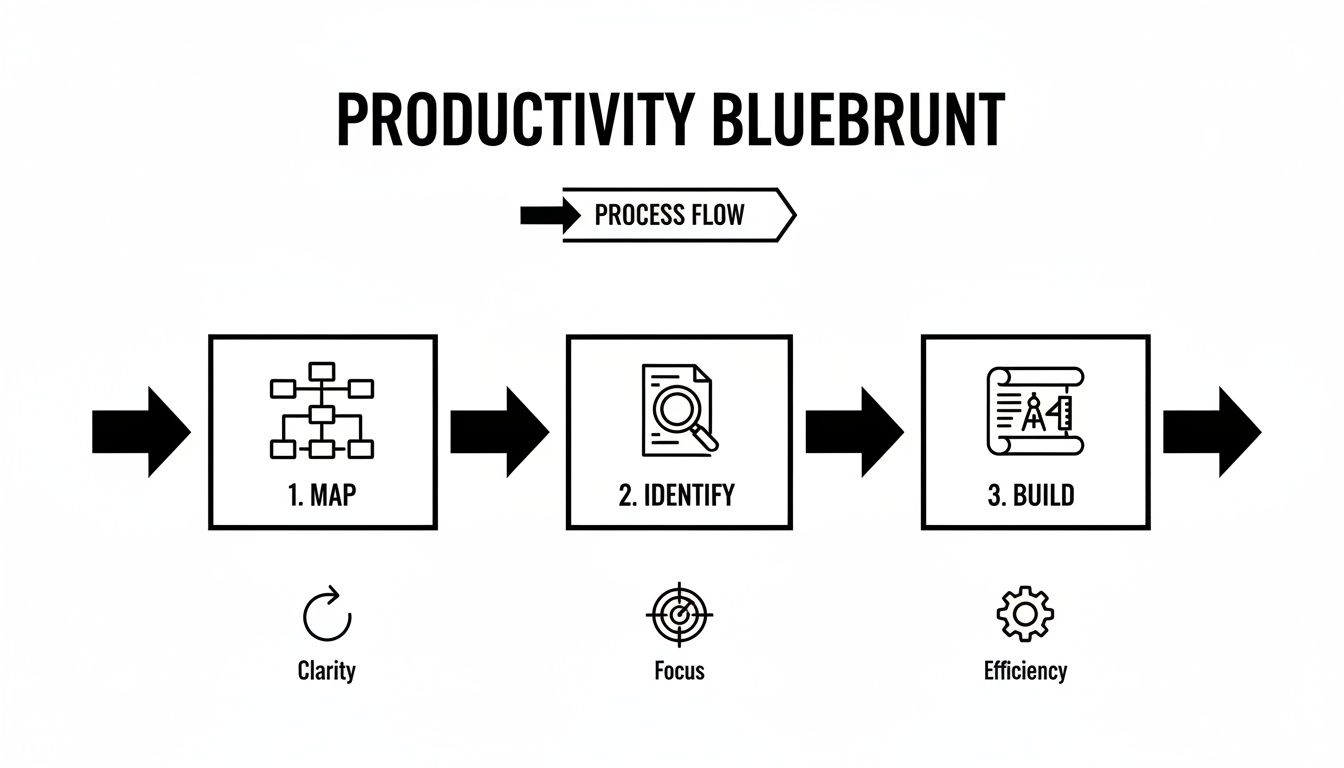
By following this approach, you ensure your final setup is a true reflection of how you work, smoothing out the friction in your daily routine.
One of the most effective ways to organize your desk is by using "zones of reach." It’s a simple concept that divides your desk into three areas based on how often you need to grab something.
Primary Zone: This is your command center. It’s the space you can easily reach without moving your elbows from their resting position. This valuable real estate should be reserved for your absolute must-haves: your keyboard, mouse, and maybe your daily notebook.
Secondary Zone: Just beyond your primary zone, this area is for things you use frequently but not constantly. You can reach them just by extending your arm. It’s the perfect spot for your phone, a cup of pens, or your water bottle.
Tertiary Zone: This is the outer rim of your desk—the space that requires a little lean or stretch to get to. It's ideal for items you only need once in a while, like a stapler, reference books, or decorative items.
Organizing this way makes every movement intentional. You're no longer hunting for things; everything you need is right where it should be, keeping you in the flow.
Your chair, monitor, and keyboard are the core trio of a comfortable workspace. Getting their positions just right is non-negotiable for avoiding that all-too-common neck, shoulder, and back strain.
Start with your chair. Adjust the height until your feet are resting flat on the floor, with your knees bent at about a 90-degree angle. Your forearms should be parallel to the floor, creating another 90-degree angle at the elbow.
Next, let's talk about your monitor. Position it about an arm's length away, with the top of the screen at or just slightly below your eye level. This tiny adjustment makes a massive difference, preventing you from hunching forward and straining your neck. If you’re starting from square one, our guide on how to set up a home office has even more foundational advice.
The goal isn't to lock yourself into one perfect, rigid posture. It’s about creating a neutral, comfortable base. Your body needs to move, so the best setups are those that support your natural alignment and allow for small shifts throughout the day.
A clear desk really is the foundation for a clear mind. So, let’s get past the endless cycle of tidying up only to have clutter creep back in. We're going to build an organizational system that actually sticks—a space where every single item has a logical, intuitive home, making focus the default setting for your workday.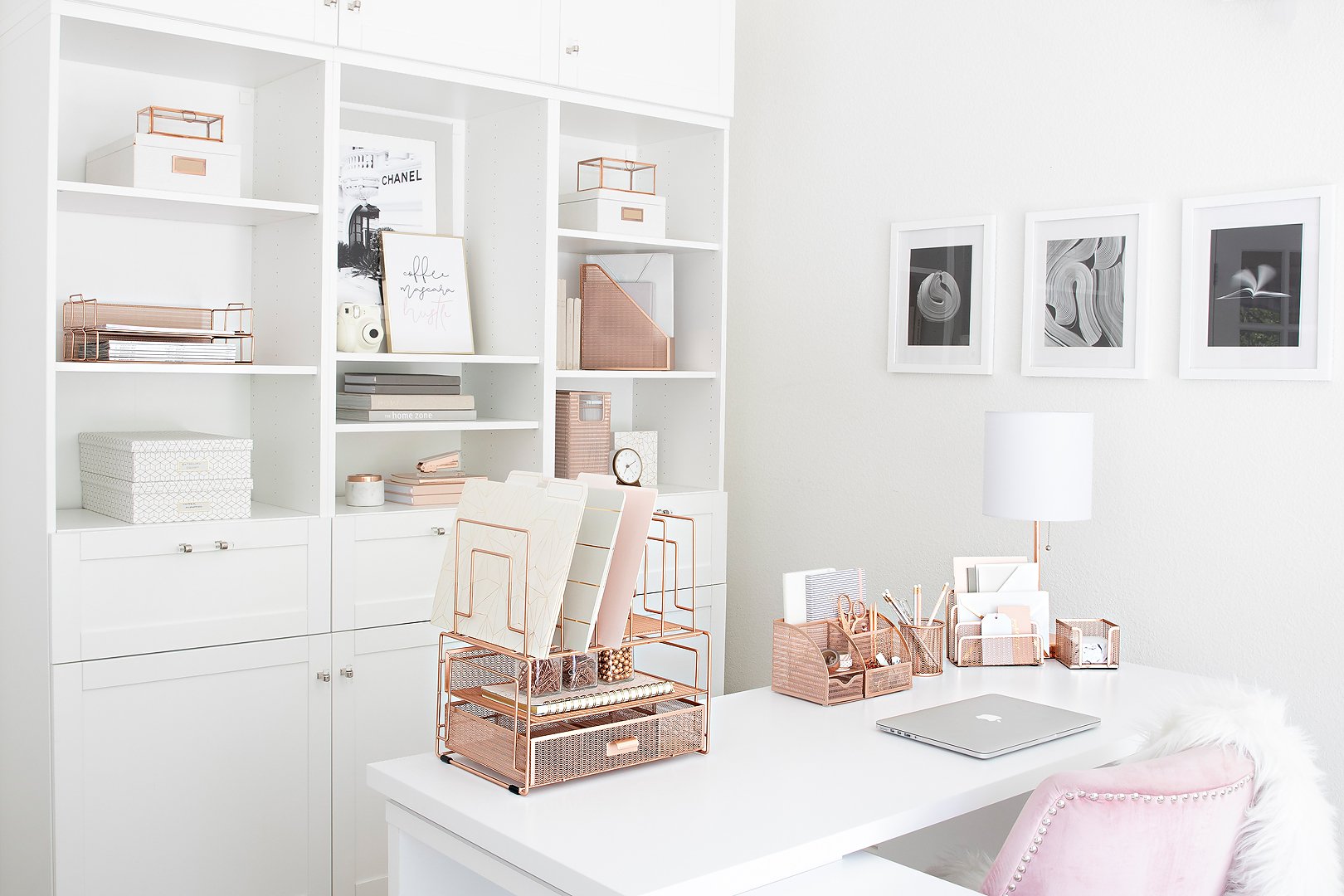
True, lasting organization isn’t about a one-time cleaning marathon. It’s about creating sustainable habits. The goal is to make putting things away just as effortless as taking them out. When your environment is set up to support your workflow, you stop wasting precious mental energy on managing mess and can pour all that energy into what truly matters.
Your desktop is prime real estate. It's meant for the task at hand, not for long-term storage. One of the most powerful moves you can make to keep your surface clear is to start thinking vertically. This simple shift in perspective opens up a whole new world of organizational possibilities.
Wall Grids: A stylish wall grid instantly becomes a customizable command center for your most-used tools. Use a few clips and small baskets to hang everything from pens and scissors to important reminders and bits of inspiration.
Floating Shelves: Installing a shelf or two just above your desk creates the perfect home for reference books, a few plants, or personal items that bring you joy without crowding your immediate work area.
Tiered Document Trays: Instead of letting papers sprawl across your desk, a tiered tray—like Blu Monaco’s gold mesh letter tray—stacks them neatly. It uses vertical space to keep your workflow organized and, just as importantly, visible.
By moving items off your desk and onto the walls, you reclaim that primary work zone for pure focus and creativity.
The core principle here is simple: Design a system that is easy to maintain. If an item’s "home" is a hassle to get to, it will inevitably end up as clutter. Make organization the path of least resistance.
Visual noise is a very real thing, and it's a huge drain on your focus. A jumble of mismatched, clashing items creates a subtle, underlying sense of chaos that your brain has to constantly work to filter out. This is where the power of a cohesive aesthetic comes into play.
Choosing a matching set of organizers, like a coordinated pen holder, mail sorter, and file holder, does so much more than just look good. It creates a feeling of visual calm and intentional order. This harmony smooths out mental friction, allowing your mind to settle into deep work much more easily. Think of it as a uniform for your desk—it signals professionalism and purpose.
This idea of a controlled, personal workspace is more critical than ever. Research continually highlights how profoundly our surroundings impact our output. For instance, one study found that open-office layouts can tank productivity by a staggering 66% because of the constant noise and interruptions. Creating your own dedicated, organized desk at home is your best defense against distraction. It gives you a controlled environment designed for success. You can dig into more workplace productivity statistics that really drive this point home.
Nothing ruins a clean, organized desk faster than a tangled nest of cables. This "cable spaghetti" isn't just an eyesore; it can be a real time-waster when you're fumbling to unplug a specific device. Thankfully, a few simple tools can restore order in minutes.
Cable Clips: These little adhesive clips are a game-changer. Stick them on the back or underside of your desk to guide wires neatly along a clean path.
Velcro Ties: Use a few reusable ties to bundle groups of cables together, like all the ones running from your monitor or computer. Instant improvement.
Cable Management Box: This is the ultimate fix. A simple box hides your entire power strip and all those bulky plugs, creating a clean look in one easy step.
Taking just ten minutes to implement a cable management system is one of the highest-impact changes you can make. It will immediately transform your desk from chaotic to controlled.
A truly productive space is about so much more than just efficiency. It’s about building an environment that actually energizes and inspires you. Once you’ve nailed down the functional layout, it’s time for the fun part: infusing your workspace with personality. This is where your desk stops being just furniture and starts becoming a personal sanctuary for creativity.
Believe it or not, the small details make all the difference. These are the touches that make a space feel like yours, transforming long work sessions into something far more enjoyable and sustainable.
Color is more than just eye candy; it's a psychological tool that can genuinely shift your mood and sharpen your focus. A well-chosen color palette instantly cuts down on visual noise and can subtly nudge you into the right mindset for the work you need to do.
For Calm and Focus: Think about blues and greens. These colors are known for their calming effects, which is perfect when you need to concentrate on detail-oriented tasks.
For Energy and Creativity: Warmer tones like soft yellows or even a pop of gold can spark optimism and energy. Something as simple as a gold pen holder can feel surprisingly motivating on a tough day.
For Clarity and Simplicity: You can never go wrong with a clean, neutral palette. Whites, grays, and natural wood tones create a minimalist backdrop that keeps distractions at bay and promotes a sense of calm order.
Think about how different colors make you feel and pick a scheme that matches your work style. Even just a few coordinated accessories can pull your entire desk together, making it feel more intentional and harmonious. For more great examples of this, check out these home office organization ideas that masterfully blend style with function.
Bad lighting is a classic productivity killer. It’s the hidden culprit behind eye strain, headaches, and that afternoon slump you just can't shake. The best desk setups treat lighting as a top priority, layering different sources to support you throughout the day.
Your first move? Maximize natural light. If you can, place your desk near a window. Just be mindful of the angle to avoid direct glare on your screen. Study after study confirms that natural light is a massive mood and alertness booster.
Next, add a dedicated task lamp for focused work. This is non-negotiable. Look for one with an adjustable arm so you can point the light exactly where you need it. Even better, find a lamp with adjustable color temperatures—a cool, bluish light is fantastic for intense focus, while a warmer, yellow light helps you ease into the evening.
A well-lit workspace is a direct investment in your health. It fights off visual fatigue, helping you stay focused longer without feeling completely drained.
Finally, make it personal. Add a small plant, a framed photo of someone you love, or a piece of art that makes you smile. These are the little things that forge a positive connection to your work, fostering that deep sense of well-being that is the true foundation of productivity that lasts.
It's one thing to talk about the theory of a productive workspace, but seeing it come to life is where the real inspiration strikes. This isn't just about cleaning up a messy desk. It’s about creating an environment that actively helps you think, create, and get things done.
These stories show just how powerful a thoughtfully designed desk layout can be in solving everyday frustrations.
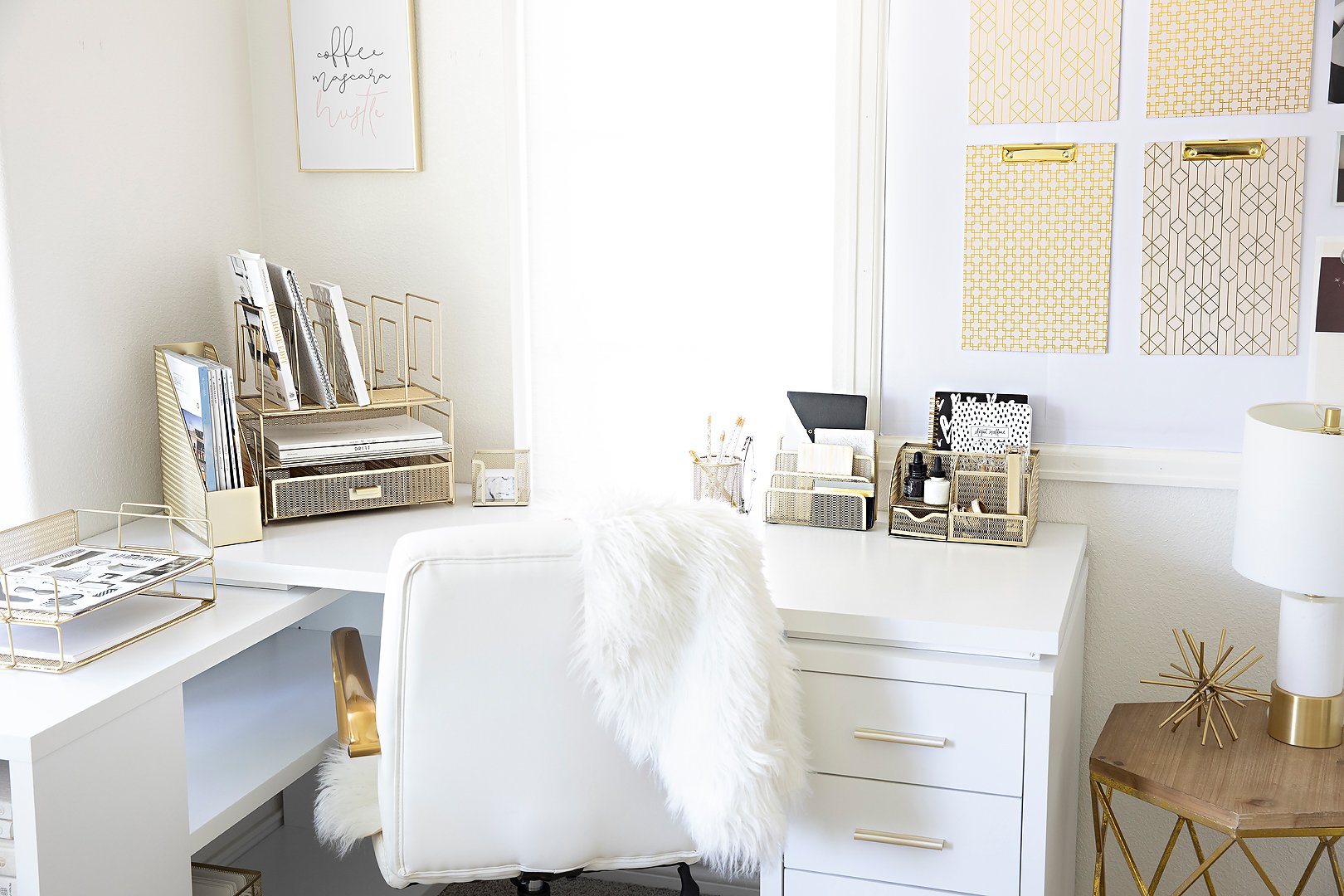
Let's dive into a couple of real-life examples where people turned chaotic corners into havens of focus.
First up, meet Sarah. As a freelance writer, her desk had become a graveyard of old notebooks, stray pens, and teetering stacks of research papers. Her biggest battle? Constant distraction. Every time she tried to sink into a creative flow, the visual noise around her would pull her right back out.
Her solution was a bold move toward minimalism, paired with some clever vertical storage.
The Struggle: Her desk surface was so buried in clutter that deep, focused work felt impossible. This led to procrastination and a scattered mind.
The Fix: She took everything off her desk except for the absolute essentials: her laptop, keyboard, and a single notebook. To handle the rest, she installed a wall grid organizer just above her monitor.
The Payoff: Pens, scissors, and active notes found a new home on the grid, instantly freeing up her primary workspace. This simple shift created a dedicated zone for writing and dramatically improved her ability to stay on task.
By getting non-essentials out of her immediate line of sight, Sarah built a true sanctuary for focus.
Next is Ben, a project manager juggling three massive client accounts. His desk was an explosion of color-coded folders, sticky notes, and project binders with zero rhyme or reason. He was losing precious time every single day just searching for the right document, which added a layer of constant, low-level stress to his work.
A disorganized physical space often mirrors a disorganized mental state. Creating order on your desk is one of the fastest ways to bring clarity and control back to your workflow.
Ben's breakthrough came from getting serious about zoning and filing.
He started by assigning a specific, stackable letter tray to each of his three main clients, keeping all active papers for each project contained yet visible. Then, he used matching file holders and folders to create a clean, cohesive look that cut down on the visual chaos.
Finally, he made a rule: at the end of each day, any notes that didn't need to be physical were digitized. This simple habit stopped new clutter from ever taking root. His systematic approach gave him an at-a-glance command center for all his projects, restoring his sense of control and calm.
Interestingly, while a personalized home office can be a game-changer, recent workplace studies show that context is everything. Research found that for tasks like team meetings and managing others, workers feel 51% more productive in a traditional office setting. This really highlights how the "best" layout is deeply connected to the specific work you do.
You can dig deeper into how office layouts impact productivity to see how different environments support different kinds of tasks. At the end of the day, these stories prove that your desk isn't just furniture—it's a powerful tool for success.
You’ve done it. You’ve sculpted the perfect desk layout, a space that truly fuels your best work. But let's be honest, the real victory isn't just in the initial setup; it's in keeping that focused, creative energy humming day after day. A pristine workspace can slide back into chaos surprisingly fast without a few simple habits. This is where we turn a great design into a lasting routine.
The secret to a workspace that stays organized isn’t about marathon cleaning sessions. It’s all about consistency. You don't need a huge weekly overhaul. Instead, a few small, daily actions will preserve the sense of calm and control you worked so hard to build.
If there's one habit I've seen make the biggest difference, it's the 'End-of-Day Reset.' Think of it as a simple, five-minute ritual that officially closes out your workday and sets your future self up for success. Before you shut down your computer, take just a moment to bring your desk back to its ideal state.
Wipe the Slate Clean: File away loose papers, pop pens back in their holder, and give your desktop a quick wipe.
Reset Your Tools: Put your keyboard, mouse, and planner back in their designated homes.
Look Ahead: Glance at tomorrow's calendar and quickly jot down your top three priorities.
This little routine does so much more than just clean up. It creates a mental boundary, telling your brain that work is officially done for the day. Walking up to a clear, prepared desk in the morning is a game-changer—it removes that initial friction and lets you dive right into what matters most.
A clean desk at the end of the day is a gift to your future self. It’s a promise of a fresh, focused start, free from yesterday's mental and physical clutter.
To stop clutter from creeping back in, you need to be proactive. Schedule brief, regular check-ins with your space, almost like preventative maintenance for your productivity. A quick weekly review keeps you on top of the small stuff, while a monthly check-in makes sure your setup is still meeting your needs.
Every Friday afternoon, I recommend taking just ten minutes. Use this time to sort through any papers that have piled up, clear out your computer’s downloads folder, and organize your digital files. It’s a small investment that pays huge dividends.
Once a month, take a step back and look at the bigger picture. Is your current layout still genuinely working for you? As projects shift, you might realize you need to swap out the tools in your primary work zone or rethink your filing system. Remember, the most productive desk is a living system, not a static display. It should evolve right along with you.
Ready to build a workspace that’s as inspiring as it is organized? Dive into the full range of stylish and functional desk accessories from Blu Monaco and start creating your own productive oasis. Find the perfect collection to match your style and get started today.


