No products in the cart.

When you decide to set up a home office, you're doing more than just picking a spot for your laptop. You're consciously creating a space that draws a line between your work life and your personal life, which is absolutely critical for focus and well-being.
At its heart, it comes down to three things: a great location, thoughtful ergonomics, and smart organization. Think of it as building your own personal command center, a place where productivity and style can finally work together.
The move to remote work has been a game-changer. It’s not just about where you work, but how you work—and you now have the power to design an environment that truly helps you thrive. The days of balancing a laptop on the kitchen counter are over. Building a dedicated home office is about carving out a sanctuary for productivity, a space that respects the all-important boundary between your job and your life.
This guide is your blueprint for creating something permanent and powerful. We’ll walk through how to build a workspace that’s not just functional, but genuinely inspiring. The goal here is to craft a space you actually want to be in every morning, one that supports your health, sharpens your focus, and shows off your personal style.
A truly effective home office is an entire ecosystem built around your workflow and mental clarity—not just a desk and a chair. To get it right, you need to focus on a few key elements:
A Defined Boundary: Physically separating your workspace sends a powerful signal to your brain. Even if it’s just a designated corner, it tells you, "It's time to focus."
Ergonomic Support: Your health comes first. A proper setup prevents the aches, pains, and physical strain that can quickly lead to burnout.
Systematic Organization: A cluttered desk leads to a cluttered mind. It’s that simple. Creating easy-to-use systems keeps your tools handy and distractions out of sight.
Hybrid work is clearly here to stay. A 2023 report from Owl Labs found that a staggering 81% of workers prefer a hybrid or fully remote job, making a well-designed home office more of a necessity than a luxury. Think about it—a disorganized desk can quietly eat away at your valuable time. That’s why smart solutions, from simple filing systems to coordinated desk sets, are so crucial for keeping you efficient.
Your home office is your personal headquarters. It should empower you to conquer your daily tasks with confidence and ease, not add to your stress.
Start thinking of your office as more than just a place to work—it's your command center. Every single choice, from the layout of your furniture to the smallest desk accessory, impacts your effectiveness and mood. A well-organized space means you can find what you need in an instant, keeping your creative flow uninterrupted.
And when you pair that organized space with one of our stylish and functional weekly planners, you’ll find it’s easier than ever to stay on top of your daily tasks.
Let’s dive in. This guide will walk you through every step of how to set up a home office, turning any corner of your home into a productive and stylish retreat where your best ideas can truly come to life.
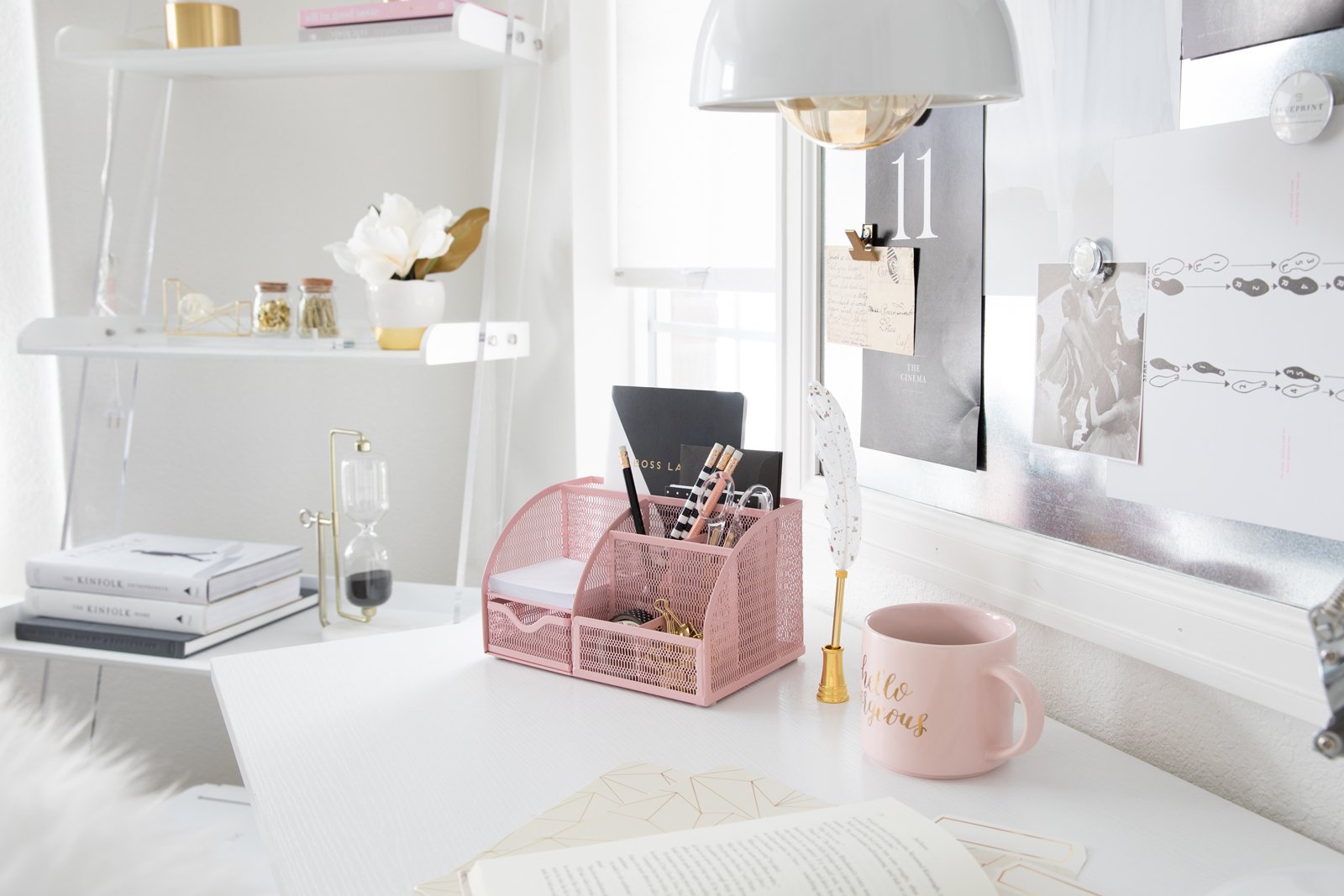
The real foundation of a great home office isn't the fancy tech or the ergonomic chair—it's the space itself. Before you think about anything else, finding the right spot in your home is the most important first step you can take. This is where you'll create an environment that helps you focus, create, and feel genuinely inspired.
This is about so much more than just clearing out a corner. You're claiming a territory dedicated entirely to your professional life.
It doesn't matter if you have a whole spare room or just a tiny nook to work with. The goal is always the same: to build a clear physical and mental boundary. This separation is what allows you to truly switch "on" when you start your day and, just as crucially, switch "off" when it’s time to close the laptop.
Before you even think about moving a single piece of furniture, take a walk through your home with a fresh pair of eyes. I promise, your perfect spot might be hiding in plain sight. Think about the flow of your day, where the foot traffic is, and what you personally need to get in the zone.
Here are a few potential locations and how you can make them your own:
The Dedicated Room: This is the gold standard, of course. A spare bedroom or an unused den gives you the ultimate separation. You can literally close the door on distractions and own the space completely.
The Multi-Purpose Guest Room: Let's be honest, that guest room probably sits empty most of the time. It's prime real estate! A sleek desk can easily share the space, or you could get creative with a Murphy bed or a stylish daybed to free up the floor.
The Unused Nook: Look for those forgotten spaces—the awkward corner in the living room, the area under the stairs, or even a wide hallway. These can be transformed into a surprisingly effective "cloffice" (a closet office) or a cozy micro-workspace.
A Divided Living Area: If you live in an open-concept space, you can still create a defined office zone. Use a bookshelf, a decorative screen, or even just a large rug to visually fence off your desk from the rest of the room.
The most important thing is to pick a spot with the fewest possible interruptions. It’s not just a feeling; a recent study found it can take over 23 minutes to get your focus back after just one distraction. That’s why a low-traffic area is absolutely essential for deep, meaningful work.
Okay, you've claimed your territory. Now it’s time to think like a designer and plan the layout. A well-thought-out floor plan can make even the tiniest space feel open, efficient, and intuitive. Think of it as choreographing your workday so every movement feels effortless.
Start with the non-negotiables. Where are the power outlets? Where does the natural light fall throughout the day? Trust me, figuring this out now will save you a ton of frustration down the road.
Your office layout should serve you, not the other way around. Design for comfort, access, and movement to create a space that feels like a natural extension of your workflow.
To build a layout that truly works, let's zero in on a few core elements. These are the building blocks of a workspace that will support your productivity and well-being every single day.
Natural Light and Views
If you can, position your desk near a window. The difference it makes to your mood and energy is incredible. Natural light is proven to reduce eye strain and headaches. If you find a window view too distracting, try orienting your desk so the light comes from the side. This illuminates your work area without causing that annoying glare on your screen.
The Power and Connectivity Hub
There's nothing that kills your flow faster than crawling under your desk to find a free outlet. Plan your entire layout around your power sources. A pro tip: get a good surge protector and mount it to the underside of your desk. This keeps your laptop, monitor, and phone chargers right where you need them, leaving your space clean and functional.
Creating Clear Pathways
This one sounds simple, but it's often overlooked. Make sure you have enough room to move around your desk and get in and out of your chair without feeling boxed in. This small detail not only prevents frustration but also makes the whole room feel larger and more organized. A good rule of thumb is to aim for at least three feet of clearance behind your chair—it makes a world of difference.
Alright, you’ve scouted the perfect location and sketched out a floor plan. Now for the really fun part—outfitting your new workspace. This is where your home office truly starts to take shape, transforming from an idea or an empty corner into a real hub for productivity and, just as importantly, comfort. You’re not just filling a space; you're making smart investments in the tools that will support you day in and day out.
The guiding principle here is ergonomics. I know, it sounds like a clinical buzzword, but it's really just the science of making your workspace fit you. Getting this right is what prevents the all-too-common back pain, neck aches, and general burnout that can creep in when you're working from home. Think of it this way: ergonomic furniture isn’t a luxury—it’s a non-negotiable for your long-term health and focus.
Your desk and chair are the command center of your office. They’re the two pieces you'll interact with more than anything else, and they have a direct line to your comfort and posture for hours every single day.
Let’s start with your office chair. Honestly, this might be the most important tool you buy. A truly great ergonomic chair will have adjustable height, a backrest that tilts, and—this is crucial—solid lumbar support to keep the natural curve in your spine. Look for armrests you can position so your shoulders stay relaxed, not hunched up by your ears. A good chair can be the difference between ending your day feeling energized or feeling completely wiped out.
Your desk is the other half of this power duo. I’m a huge advocate for standing desks, or at least a sit-stand converter. Being able to change your position throughout the day is a game-changer for energy levels and can dramatically reduce back pain. The goal, whether you're sitting or standing, is to have your desk at a height where your elbows can rest at a comfortable 90-degree angle while typing, keeping your wrists nice and straight.
Your body is your most valuable asset. Investing in furniture that protects it isn't an expense; it's a foundational part of setting up a home office that will support you for years to come.
With your ergonomic foundation set, let's talk tech. While everyone's needs are a little different depending on their job, there are a few core pieces that are pretty much essential for everyone.
Your Monitor and Visual Setup
Trying to work all day on a small laptop screen is a fast track to neck strain. Trust me, an external monitor will revolutionize both your posture and your productivity.
Positioning is Key: Aim to have the top of your monitor screen at or just a hair below your eye level. This simple adjustment stops you from hunching over or craning your neck.
Distance Matters: A good rule of thumb is to place the monitor about an arm's length away. This helps cut down on digital eye strain without making you squint to see the screen.
Consider a Dual Setup: If your work has you constantly juggling different apps or browser tabs, a second monitor can be an incredible workflow boost. No more toggling back and forth between windows a hundred times a day.
Lighting and Connectivity
Two often-overlooked elements can make or break your day: lighting and internet. Bad lighting can bring on headaches and fatigue, and we all know a weak internet connection is the ultimate productivity killer.
A good desk lamp with adjustable brightness and color temperature is a fantastic addition. It lets you customize the light for the task at hand or the time of day. As for connectivity, don't just assume the router "somewhere in the house" is good enough. If your office is on the other side of the home, look into a Wi-Fi mesh system or a powerline adapter to guarantee a strong, stable connection. A solid signal means no more dropped video calls or painfully slow file downloads.
Once you've got the essentials nailed down, a few extra pieces of tech can elevate your setup from just functional to truly phenomenal. These are the tools that help minimize distractions and lock you into that deep-focus flow state.
Noise-canceling headphones are an absolute must if you share your home or live in a noisy neighborhood. They create an instant bubble of quiet that signals to your brain—and everyone else—that it's time to focus.
Finally, think about how you corral all your daily bits and pieces. A clear desk really does lead to a clear mind. A set of thoughtfully designed desk organizers gives everything from pens and notebooks to your phone a proper home. For a really polished look, you can explore cohesive collections, like the ones from Blu Monaco, that help you build a stylish and unified organization system to keep the clutter from taking over.
By being intentional with each piece of furniture and technology you choose, you’re building more than just a place to log on—you're crafting an environment designed for your success.
A clear desk really does lead to a clear mind. We've talked about furniture and layout, but the real magic in a productive home office comes from the simple, repeatable systems you build to manage the daily flood of stuff. This is where we go from just having a workspace to truly mastering it.
Organization isn't a one-time project; it's a daily habit. It all starts with one core idea: every single item on your desk, from a pen to a paperclip, needs a designated home. When things have a place to live, tidying up becomes a natural reflex instead of a monumental chore you dread all week.
This infographic breaks down the ergonomic tools that create a healthy foundation for an organized desk.
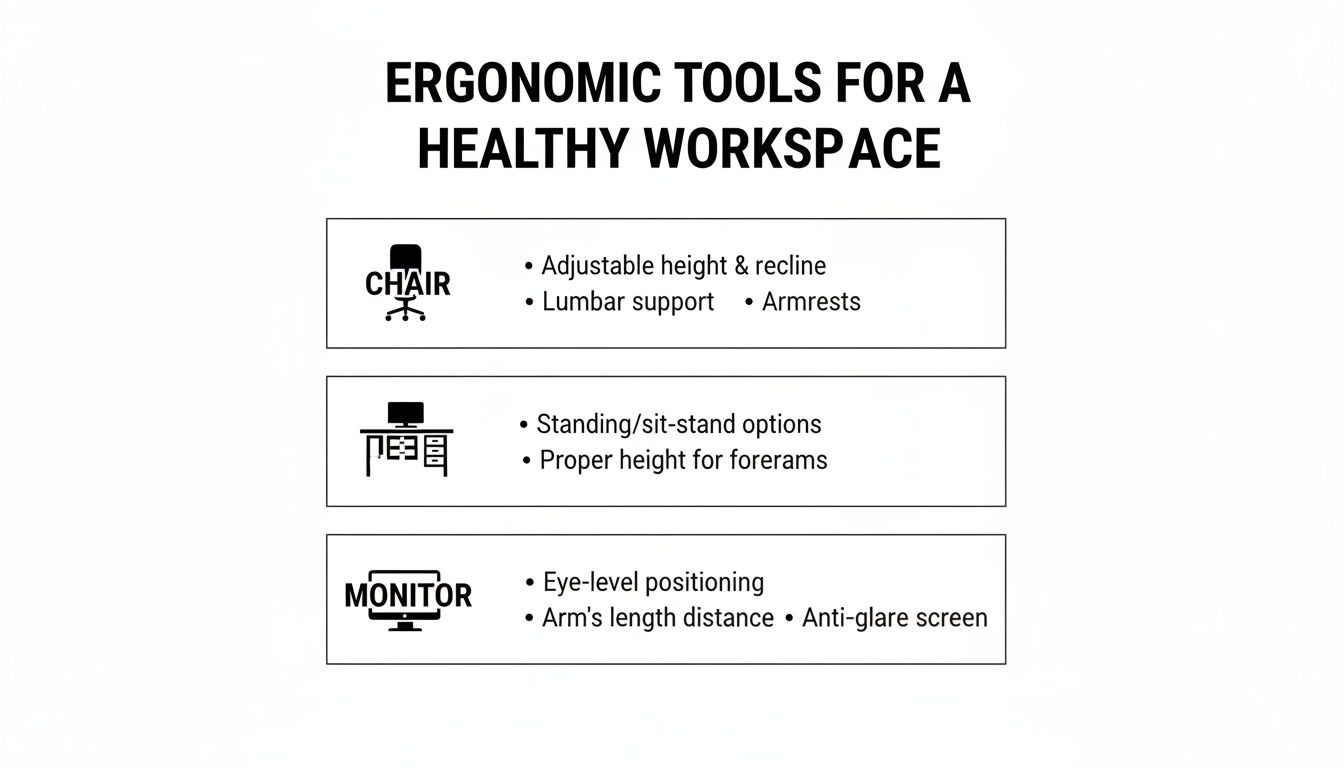
Think of an adjustable chair and a properly sized desk as the sturdy shelving for your body and your workflow—they create the structure you need to support everything else.
The first step to taming the chaos is to group like with like. Think in simple categories: things you write with, papers, tech accessories, and daily go-tos. This is where a great desk set can make a huge difference, not just for function but for bringing your style to life.
Try using a multi-compartment organizer for your pens, highlighters, and scissors. A letter tray can be the official landing zone for incoming mail or documents needing your attention. When you use coordinated pieces, you're creating a visual language for your organization that makes your desk look intentional and pulled-together.
The goal isn't just to have a tidy desk. It's to create an environment where your mind is free to focus on what actually matters—your work.
Even now, paper clutter can feel like an endless battle. The key is to create a simple, active filing system. You don't need a giant, clunky cabinet; a compact desktop file sorter can be incredibly powerful for managing current projects, bills to pay, and documents to file later.
Then, apply that same logic to your digital world. Your computer's folder structure should mirror your physical system. A few key folders could be:
01_Projects_In_Progress: For all your active work.
02_Reference_Materials: For articles, research, and resources you need to keep.
03_Admin_And_Finance: For invoices, receipts, and important business documents.
04_Archive: For completed projects you might need to look back on.
When you create parallel systems for physical and digital files, you eliminate that mental friction of trying to remember where you saved something. For a deeper dive, you can explore tons of great home office organization ideas to help refine your approach.
If you're looking for a quick way to get started, a complete desk set is the way to go. Here's a look at some of our favorite Blu Monaco collections to help you find your perfect match.
| Collection | Color/Finish | Best For | Key Pieces Included |
|---|---|---|---|
| Gold Wire Collection | Polished Gold Metal | Modern, minimalist, and glam aesthetics | Pen cup, letter sorter, sticky note holder, file organizer |
| Teal Wood Collection | Vibrant Teal Woodgrain | Adding a bold, cheerful pop of color | 5-piece set: mail sorter, pen cup, file holder, note holder |
| Classic Black Mesh | Matte Black Metal | Industrial, functional, and timeless setups | 6-piece set: letter tray, pen cup, sorter, note holder |
| Rose Gold Collection | Chic Rose Gold | Trendy, feminine, and sophisticated offices | 5-piece set: hanging file organizer, pen cup, letter tray |
Whether you go for chic rose gold or classic black mesh, starting with a coordinated set instantly makes your desk feel more unified and under control.
Nothing ruins the vibe of a beautifully organized desk faster than a tangled mess of wires. Cable management is the final frontier in creating a truly peaceful workspace. That "wire spaghetti" behind your monitor isn't just an eyesore—it’s a dust magnet that makes plugging anything in a total pain.
The good news? Taming this beast is easier than it looks. Start by unplugging everything and figuring out what each cable actually does. From there, a few simple tools can create a clean, streamlined setup.
My Go-To Cable Management Tools:
Cable Sleeves: These fabric tubes are brilliant for bundling a bunch of cords into one clean channel running from your desk to the power strip.
Velcro Ties: Way better than zip ties because they're adjustable. Use them to group wires heading in the same direction, like from your monitor to your laptop.
Adhesive Cable Clips: These tiny clips stick to the back or underside of your desk, letting you guide individual cords along a hidden path.
Under-Desk Cable Tray: This is the ultimate move. It's a wire basket that mounts right under your desk to hold the power strip and all the extra cable length, getting everything off the floor for good.
Seriously, take 30 minutes to implement a cable management system. It's a small effort that pays off big time in daily satisfaction and visual peace.
Alright, you've got the essentials in place—the desk, the chair, the tech. Now comes the best part: making the space feel like yours. This is where we move past pure function and start injecting your personality into the room. It’s this final touch that transforms a sterile work area into a place you genuinely look forward to entering each morning.
These finishing touches are more than just fluff. They're powerful little tools for your motivation and well-being. The goal here is to strike a balance, creating a space that reflects who you are while still feeling professional, uncluttered, and ready for deep focus. It's about building a personal sanctuary that fuels your best work.
Color is a funny thing; it has a surprisingly big impact on our mood and productivity. The colors you surround yourself with can either fire up your brain for a creative session or calm it down for detail-oriented tasks. Knowing this, you can intentionally build a color palette that actually supports the way you work.
Take a moment to think about what your day-to-day work looks like. Are you a writer who needs total zen, or a designer who thrives on a jolt of energy?
For Calm and Focus: You can't go wrong with blues and greens. Blue is known to help with concentration and a feeling of stability. Green is easy on the eyes (literally reducing strain) and is often associated with balance.
For Creativity and Energy: If you need to think outside the box, try adding pops of yellow or orange. Yellow can spark creativity and optimism, while orange brings a sense of enthusiasm. The key word here is pops—use them as accents so they don’t become overwhelming.
You don't have to repaint the walls to get these benefits. A piece of art, a colorful mousepad, or a vibrant set of desk accessories can do the trick without any major commitment.
Personalizing your office is a delicate dance. You want to be surrounded by things that inspire you, but you have to stop short of creating visual noise that just becomes a distraction. The secret is to be incredibly selective and intentional with every single item you bring into your workspace.
A few well-chosen personal items can make your office feel like a supportive, welcoming extension of you. This is how you really put your stamp on the space.
Meaningful Decor, Mindful Placement
Instead of scattering random trinkets across your desk, pick a few things that hold real meaning. A framed photo of people you love, a piece of art from a favorite trip, or a small plant can give you a welcome mental break during a hectic day. The trick I've found is to group these items together in one zone—maybe on a floating shelf or in a specific corner of your desk. This way, they feel contained and purposeful, not like clutter.
Your home office should be a reflection of your professional aspirations and personal identity. Curate it with items that tell your story and remind you of your "why."
Want to know the secret to a polished, put-together home office? Cohesion. This is where color-coordinated accessories become your secret weapon. When your pen holder, file sorter, and letter tray all share a common color or finish, it creates an instant sense of order and intention. It sends a message that every detail was thought through.
This is the final, crucial step in setting up a home office that feels both incredibly functional and genuinely beautiful. It’s what pulls the entire space together, elevating it from a random collection of stuff into a unified, thoughtful design.
Imagine a desk where all your organizational tools have a sleek, modern gold finish. Or maybe you'd prefer a calming aqua to bring a bit of a coastal vibe to your workday. Brands like Blu Monaco are fantastic for this because they offer complete collections in different finishes—from rose gold and teal wood to classic black mesh—making it simple to get that cohesive look.
This isn’t just about looking good, either. It actually simplifies your organizational system. When every piece works together, it reinforces the idea that everything has a home, making it so much easier to keep your desk tidy and inspiring, day in and day out. This is the final layer that turns your workspace into a true command center for success.
Even with the perfect plan, you're bound to run into a few little hiccups when putting together your home office. It’s totally normal! Let’s walk through some of the most common questions I hear and get you some practical answers to make your space one you genuinely love working in.
Think of this as the fine-tuning phase. Sometimes, one small change can completely transform your day-to-day comfort and focus.
This is the big one, and the answer might surprise you: probably a lot less than you think. You don't need a spare bedroom with a locking door to create a productive workspace. What truly matters is establishing a clear psychological boundary, not necessarily a physical one.
A quiet corner in your living room, a small nook under the stairs, or even a section of your countertop can work wonders. If you have room for a small desk and a good chair, you're in business. The real magic happens when you start thinking vertically—wall shelves and smart organizers give you tons of storage without taking up precious floor space.
The success of your home office isn't about square footage. It’s about how well that space protects your focus and keeps you in the zone, no matter how small it is.
Let's be real: working from home often means sharing your "office" with kids, partners, roommates, and pets. Getting a handle on interruptions is absolutely key if you want to get any deep work done. You can’t silence the world, but you can definitely build your own little bubble of concentration.
Noise-Canceling Headphones: I consider these an essential piece of equipment. They're the single fastest way to block out household chaos and send a clear "I'm working" signal to everyone around you.
Create "Do Not Disturb" Cues: Something as simple as a small sign on your desk can work wonders. If you do have a door, keeping it closed sets a powerful boundary.
Work with Your Household's Rhythm: Try to schedule your most demanding tasks for naturally quieter times, like early in the morning before everyone else is up, or while the kids are at school.
For a lot of people, the toughest part is staying motivated without the built-in structure of a traditional office. The secret is to create your own routines—little rituals that tell your brain when it’s time to work and when it’s time to switch off.
This could be as simple as starting your morning with a quick walk around the block, changing out of your pajamas, or taking five minutes to tidy your desk before you sign off for the day. These small, consistent habits provide the framework you need to stay focused and, just as importantly, to protect your work-life balance. Your environment shapes your mindset, and a space that’s organized and inspiring is your best secret weapon for staying productive.
Ready to build a workspace that’s not just functional, but genuinely inspiring? Check out the beautiful, color-coordinated collections from Blu Monaco. You'll find everything you need to pull your space together and get those creative juices flowing. Find your perfect style at https://www.blumonaco.com.


