No products in the cart.

Let's be honest, your desk isn't just a desk—it's the command center for your entire classroom. It's mission control. Thinking about it that way, as the calm, functional heart of your teaching universe, is the first step toward transforming it from a pile of papers into a powerful tool that works for you, not against you.
This isn't just about being tidy. It’s about creating a strategic space that saves you time and, more importantly, mental energy.
The single most effective strategy I've ever used is zoning. It's a simple idea with a huge impact: you map out dedicated areas on and around your desk for specific, recurring tasks. Instead of one big, chaotic surface where everything lands, you create intentional spaces that guide your workflow and make your movements almost automatic.
Think about the different hats you wear in a single day. You're a planner, an instructor, an evaluator, and a person who needs a coffee cup that won't get knocked over. Each of those roles deserves its own little piece of real estate on your desk. The goal here is to eliminate that "Now, where did I put the...?" feeling that drains your focus.
Start by sketching out your core activities. Most teachers find they fall into these categories:
The Teaching Zone: This is your primary action station, right in the center. It’s where your laptop or monitor lives. Keep this space sacred! The only things allowed here are the tools you need for the lesson at hand—your daily planner, a pen, maybe a notepad for quick thoughts. Nothing else.
The Grading Zone: This is home to the "to-be-graded" tray and all your favorite grading supplies, like those flair pens and sticky notes we all love. Here’s a pro-tip I swear by: place this zone on your non-dominant side. If you're right-handed, put it on your left. This keeps your main workspace completely clear and ready for action.
The Planning Zone: This is your forward-thinking space. It’s where you keep your curriculum binders, long-range calendars, and big-picture plans. This is where you look ahead and map out what's coming next week, next month, or next semester.
The Personal Zone: You're a human, not a teaching robot! Carve out a small, dedicated spot for your personal items—your water bottle, your phone, maybe a little plant or a framed photo that makes you smile. Keeping these things contained ensures they feel like a comfort, not clutter.
This concept map really brings the idea of zoning to life, showing how you can divide your desk into a truly functional command center.
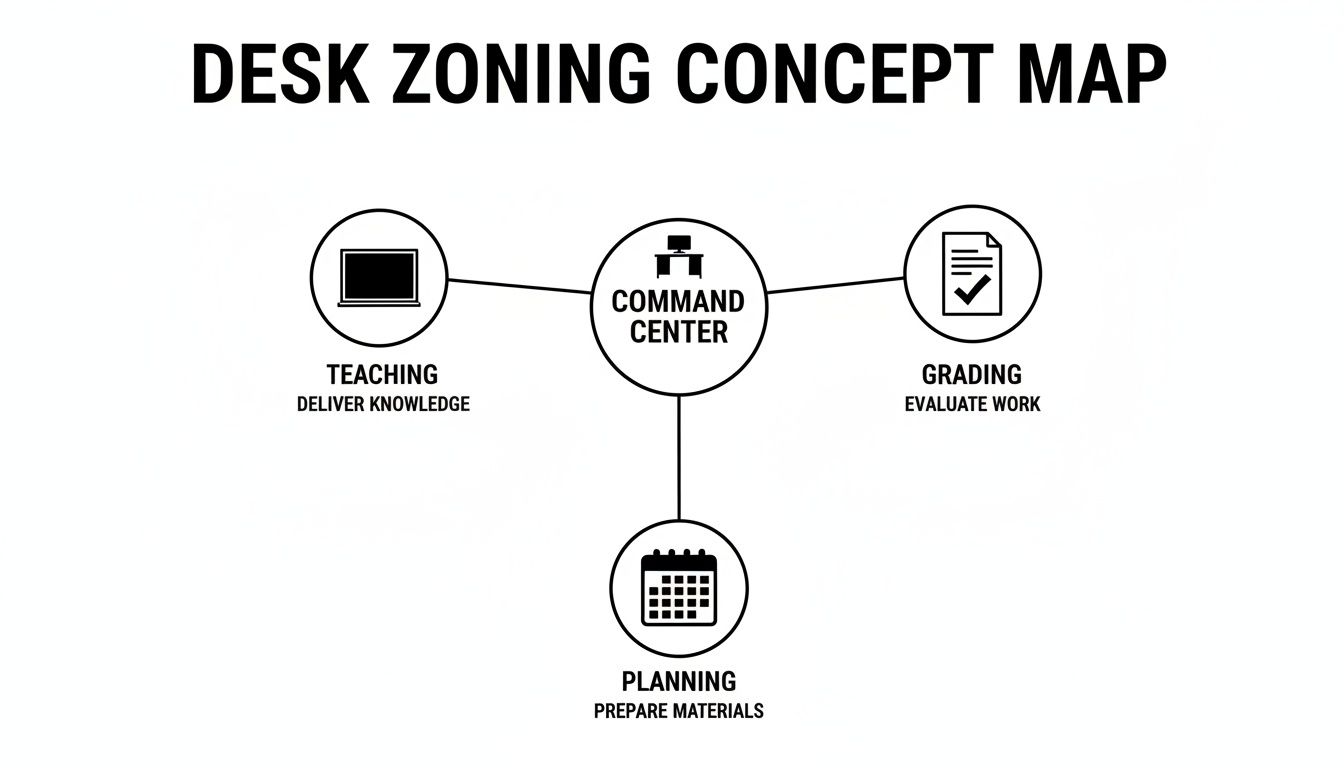
As you can see, each zone has a clear purpose. This prevents tasks from bleeding into one another and keeps your main workspace focused and ready for whatever the day throws at you.
By giving every square inch of your desk a job, you’re not just organizing your stuff—you’re organizing your actions. This intentional layout makes switching between tasks feel seamless and effortless.
Building a system that truly supports the fast-paced, dynamic nature of teaching is the ultimate goal. For a deeper dive into creating a workspace that syncs up your physical space, digital workflow, and time management, check out a practical guide to staying organized at work.
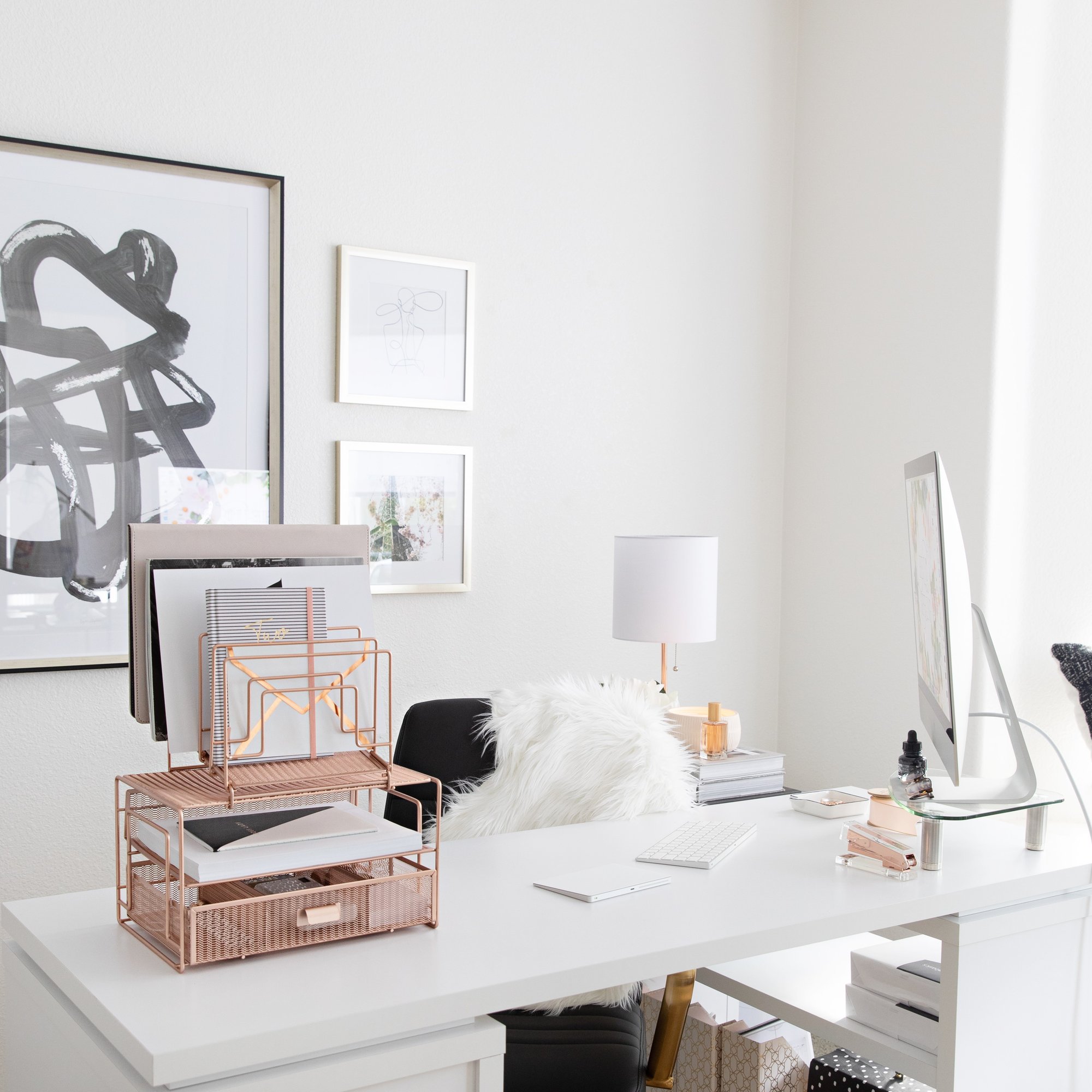
Let’s be honest: the secret to a desk that actually stays organized isn’t just sheer willpower. It’s about having the right tools for the job. But I’m not talking about those generic plastic tubs that just hide the clutter and do nothing to spark joy.
Think of your storage solutions as functional decor. These are pieces that are not only smart but also stylish enough to make you smile every time you see them. When you love the space you're in, you’re naturally more motivated to keep it that way. This is your chance to pick things you genuinely love to look at and use every single day.
One of the easiest ways to bring a sense of order to the chaos is with a coordinated desk set. When your letter tray, pen holder, and file sorter all match, it instantly creates a feeling of calm and intention. It’s a powerful visual cue that tells your brain, "Everything here has a place and a purpose."
For instance, Blu Monaco’s chic Fontvielle collection in classic black mesh or a vibrant aqua set can bring a beautiful harmony to your command center. Instead of a jumbled assortment of organizers collected over the years, a cohesive set makes your desk look polished and thoughtfully curated. This isn't just about looking good; it's about quieting the visual noise so you can focus on what really matters—your students.
Your desk surface is some of the most valuable real estate in the classroom. To keep it clear for the work you need to do right now, the best strategy is to think vertically. Lifting papers, folders, and supplies off your desk creates immediate breathing room and makes your entire workspace feel so much larger and more manageable.
Ready to build up? Here are a few ideas:
Tiered Letter Trays: These are absolute game-changers for managing the constant flood of papers. I like to designate each tier for a specific action—"To Grade," "To File," and "To Hand Out." It’s an instant workflow system right at your fingertips.
Wall-Mounted Organizers: Don't forget to look up! The wall space behind or beside your desk is an untapped resource. A hanging file organizer is perfect for holding student folders, permission slips, or weekly lesson plans, keeping them accessible but completely off your desk.
Desktop Shelves: A small shelf or monitor stand can literally double your storage for those little things you need nearby but not in your way, like sticky notes, your favorite stapler, and tape dispensers.
When your organizational tools are both beautiful and functional, maintaining order becomes a joy, not a chore. You start to see tidying up not as a reaction to chaos, but as a proactive ritual that helps you reset.
By choosing pieces that really speak to your personal style, you’re not just buying storage containers. You’re investing in a more peaceful, productive, and inspiring environment for yourself. If you're looking for more ways to blend style with smart function, you'll find tons of great tips in our guide to home office organization ideas.
Finding the right style can feel overwhelming, but it's all about matching your tools to your personality and classroom vibe. This little table can help you pinpoint what might work best for you.
| Organizational Style | Best For | Blu Monaco Collection Example | Key Pieces |
|---|---|---|---|
| Modern Minimalist | Teachers who prefer clean lines and a calm, clutter-free workspace. | The Monte Collection (Black) | A sleek letter tray, a simple pen cup, and a magazine file create a wonderfully streamlined look. |
| Bright and Bold | Anyone who loves a pop of color to bring energy and personality to their desk. | The Riviera Collection (Aqua) | A vibrant 5-piece desk set that includes everything from a mail sorter to a sticky note holder. |
| Chic and Glam | Educators who enjoy a touch of elegance and sophistication in their daily tools. | The Fontvielle Collection (Gold) | A glamorous gold paper tray and matching file holder can make even grading feel a little more luxurious. |
Ultimately, the best organizational systems are the ones that make you feel good. When you select pieces that not only solve a problem but also make your desk a place you're genuinely excited to sit down at each morning, you've found the perfect match.
Let’s be honest: the river of paper flowing through a classroom never stops. Between student work, permission slips, meeting notes, and flyers, the pile-up is real. If you feel like you're constantly fighting a losing battle, I want to share the single most powerful strategy I've ever used: the "touch it once" principle.
It’s a simple concept that completely changes the game. When a piece of paper lands on your desk, you deal with it right then and there. No more "I'll get to it later" piles that slowly morph into a mountain of dread. Every single sheet gets an immediate, decisive action.
To pull this off, you need a system—a clear, simple workflow that gives every piece of paper a home right on your desktop.
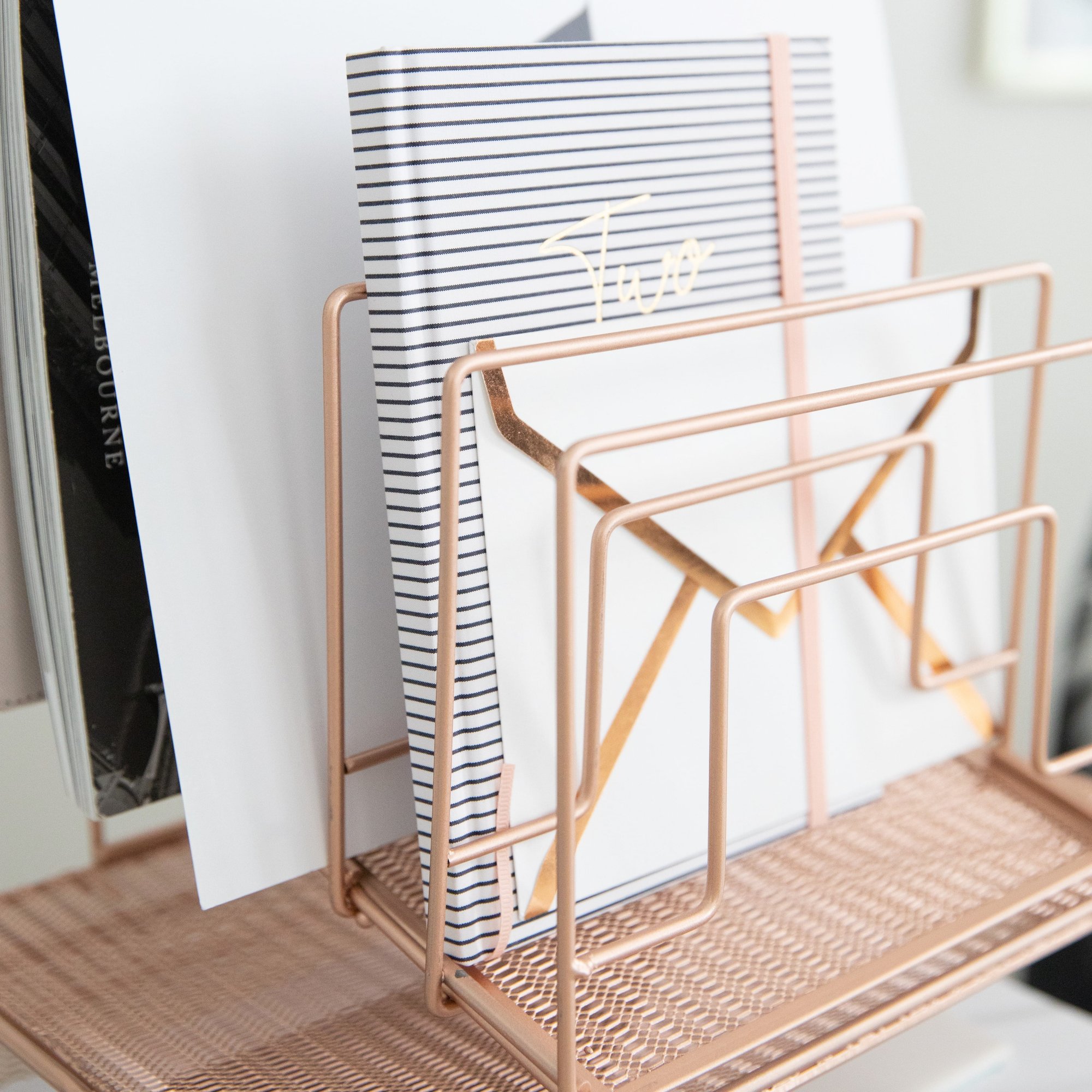
Think of your desk as a command center, not a storage unit. It needs a visual, intuitive system for processing papers on the fly. One of the most effective tools for this is a simple tiered paper tray. It keeps everything visible, contained, and ready for action.
You can find all sorts of stylish and functional paper trays that not only match your classroom's vibe but also create that instant workflow you need.
Label your trays with clear, action-oriented categories. Skip the vague labels and get specific:
To Grade: This is the non-negotiable pile for student work needing feedback.
To File: For anything that needs to be saved, like signed forms or important memos.
To Copy/Prep: Materials for upcoming lessons go here, waiting for your planning period.
Suddenly, those overwhelming stacks are transformed into a clear, manageable to-do list. A quick glance tells you exactly what needs your attention next.
When every paper has a clear, immediate destination, you eliminate decision fatigue. You're no longer wasting mental energy figuring out what to do with each sheet—the system does the thinking for you.
Classroom clutter isn't just physical anymore. A desktop littered with untitled documents and a chaotic downloads folder can create the same mental drag as a messy desk. The secret is to build a digital filing system that mirrors your physical one.
Treat your computer's desktop just like your physical desk—keep it clear and ready for action. Resist that temptation to save everything there! Instead, take a little time to organize digital files with a logical folder structure and consistent naming conventions. It pays off, I promise.
Here’s a simple, effective digital structure to get you started:
Main Folder: [School Year]
Sub-folder: Lesson Plans
Unit 1 - The Odyssey
Unit 2 - Poetry
Sub-folder: Student Information
IEP & 504 Plans
Parent Communication Logs
Sub-folder: Administrative
Meeting Notes
Professional Development
When your physical and digital worlds are in sync, you create a seamless organizational flow. This harmony saves you from those frantic searches for that one specific worksheet or file, giving you back precious time to do what you do best—teach.
A beautifully organized desk is one thing; keeping it that way is another beast entirely. Trust me, lasting order doesn’t come from a single, massive weekend overhaul. It’s built from the small, consistent habits you practice every single day. These tiny rituals are the real secret to preventing that familiar chaos from creeping back in.
One of the simplest yet most powerful habits? Labeling. When everything from your file folders to your cord organizers has a clear, simple label, you take the guesswork out of the equation. You’re no longer wasting precious mental energy trying to remember where something goes—the system just tells you. This simple act turns tidying into a quick, thoughtless task.
The end of the school day can be a whirlwind. Between last-minute questions and dismissal duties, you’re often left feeling completely drained. The absolute last thing you want to do is tackle a messy desk. This is where the 5-Minute Reset comes in—a non-negotiable ritual that will totally transform your evenings and your mornings.
Just set a timer for five minutes before you pack up to leave. During this time, your only mission is to get your desk back to its "ready state."
Papers: Quickly sort any loose papers into your action trays—think "To Grade" or "To File."
Supplies: Pop your pens, stapler, and other tools back into their designated homes.
Surfaces: Give your main workspace a quick wipe-down.
This isn’t about deep cleaning. It’s a rapid-fire reset that clears your physical workspace and, more importantly, your mind. You get to walk out of the classroom feeling accomplished and walk in the next morning to a calm, welcoming command center, truly ready for a fresh start.
Committing to this small daily habit does more than just keep your desk tidy—it builds a powerful sense of closure at the end of the day, allowing you to truly leave work at work.
Even with the best daily habits, paper has a way of multiplying. To keep your filing system from overflowing, you absolutely need to schedule a Weekly Paper Purge. This is just a dedicated 15-20 minute block in your schedule, maybe on a Friday afternoon, to clear out the week's build-up.
This is where a good planner becomes your best friend. Using a dedicated teacher planner with stickers and a calendar makes it easy to block out this time and actually stick to it.
During this session, go through your "To File" tray. Digitize what you can, file what’s absolutely essential, and recycle everything else without hesitation. This routine ensures your systems stay lean and functional, stopping that slow creep of clutter that can sabotage even the most brilliant organization.
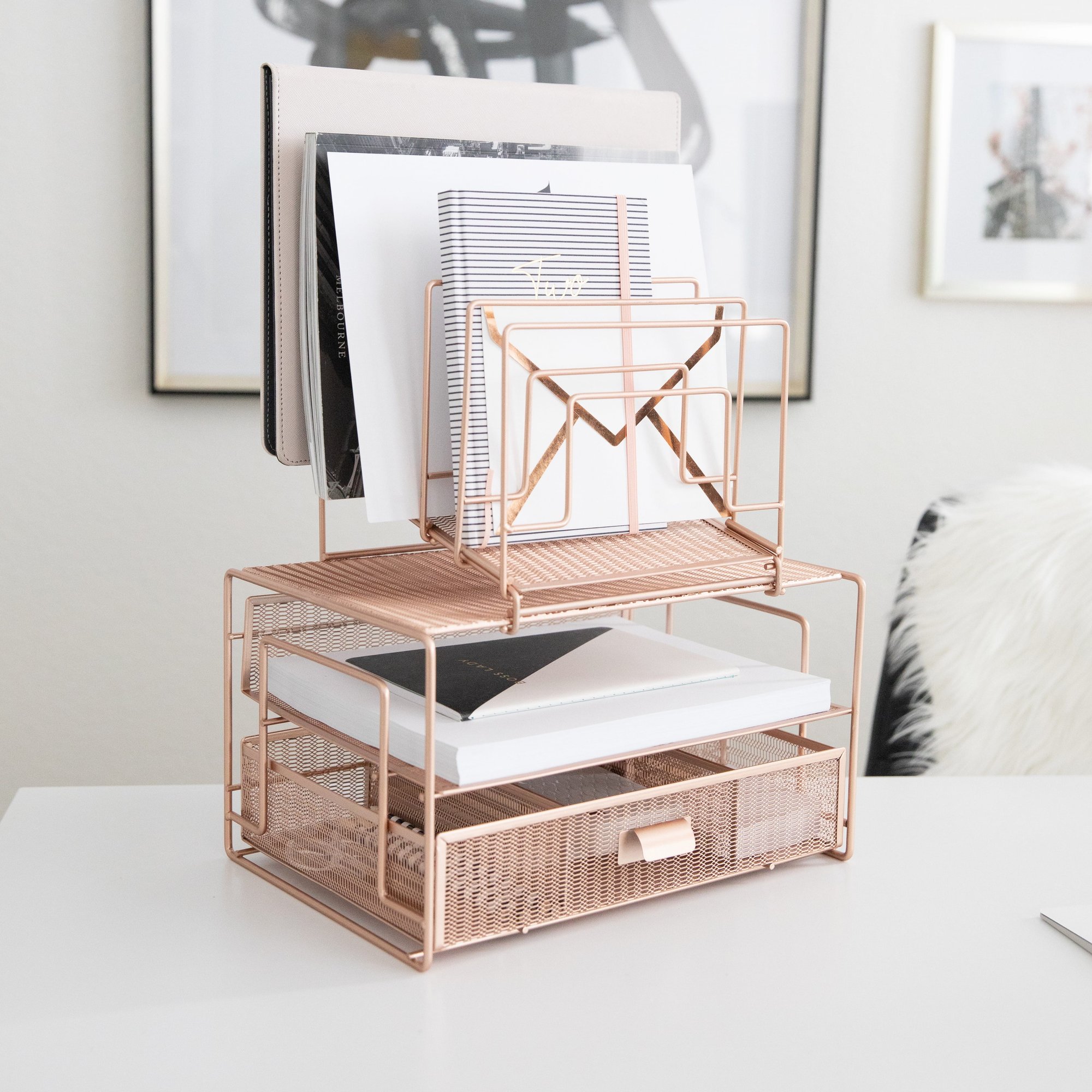
Let’s be honest: your desk is more than just a place for lesson plans and grading. It’s your command center, your thinking spot, and a place you spend countless hours. So why shouldn't it be a space that actually recharges and inspires you?
This is the fun part. It's where we move beyond just organizing and start infusing your personality into the system. Making your desk feel uniquely yours can turn a mundane workspace into a little haven, giving you a spark of joy on even the most chaotic days.
Personalizing doesn't mean cluttering. The secret is to choose just one or two small, meaningful items that make you genuinely smile. This isn’t about collecting trinkets; it’s about curating a tiny corner of happiness.
Think about adding something like:
A favorite photo of your family, your pet, or a memorable vacation.
A small, hardy plant like a succulent to bring a bit of life and nature indoors.
An inspiring quote that reminds you of your "why," maybe on a little letterboard or in a nice frame.
Your favorite coffee mug—the one that makes that first sip in the morning feel like a small, special ritual.
Tuck these treasures into your personal zone, maybe in a top corner or on a small riser, so they’re visible but out of the way of your main workflow.
When you intentionally choose items that bring you happiness, your desk stops being just an administrative hub. It becomes a source of personal encouragement and well-being.
Have you ever noticed how certain colors can lift your mood? That’s real! A coordinated color palette can instantly make your space feel less chaotic and more intentional. Instead of a random mix of office supplies, pick desk accessories in a color you love.
Whether you go for a calming blue from the Blu Monaco Aqua collection or a chic pop of rose gold, a cohesive look makes everything feel more polished and put-together.
And don't forget your own physical comfort! This is a huge part of making your desk a nurturing space. Make sure your monitor is at eye level and invest in a chair that actually supports you. These simple adjustments are an act of self-care, ensuring your desk is a place that looks after you, body and mind, through all those long hours.
Whenever you start a new organizing project, a few questions are bound to pop up. Hitting a small snag or wondering if you're doing it "right" is totally normal. I like to think of these little challenges not as roadblocks, but as signposts guiding you to a system that’s a perfect fit for you. Let’s tackle some of the most common hurdles to help you create—and keep—a desk you absolutely love.
The secret here is to create a single, non-negotiable entry point. Find a sturdy, clearly labeled inbox tray and make that the only place for turned-in work. It’s a simple rule, but it's powerful. From the very first day, train your students that this is the spot for every single assignment. This one habit corrals the paper monster into one manageable location instead of letting it creep across your entire desk.
Then, build a quick, 10-minute "reset" into your end-of-day routine. Just take that tray and swiftly sort everything into your "To Grade" and "To File" systems. This small, consistent action is what prevents the paper pile-up from ever happening again.
By creating a single, designated home for incoming papers, you stop the chaos before it even begins. It's a proactive strategy that transforms a source of stress into a simple, predictable part of your daily routine.
When you’re short on surface area, your new mantra is: think vertical. Limited desk space is an invitation to look up and claim all that untapped real estate on the walls and in the air around you. Getting papers and supplies off the desk surface is the most effective way to make a small desk feel spacious and ready for work.
Here are a few of my favorite strategies for smaller spaces:
Go Up the Wall: Use the wall behind or beside your desk for hanging file sorters. These are brilliant for holding student folders, weekly readings, or permission slips that you need to keep handy but off your desk.
Get a Monitor Stand: A monitor stand with built-in drawers is an absolute game-changer. It not only lifts your screen to a more comfortable height but also carves out a whole new storage layer underneath for sticky notes, pens, and paper clips.
Choose Multi-Taskers: Look for accessories that pull double or triple duty. Think about an organizer that holds your pens, props up your phone, and has a spot for a notepad, all in one compact footprint.
Maximizing that upward space is truly the key to unlocking a small desk's full potential.
Here's the fun part: let your functional pieces be your decor. Instead of adding a bunch of extra trinkets that just take up space and collect dust, invest in beautiful versions of the tools you already use every day.
Think of a stylish magazine file, a chic pen holder, or a coordinated desk set in a color that just makes you happy, like a vibrant aqua or a sophisticated rose gold. The tools themselves become the art.
Then, limit purely decorative items to just one or two small, meaningful pieces—maybe a favorite little plant or a single framed photo. Just be sure to place them slightly outside your primary work zone. This keeps your main area clear for action while still making the space feel entirely like your own.
Ready to find those perfect pieces that marry function with style? At Blu Monaco, we design desk accessories and collections that help you create a workspace that’s not just organized, but genuinely inspiring.
Explore our collections and start building your dream command center today.


