No products in the cart.

Let’s be honest, that growing pile of paper on your desk or kitchen counter is more than just a physical mess—it's a silent source of stress. Tackling it often feels like a chore that sinks to the very bottom of our to-do list, but letting it pile up has hidden costs that chip away at our mental clarity, productivity, and even our finances.
Imagine walking in the door after a long day, only to be greeted by a mountain of receipts, bills, and school papers. It’s an all-to-common scene, especially now that so many of our homes also function as our offices.
This disorganization just feeds the chaos. In fact, studies show that a cluttered desk can tank your productivity by up to 20%. Think about it: people spend an average of 1.5 hours every single week just searching for misplaced documents. If you're curious about just how much paper we're all dealing with, you can explore more insights about household paper statistics.
Ultimately, getting organized isn't just about having a tidy desk. It’s about reclaiming your peace of mind. When your physical environment is in chaos, your mind often follows suit. A clear, functional system for your paperwork gets rid of that nagging feeling that you’ve forgotten something important, like a bill payment or a crucial email.
Tackling paper clutter is an act of self-care. It replaces anxiety with a sense of control, turning a source of stress into a sanctuary of calm and order.
This guide is about reframing organization as an act of empowerment. It’s about creating a home that truly supports your well-being, not one that adds to your mental load. By building a simple, sustainable system, you can finally conquer the paper chaos for good and cultivate a space that feels serene and completely under your control.
An organized home is more than just beautiful—it's the foundation for a calmer, more focused life. And as you'll soon see, functional solutions can also be incredibly stylish, blending right in with your home's unique aesthetic.
This is where the magic really starts to happen. Forget timidly chipping away at those paper piles—we're going all in for a clean sweep that delivers immediate, satisfying results. The first move is to hunt down every single piece of paper from every corner of your home and bring it all to one central workspace.
Go on a scavenger hunt. Check the kitchen counter, that notorious junk drawer, your car's glove box, and the forgotten corners of your home office. Yes, it's going to look like a paper volcano erupted, and honestly, that’s the whole point. You have to see the full scope of the problem to truly solve it. This one action turns that vague, nagging anxiety into a physical, conquerable mountain.
With your paper mountain assembled, it's time to break it down. The key here is simplicity. Don't get bogged down in overthinking it. Every single sheet will fall into one of just four categories. Grab some boxes or just clear four distinct spots on the floor and label them:
Keep: These are your non-negotiables—the essential, original documents. We're talking birth certificates, marriage licenses, property deeds, car titles, and social security cards. These are the papers that need secure, physical storage.
Digitize: This pile is for everything you need the information from, but not the actual piece of paper. Think of last year's utility bills, appliance warranties, or your kid's amazing school report. You want the data, not the clutter.
Shred: Anything with sensitive personal information that you no longer need goes directly here. Old bank statements, expired credit card offers, voided checks, and outdated medical bills are prime candidates. Protecting your identity is non-negotiable.
Recycle: And now for the easiest pile! Junk mail, old magazines, expired coupons, and any other non-sensitive paper can be tossed right into the recycling bin. Freedom!
This simple sorting process is incredibly empowering. It takes an overwhelming mess and turns it into a series of small, confident decisions. You're not just shuffling papers anymore; you're actively reclaiming your space and taking back control.
The infographic below really drives home the negative ripple effect that paper clutter has on our stress levels, our time, and even our finances.
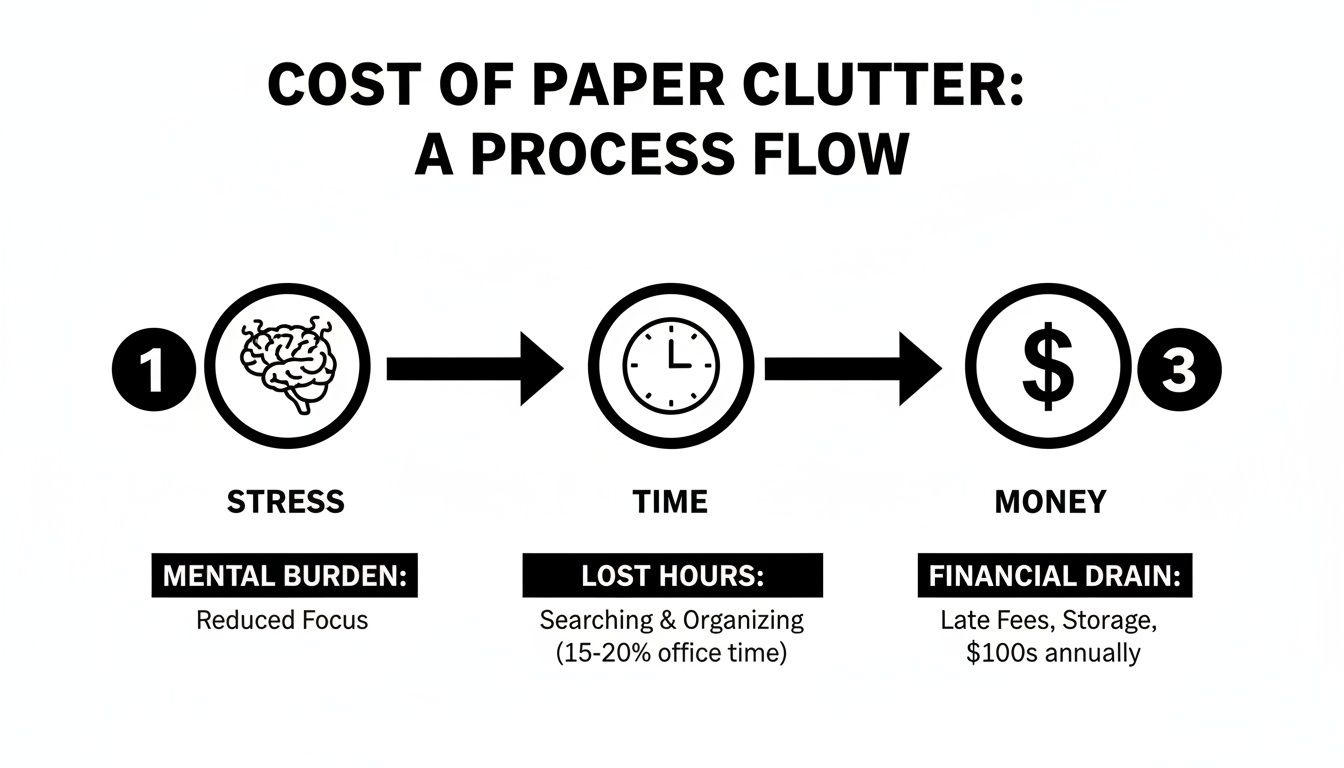
As you can see, there’s a direct line from that mental strain to wasted hours and financial fallout, which is exactly the cycle we’re here to break.
After a good purge, it’s not unusual to discover that 80% or more of that initial mountain of paper can be shredded or recycled. The feeling of physically lightening that load is your first huge win in getting your home organized.
Once you’ve sorted that very last piece, you'll be looking at a much smaller, far less intimidating collection of documents. This is the solid foundation for the beautiful, streamlined system you're about to build. Take a deep breath and appreciate the clear space you've just created before we dive into the next step.
Now for the fun part. After that immensely satisfying purge, you're left with only the papers that truly matter. It’s time to build a system that not only wrangles what’s left but keeps the chaos from ever returning. This is your Paper Command Center—an inspiring, functional hub designed for your life.
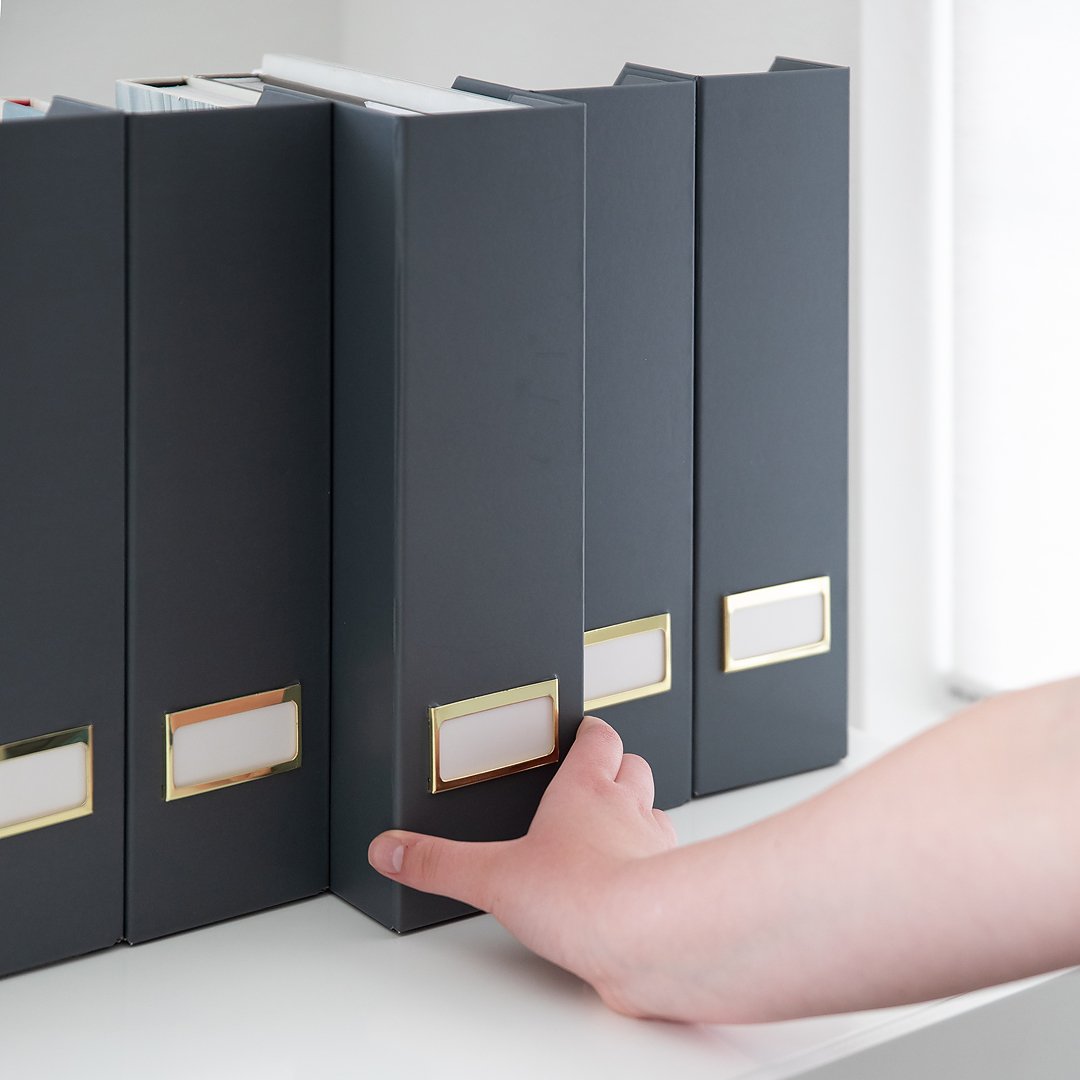
Think of this less like storage and more like a cockpit for running your household. We're not just hiding papers; we're creating an intuitive workflow right where you need it. When everything has a purpose and a place, managing daily tasks can actually feel effortless.
The soul of any lasting organization system is common-sense categorization. Forget generic labels. The best way to sort your 'Keep' pile is by thinking about how you actually live and grouping papers into broad categories that click with you.
It’s a personal process, but I’ve found that most households get a great start with these core buckets:
Financial: This is command central for your money. Think bank statements, bills that need paying, investment updates, and recent pay stubs.
Household: The operations manual for your home. This is where you’ll put paid utility bills, home repair receipts, appliance warranties, and contacts for trusted vendors.
Medical: Keeping health documents in one spot is a non-negotiable. This file is for insurance EOBs, prescription info, and summaries from doctor's visits.
Personal: A flexible catch-all for documents tied to each person in the house, like school papers, vehicle registrations, or professional certificates.
From there, you can get more specific. Under ‘Financial,’ you might have sub-folders like “Unpaid Bills,” “Taxes 2024,” and “Retirement.” Suddenly, you’ve created a clear roadmap to find anything in seconds flat.
With your categories mapped out, you can bring them to life with tools that are as beautiful as they are practical. The secret is matching the right tool to the right task. This is where you elevate organizing paperwork at home from a mundane chore into an act of self-expression.
First, create a single "Inbox." This is the one and only spot where all new paper lands—mail, school flyers, receipts, you name it. A chic letter tray on your desk or entryway table works beautifully. It corrals the clutter before it can even start. If you need some inspiration, we have a whole guide to help you choose the perfect desk paper trays to match your vibe.
Your command center is more than just a place for files. It's an active, daily system. Making it visually appealing encourages you to use it consistently, turning good habits into second nature.
For the papers you’re actively working on, a desktop file organizer is a complete game-changer. It keeps your current projects and categorized files upright, visible, and always within reach. No more frantic digging through piles!
With so many people working from home, it's no surprise that 40% of remote professionals feel swamped by office clutter. For creatives, educators, and entrepreneurs, a messy desk isn't just an eyesore; it's a creativity killer.
This is exactly why we design cohesive collections.
Match the right Blu Monaco product to your specific paperwork needs to create a stylish and functional system.
| Paperwork Type | Recommended Organizer | Best For | Example Collection |
|---|---|---|---|
| Incoming Mail & Daily Papers | Letter Tray / Paper Tray | Creating a single, stylish "inbox" to stop paper from scattering. | Riviera Collection |
| Active Projects & Current Bills | Desktop File Sorter | Keeping immediate-action items visible and accessible on your desk. | Monte Collection |
| Categorized Household Files | Hanging File Organizer | Wall-mounted storage that saves desk space for daily tasks. | Amira Collection |
| Magazines & Reference Binders | Magazine File Holder | Storing bulkier items upright for a clean, polished look. | Perch Collection |
Imagine a desk with a stunning gold-finish file sorter, a matching pen cup, and a magazine file—all working together. These thoughtfully designed pieces don’t just organize; they turn your workspace into a place you genuinely want to be.
Let’s be honest: not every piece of paper deserves a spot in your beautiful new Command Center. Once you have a handle on your day-to-day documents, it's time to create a safe haven for your long-term papers—the 'keep but hide' files that are crucial but not part of the daily grind.
I'm talking about things like tax records from the past seven years, property deeds, old contracts you might need someday, and car titles. These documents are the foundation of your personal and financial history, and they need a secure, organized home far from the everyday shuffle. This is your personal archive.
The first step in building a smart archive is knowing the difference between "active" and "archived." I live by a simple rule: "Will I need to touch this in the next 12 months?" If the answer is a clear "no," but the document is still legally or financially important, it's destined for the archive.
Your archive isn’t a graveyard for old papers. It’s a library of your life's most important milestones, carefully curated so you can find what you need, whether that's next year or a decade from now.
Making this distinction is one of the most powerful moves you can make when organizing paperwork at home. It keeps your main workspace lean and focused on what truly matters now, while giving you peace of mind that your essential documents are safe and sound.
An archive you can't navigate is just another pile of clutter. Your best friend here is a clear, consistent labeling system. Group similar documents together before you even think about putting them in a box.
Here’s how I often break it down:
Financial Archives: This is the perfect home for tax returns older than the current year, old investment statements, and paperwork for loans you've already paid off.
Property & Asset Records: Create a dedicated space for house deeds, vehicle titles, and receipts for major purchases that you might need for insurance claims down the road.
Personal Vital Records: While the originals of birth certificates or marriage licenses belong in a fireproof safe, the archive is a great place for certified copies and other important personal histories.
Using sturdy, beautiful storage boxes doesn't just protect these papers; it transforms a messy closet shelf into something you're not afraid to look at. For a cohesive look, you could use a matching set of decorative foldable magazine boxes to bring some style to your storage. Label each box clearly and specifically—think "TAXES 2017-2020" or "HOUSEHOLD - Deeds & Titles."
And remember, many long-term papers don't need to be physical at all. For documents that don't require an original hard copy, you can learn how to build your digital library and drastically cut down on the sheer volume. This hybrid approach—secure physical storage for the absolute essentials and a digital archive for the rest—is the ultimate strategy for creating order that actually lasts.
Let’s be honest: going completely paperless sounds amazing, but it’s not always realistic. Life comes with official documents, sentimental cards, and warranties that just feel better in hand. But a “paper-light” lifestyle? That’s something we can all achieve, and it's a game-changer.
The real magic happens when you become intentional about what you keep physically, turning everything else into easily searchable digital files that don't take up an inch of space.
So, how do you decide? My rule of thumb is simple: anything with a raised seal, a "wet" signature, or significant legal weight stays put. We're talking about birth certificates, property deeds, passports, and wills. These are the non-negotiables that need secure, physical storage. Pretty much everything else is fair game for the scanner.
You don’t need a big, clunky office scanner to get started. Honestly, the camera on your phone is probably all you need. Modern scanning apps are brilliant—they can automatically crop, flatten out creases, and turn a crumpled receipt into a crisp, clean PDF in seconds.
I’ve gotten into the habit of scanning important receipts right at the counter or as soon as I get home. It takes ten seconds and prevents that little slip of paper from ever joining a doom pile.
A paper-light home isn’t about getting rid of every single piece of paper. It’s about getting rid of the chaos. Thoughtful digitizing trades physical clutter for digital freedom.
But a word of warning: without a system, you’ll just trade a physical mess for a digital one. A logical folder structure and a consistent naming plan are your best friends for organizing paperwork at home. Before you scan a single thing, you need a plan. And a huge part of this is learning how to deal with those small, everyday papers—it's worth learning how to organize receipts and conquer paper chaos from the get-go.
To avoid creating a digital junk drawer, set up your system before you start scanning. I recommend using a cloud service like Google Drive or Dropbox. Start by creating a few broad parent folders that mirror the physical categories you just sorted: "Financial," "Medical," "Household," etc. Then, within those, you can create sub-folders for each year.
Now for the secret weapon: a consistent file naming system. This is what makes your digital files instantly searchable. I swear by this format:
YYYY-MM-DD_Vendor_DocumentType.pdf
So, that electricity bill from last month? It becomes:
This little trick automatically sorts all your files by date, making it incredibly simple to pull up exactly what you're looking for. By taking a few moments to scan and name new papers as they come in, you're not just clearing clutter—you're building a powerful, organized digital archive that will serve you for years to come.
You’ve done the hard work and built a brilliant system. But the real secret to keeping that paper monster gone for good? It’s all in the small, consistent habits you build from here on out.
Even the most picture-perfect space can slide back into chaos without a few simple routines to handle the daily flood of paper. This isn’t about being perfect; it’s about making things easier on your future self.
One of the most powerful habits I swear by is the “One-Touch Rule.” When mail comes through the door, you deal with it right then and there. Don't just drop it on the kitchen counter. Take two minutes to open, sort, and put every single piece where it belongs—your inbox tray, the recycling bin, or the shredder.
To keep your system running smoothly, block out just 15 minutes for a “Weekly Reset”—maybe every Sunday evening. This is your dedicated time to clear out your inbox tray, pay any bills that have come in, and file away the week's important papers.
It’s a tiny investment of time, but the payoff in peace of mind is massive.
This little ritual stops small tasks from piling up and becoming a weekend-long project. Think of it as a quick reset for your command center, letting you walk into Monday with a clean slate. These are the kinds of actions that make for great home office organization ideas that actually last.
Maintaining an organized home isn't a one-time project; it’s a lifestyle built on simple, repeatable actions. Consistency will always be more powerful than a single, heroic cleaning session.
Another game-changer is to stop junk mail before it even starts. There are services that let you opt out of unsolicited offers and catalogs. It’s a simple move that dramatically reduces the amount of paper you have to touch in the first place, making your daily sort even faster.
At the end of the day, these are the habits that protect your hard-won clarity. They turn the chore of organizing paperwork at home into a simple, effortless part of your daily rhythm, keeping your space serene and productive for good.
As you start to get your new system in place, you’ll naturally run into a few tricky situations. It happens to everyone! Let's walk through some of the most common questions that come up.
What about that document that feels like it belongs in multiple places? Think of a medical bill that’s also a tax write-off. Is it a health document or a financial one?
The answer is simpler than you think: file it where you would instinctively look for it first. This system is for you, so the only right answer is the one that makes sense to your brain. Don't chase perfection; aim for what feels intuitive.
This is the million-dollar question. While rules can vary, a solid guideline is to keep most general household papers, like utility bills or bank statements, for about one year.
For anything related to your taxes—receipts, deduction records, official forms—the gold standard is to hold onto them for seven years. It’s always better to be safe when it comes to the IRS.
We all have them—the birthday cards, the kids' drawings, the heartfelt letters. These treasures deserve their own special home, separate from your active files.
Find a beautiful memory box or a decorative storage container just for these items. Giving them a dedicated, honored place keeps them safe while preventing them from cluttering up the system you use for your day-to-day life.
Feeling inspired to create a workspace that brings you a sense of calm and control? Discover the beautifully coordinated desk accessories from Blu Monaco and find those perfect finishing touches for your new command center. Start designing your dream desk at https://www.blumonaco.com.


