No products in the cart.

Organizing your desk isn't just a chore to check off your list—it's a powerful act of self-care that directly fuels your focus and productivity. Think of it as reclaiming your workspace, and by extension, your mind. You're consciously creating a space that doesn't just hold your stuff but actively inspires creativity and efficiency.
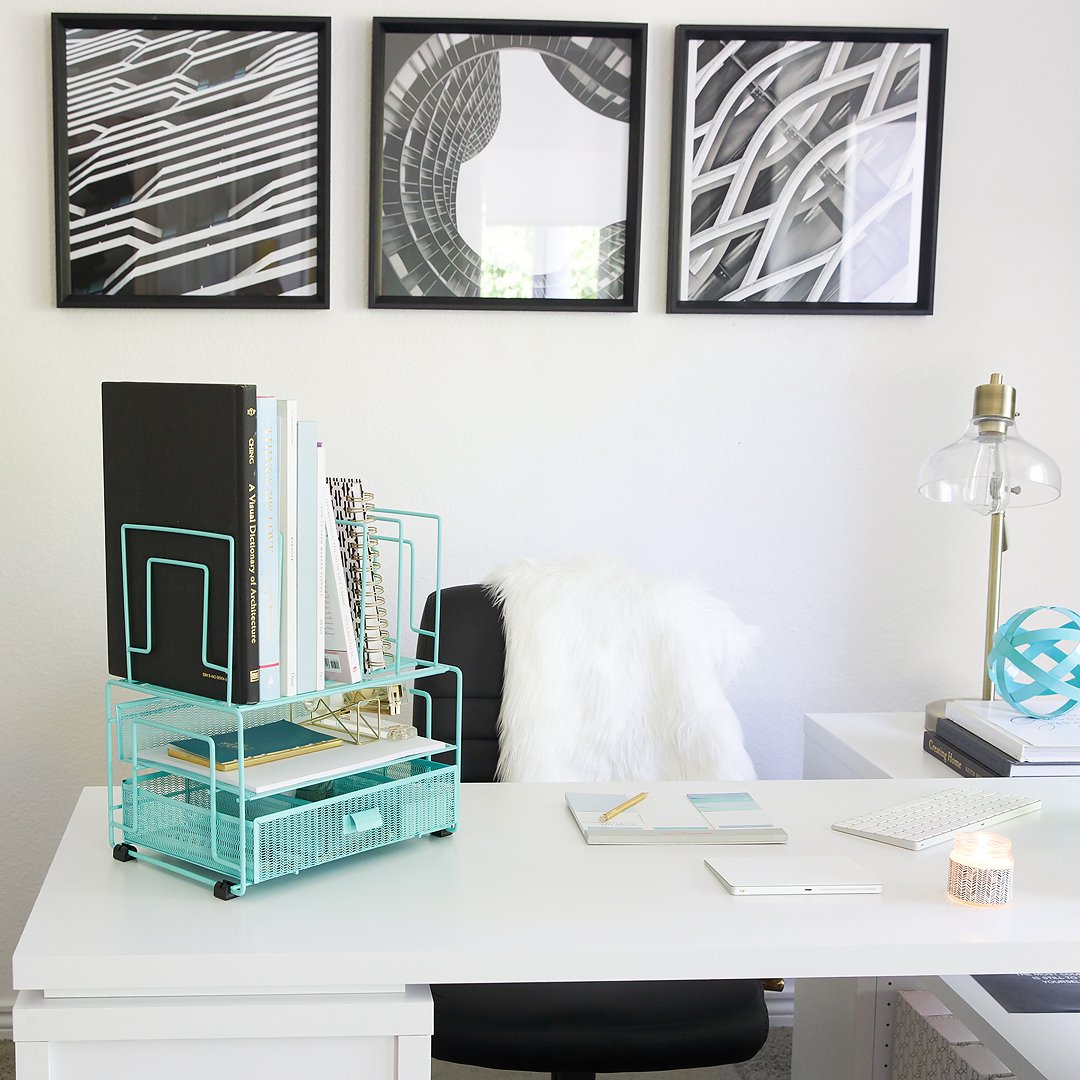
Before you move a single piece of paper, take a step back and look at your desk. This is the command center for your entire professional life, not just a slab of wood for your computer. The state of this space is often a direct, physical representation of your mental state. A chaotic desk almost always leads to a distracted, overwhelmed mind, which dials up your stress and tanks your ability to concentrate.
This isn't just a feeling—it has real, measurable consequences. Visual clutter creates mental clutter. In fact, studies have shown that disorganization contributes to a staggering $438 billion in lost productivity worldwide each year, largely due to low employee engagement.
When you flip that script by organizing your desk, the benefits are immediate. Using smart, coordinated pieces like Blu Monaco's Monte series file sorters keeps your essentials right where you need them. This simple change helps you reclaim the 20-30% of the workday that disorganized people often lose just searching for things.
To see just how big a difference this makes, let's look at the before and after.
| Benefit Area | Cluttered Desk (The 'Before') | Organized Desk (The 'After') |
|---|---|---|
| Productivity | Constant searching, missed deadlines, high distraction levels. | Streamlined workflow, faster task completion, easy access to tools. |
| Mental State | Overwhelmed, stressed, unable to focus, decision fatigue. | Calm, clear-headed, focused, reduced mental load. |
| Professional Image | Appears chaotic, disorganized, and unprofessional. | Looks competent, detail-oriented, and in control. |
| Creativity | Stifled by physical and mental clutter. | Inspired by a clean, aesthetically pleasing environment. |
The contrast is pretty stark, isn't it? A well-organized desk isn't about perfection; it's about creating an environment that works for you, not against you.
When you start viewing desk organization as a strategic career move, it stops feeling like a burden and becomes an opportunity. You're not just tidying up; you're consciously designing your space to set yourself up for peak performance.
Boosts Professionalism: A curated workspace sends a strong message. It shows you're competent, detail-oriented, and on top of your game.
Inspires Creativity: You’d be surprised how an aesthetically pleasing setup can spark new ideas and keep you motivated.
Reduces Decision Fatigue: When every item has a designated home, you waste zero mental energy trying to find what you need.
Take something as simple as choosing a stylish pen cup, like Blu Monaco’s Fontvielle. It does more than just hold your pens—it adds a touch of polished design that elevates your entire desk. The same way an organized desk helps clear the clutter from your workspace, learning how to improve mental clarity and sharpen your focus is a game-changer for your overall productivity.
The goal is to create an environment that supports your 'flow state'—that magical zone of deep concentration where your best work happens. An organized desk removes the physical and mental barriers that stand in your way.
Ultimately, taking control of your desk is an act of empowerment, especially when work feels demanding. For more great ideas on building a productive workspace, check out our guide on how to https://www.blumonaco.com/blogs/content/how-to-improve-workplace-efficiency.
Feeling buried under the mountains of paper, pens, and who-knows-what on your desk? I’ve been there. The most effective way to organize your desk isn't just about shuffling things around—it’s about a complete reset. I call it the Clear, Categorize, and Contain method. It’s a simple, three-part strategy that will give you back control and clarity.
Seriously, everything. Take a deep breath and sweep every single item off your desk surface and out of your drawers. The monitor, the keyboard, that stack of mail you’ve been meaning to open, every last paperclip. Put it all on the floor, a spare table, or even a blanket. You need a completely blank canvas to work with.
Now, with your desk totally bare, give it a good, satisfying wipe-down. This isn't just about cleaning; it's a powerful mental reset. It’s you, staking your claim and starting fresh. That empty surface is your new standard—only what’s truly essential will earn back its spot.
Take a look at the pile of stuff you just removed. It’s time for some honest decisions. Sort it all into four simple piles: Keep, Relocate (it belongs somewhere else), Trash, and Unsure. Be real with yourself. When was the last time you actually used that branded stress ball? Does that dried-out highlighter really spark joy?
A little pro-tip I swear by is the "touch it once" rule. As you pick up an item, decide its fate right then and there. Putting it aside to "decide later" is just creating a new clutter pile.
The goal isn't to become a hardcore minimalist (unless you want to!). It’s about being intentional. Your desk is prime real estate, and every single thing on it should either be useful, necessary, or truly make you happy.
You’ve done the hard part and whittled everything down to your "Keep" pile. Now, let’s bring some order to the chaos by grouping like with like. This is the crucial step that prevents you from just throwing everything back into a drawer and calling it a day. Think about your actual daily workflow.
Create categories that make sense for you. Some common ones I always start with are:
Daily Drivers: The non-negotiables you reach for constantly. Think of your favorite pen, your planner, a pad of sticky notes, and your phone charger.
Project Files: Anything and everything related to what you’re actively working on right now—client folders, research printouts, design sketches, you name it.
Reference Materials: Things you need, but not every day. This could be a company directory, training manuals, or style guides.
Office Supplies: The back stock. All the extra pens, paper clips, staples, and other things you need to grab from time to time.
Sorting everything this way gives you a crystal-clear picture of what needs to be within arm's reach versus what can be tucked away. Your planner? Front and center. That extra ream of printer paper? It can live happily in a cabinet.
This is where the magic happens. It’s time to give every single item a permanent, logical home. We’re putting your categorized items back, but this time, with a strategy based on how often you use them.
Your "Daily Drivers" belong in your prime work zone, ideally where you can grab them without even thinking. A chic organizer, like a Blu Monaco pen cup, is perfect for keeping your go-to writing tools upright and ready, not rattling around in a drawer.
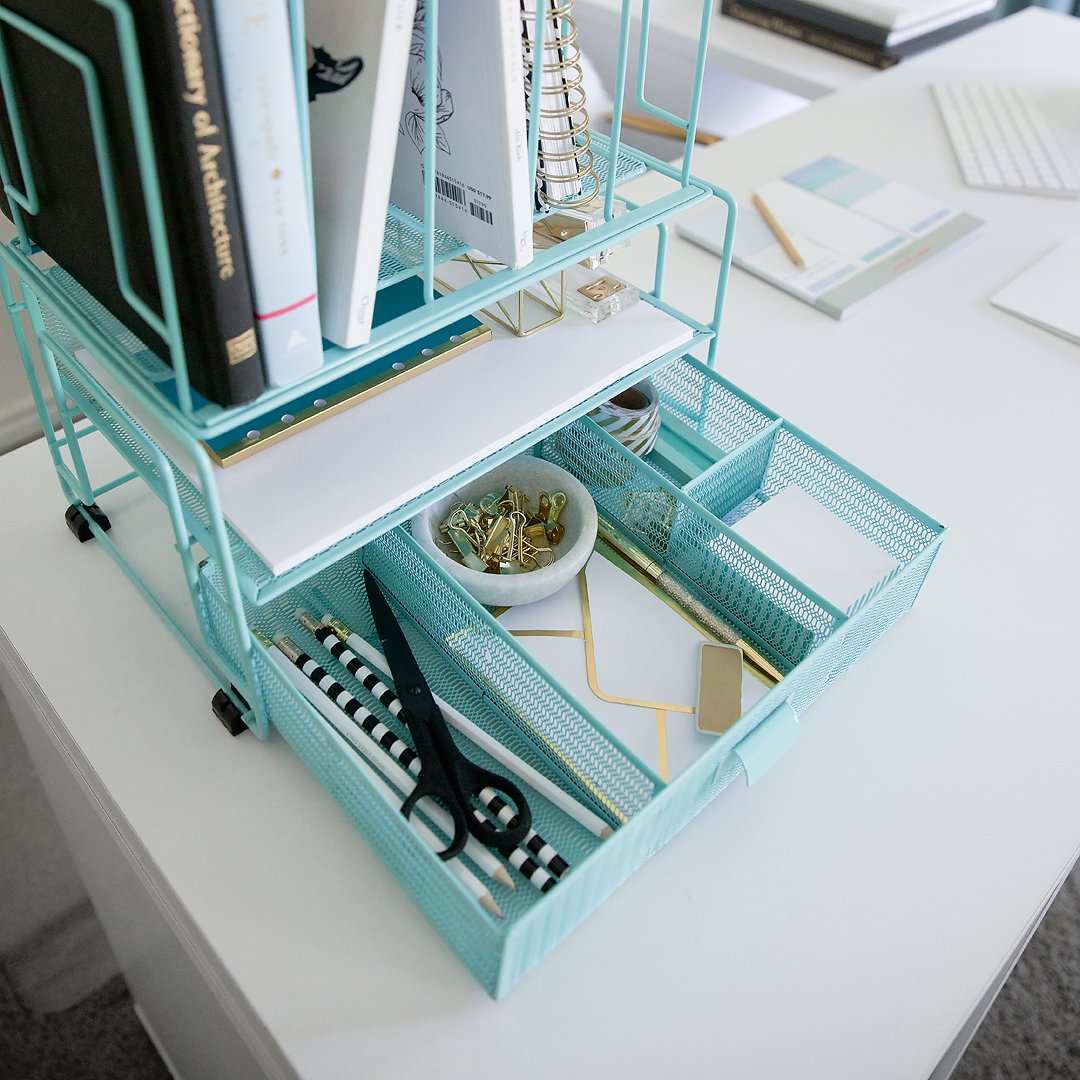
For all those active project files, think vertically. A good vertical file sorter keeps papers tidy and visible without eating up your entire desk surface. As for the reference materials and extra supplies, they can be neatly contained in labeled drawers or bins.
This final step is what turns that clean slate into a high-functioning command center, ready for whatever the day throws at you.
Now that you’ve cleared away the clutter and sorted your must-haves, it’s time to start thinking like a designer. A truly effective desk isn't just about being neat; it's about being smart. It’s about creating an intentional layout—or zones—that mirrors the way you naturally work, cutting down on wasted movement and mental clutter.
The whole idea is to map your physical space to your daily rhythm. Instead of a random jumble of tools and papers, you create a seamless flow where everything you need is right where you'd expect it to be. This one shift can completely change your relationship with your workspace and send your efficiency through the roof.
Most of our work, no matter the industry, can be broken down into three primary zones. I like to think of them as little neighborhoods on your desk, each with its own specific job.
The Digital Hub: This is your command center, right in the middle of it all. It’s where your monitor, keyboard, and mouse live—the tech you’re using all day long. The main goal here is to create an ergonomic setup that feels comfortable and keeps your focus front and center.
The Analog Space: This is your spot for all the hands-on, non-digital tasks. Think jotting down notes, sketching out a concept, signing papers, or reviewing a printed report. For most right-handed people, this is just to the right of the keyboard; for lefties, it’s on the left. Simple.
The Reference Point: This is home for items you reach for often, but aren't constantly in your hand. This could be a vertical file sorter with your current project folders, a cup full of your favorite pens, or your daily planner. It should sit just outside your main work area, easily accessible with a quick reach.
The concept map below brings this whole process to life, showing how clearing out the space and categorizing your items is the essential groundwork for creating effective zones.
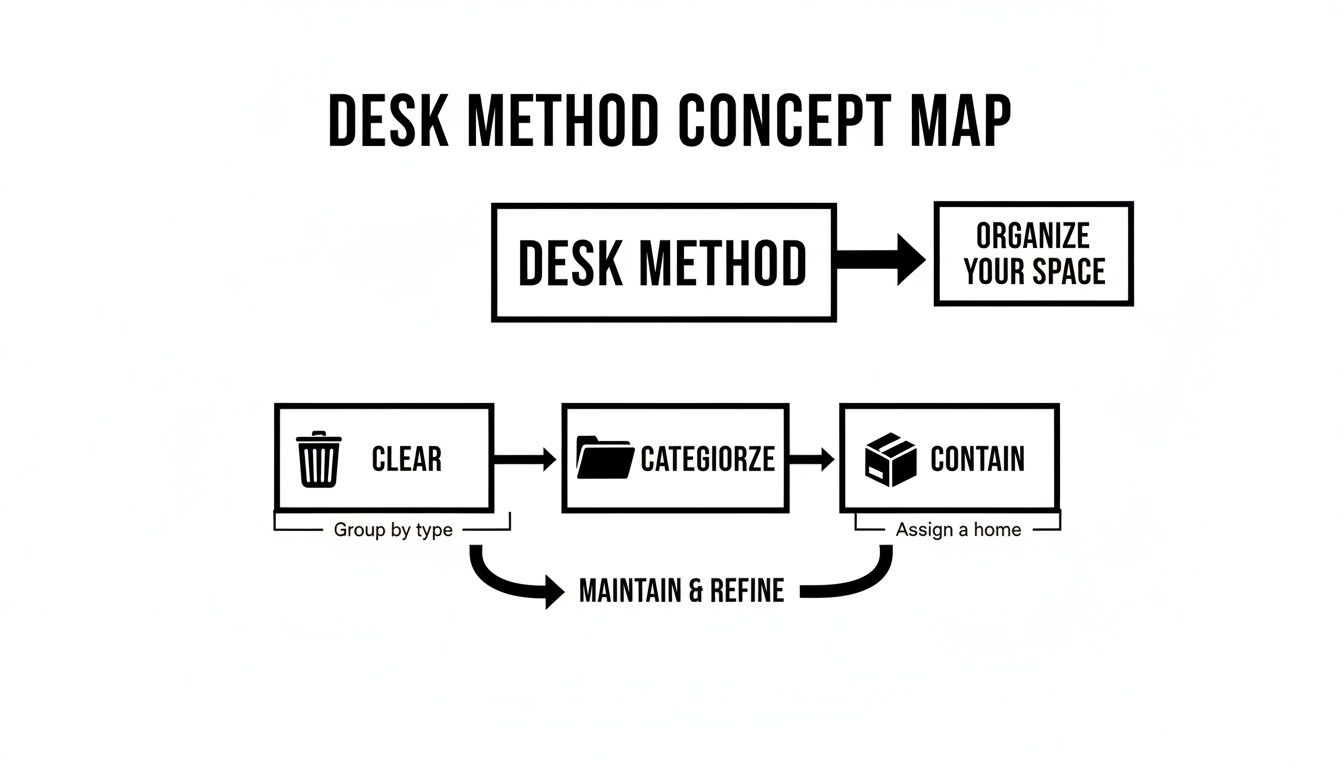
It’s a great reminder that you can't build an organized system on a foundation of chaos. You have to clear the decks first.
Of course, the way you balance these zones depends entirely on your job. A graphic designer might dedicate most of their desk to a massive Digital Hub with multiple monitors, leaving only a small corner for an Analog Space. A writer or an editor, on the other hand, might have a huge Analog Space for manuscripts and notebooks, with a more compact digital setup.
Your desk should be a reflection of your unique workflow. Don't force a system that doesn't fit your daily tasks. The best organization method is the one you can actually maintain because it makes your job easier.
A great way to bring these zones to life is with coordinated accessories. Imagine using pieces from Blu Monaco’s Riviera collection to define your Analog Space—a matching teal letter tray and pen cup instantly create a cohesive, inspiring little corner that feels like yours. As you get comfortable with this setup, you can learn more about how to create a productive workspace that actively fights off interruptions.
By designing your desk with intentional zones, you’re turning it from a passive tabletop into an active partner in your productivity. To explore this concept even further, check out our guide to finding the best desk layout for productivity.
Alright, with your zones mapped out, we get to the really fun part: picking out the gear that brings your dream desk to life. This is more than just buying containers. It's about curating a collection of tools that are as hardworking as they are beautiful. The right accessories don’t just hold your stuff; they actually make you want to stay organized.
Think about the vibe you're going for. Are you drawn to the sleek, modern feel of metal mesh organizers, or do you prefer the calming, natural energy of warm wood? Color plays a huge role here, too. A coordinated collection, like one of Blu Monaco's multi-piece sets, is a shortcut to a polished, intentional look. It instantly elevates your desk from a random pile of things to a true command center.
Even the most beautiful organizer is just clutter if it doesn’t actually help you work. The trick is to pick pieces that solve your real-world, everyday problems.
For Active Projects: If you're constantly juggling different reports or client files, a simple inbox can turn into a chaotic mess. A desktop hanging file organizer is a fantastic solution. It keeps your current project folders upright and visible, so you can grab what you need without a frantic search.
For Daily Paper Flow: Let's be honest, not all paper is the same. Using stackable desk paper trays is a genius way to manage everything that comes across your desk each day. We dive deep into creating the perfect paper system in our guide to desk paper trays.
For Small Supplies: Don’t let paper clips, pens, and sticky notes wander all over your desk. A simple multi-compartment caddy gives these little essentials a home, clearing up your primary work area for focus.
There's a reason people are so invested in this. The global market for desk accessories hit an incredible $4292.6 million in 2025 and is expected to climb by 5.3% each year through 2033. And with 83% of workers now embracing hybrid work, a well-organized desk has become essential for productivity. This isn't just a trend; a tidy desk is a competitive edge. Discover more insights from this market research.
Even the most thoughtful setup can be undone by two classic culprits: cable clutter and a lack of space. But don't worry, there are stylish solutions for both.
Your workspace tools should be an investment in your own efficiency and peace of mind. Choose pieces that you love to look at and that make your daily routine smoother.
For that nest of cords lurking behind your monitor, an elegant cable management box or a few adhesive clips can make a world of difference. They get the visual mess out of sight and make it way easier to find the right plug when you need it.
And if you're working with a smaller desk? The strategy is simple: think vertically. A monitor stand with built-in storage drawers or shelves underneath is an instant game-changer, creating a whole new layer for organization. Similarly, wall-mounted organizers or hanging file holders lift supplies completely off your desktop, freeing up that valuable real estate for the work that matters most.
You’ve done the hard work—the decluttering, the sorting, the zoning. Your desk looks incredible. But now comes the real challenge: how do you keep it this way? An organized desk isn’t a one-and-done project; it’s a living system that needs a little bit of care to keep supporting you day after day.
The secret isn't another marathon cleaning session. It's something far more powerful and sustainable: a simple, five-minute routine at the end of each workday. I call it the "Daily Reset." This tiny investment of time is your guarantee that you’ll walk into a calm, inspiring workspace every single morning, ready to dive right into your best work.
The whole idea is to make this process feel effortless. Don't think of it as a chore. Instead, see it as a series of tiny, satisfying actions that signal the end of your day and set you up for a great tomorrow.
Here’s what your five-minute reset could look like:
Surface Sweep (1 Minute): Give your main work surface a quick wipe-down. Put away any stray pens, notebooks, or coffee mugs that have wandered into your primary zone.
Paper Triage (2 Minutes): Deal with any new papers that have landed on your desk. Remember the "touch it once" rule—file it, scan it, or toss it. Don't let it sit.
Tool Homecoming (1 Minute): Return every tool to its designated home. The stapler goes back in its spot, your planner gets closed, and your keyboard and mouse are neatly aligned.
Tomorrow's Glance (1 Minute): Take a quick look at your calendar for the next day. This little bit of mental prep helps you feel in control and ready to hit the ground running.
This brief routine is more than just tidying up. It's a mental transition that signals the end of your workday, helping you disconnect and protect your personal time.
In the chaos of modern work, a tidy desk can be an anchor of sanity. With hybrid models now the reality for 77% of us and last-minute video calls becoming the norm, your desk is one of the few constants you can control. A clean space is a direct antidote to that "always-on" feeling that creeps into our professional lives. You can explore more statistics about modern work habits here.
To keep your system in top shape, I recommend adding a slightly longer, ten-minute "Weekly Refresh" to your calendar—maybe every Friday afternoon. This is your chance to catch any little things that might have slipped through the cracks during the week.
Use this time to:
Clear out your "Action" or "To-File" tray.
Dust your monitor and accessories.
Drag any stray digital files on your computer desktop into their proper folders.
By building these small routines into your week, you shift desk organization from a monumental task into a simple, automatic habit. This commitment ensures your workspace remains a source of inspiration and productivity, not a source of stress.
Even with the best game plan, a few tricky questions always seem to pop up right when you start to get organized. Let's walk through some of the most common hurdles I see people face and find some smart, inspiring ways to clear them for good.
Ah, the paper monster. It’s the number one cause of desk chaos, but I promise, it’s not invincible. The secret is to stop seeing it as a single, overwhelming pile and start treating it like traffic that needs to be directed.
Give every single piece of paper that lands on your desk a destination with this simple, three-part system:
Action: This is for anything that needs your attention this week. A sleek vertical file sorter or a tiered letter tray is perfect for keeping these items upright and in your line of sight.
Reference: Think of this as your "need it, but not right now" pile. A desktop hanging file organizer is fantastic for keeping things like project briefs or contact sheets accessible but off your primary workspace.
Archive: For documents you need to keep long-term (think taxes or completed project files), get them off your desk entirely. A dedicated filing cabinet is their home now. Your desk's prime real estate is for the work that matters today.
The real game-changer is creating the habit of sorting paper the second it arrives. Is it action, reference, archive… or trash? Decide instantly.
While every person's workflow is different, there are a few foundational pieces that make almost any desk work better. Think of this as your organizational dream team.
A Pen Cup: It sounds simple, but corralling all your pens, pencils, and highlighters in one spot is a small win that makes a big difference.
A Multi-Compartment Organizer: This is your hero for all the little things—paper clips, sticky notes, rubber bands—that love to spread out and create visual noise.
A Vertical File Sorter: Like we just talked about, this is your best defense against the dreaded paper pile-up for active documents.
A Magazine File: Don't let the name fool you. This is the perfect home for notebooks, planners, and manuals, keeping them neat and tidy.
A Cable Management Solution: Nothing ruins a beautiful setup faster than a tangled nest of cords. A simple box or a few clips can tame them in minutes.
Want to get that polished, pulled-together look from day one? A coordinated set is the way to go. Blu Monaco's Monte or Fontvielle collections package these essentials in stunning, matching styles. It's an instant aesthetic upgrade.
Choosing the right tools isn't just about finding a place to put things. It's about creating a system that feels effortless and genuinely inspiring to use every single day. A workspace you love is a workspace you'll actually keep tidy.
When you don't have a permanent desk, your entire organization system needs to be ready to move. Portability is your new best friend.
Think about creating a personal "command center" with a stylish portfolio or a handled desk caddy. At the start of your day, you unpack your essentials. At the end, your five-minute reset is as simple as packing it all back up. This does more than just keep the shared space clean—it gives you a sense of ownership and consistency, no matter which desk you land at.
Ready to create a workspace that doesn't just work, but inspires you? Having the right tools makes all the difference. Explore Blu Monaco's stylish and functional collections to find the perfect pieces that speak to your style and supercharge your workflow. Transform your desk today.


