No products in the cart.

Let's be honest, that mountain of paperwork, the tangled web of cords, and the army of forgotten coffee mugs on your desk aren't just an eyesore. They're silent assassins of your focus and energy. Getting organized isn't just about a quick cleanup; it's about designing a system that sets you up for your most productive, creative, and inspired work.
Take a look at your desk right now. That chaotic pile of papers, scattered pens, and tangled cords? It’s actively sabotaging your ability to think clearly. Imagine trying to nail a critical report while your eyes are constantly drawn to a stack of unpaid bills or a jumble of sticky notes. Every single item is a tiny visual distraction, a small mental task left undone, pulling your focus away from what truly matters. Fighting that constant battle for your attention is utterly exhausting.
This isn't just a feeling; it's a fact. There's a direct, well-documented link between the physical mess around us and the mental stress inside us. A survey of 1,000 office workers found that a staggering 90% feel that a cluttered workspace torpedoes their productivity and mood. That's no surprise when you look at the science. Researchers at the Princeton University Neuroscience Institute discovered that visual clutter literally competes for your brain's attention, making it harder to focus and process information. It can tank your performance, mess with your memory, and even crush your creativity. You can dive deeper into how clutter affects your brain in this insightful study.
When your environment is chaotic, your mind often follows suit. The time you waste hunting for a stapler or that one specific invoice is more than just a few lost minutes. It’s a total break in your concentration and momentum. It's like trying to drive a high-performance car down a road riddled with potholes—you might get where you're going, but the ride will be slow, frustrating, and incredibly stressful.
Your desk is more than a piece of furniture; it's the command center for your professional life. Treating it with intention is the first step toward reclaiming your focus and achieving your goals.
Transforming your desk from a source of stress into a sanctuary of productivity is one of the most powerful moves you can make. It’s about creating an environment that actively supports your ambitions instead of undermining them. A truly organized desk gives you so much more than just a tidy surface:
Less Stress: A clean, orderly space brings a sense of calm and control, letting you tackle your work with a clear head.
Sharper Focus: With fewer visual distractions, your brain can lock in on the task at hand, leading to that deep-work state we all crave.
Effortless Efficiency: When you know exactly where everything is, you eliminate wasted time and frustration, moving seamlessly from one task to the next.
A Creativity Boost: When your mind isn’t weighed down by clutter, it has the freedom to wander, make connections, and spark new ideas.
The key is to stop seeing desk organization as a tedious chore. Instead, see it as the foundational step toward a more fulfilling and successful workday. It's a powerful investment in your own well-being and a strategic move to unlock your true potential.
Let's be honest, reclaiming your desk from the clutches of chaos isn't about shuffling piles from one side to the other. It’s about a fresh start, a reset. This is your chance to build a workspace that actually works for you, not against you. We'll approach this in two simple phases: a complete purge to clear away the noise, followed by a smart, strategic plan to create an intuitive and efficient layout.
The first, most liberating step is also the most courageous: empty your desk. Completely. Pull everything off the surface and out of the drawers. This gives you a clean slate and forces you to be intentional about what truly earns its place back in your focus zone.
With everything laid out, it's time to sort. Grab three boxes or just mark out three areas on the floor to make quick, decisive choices.
Keep: These are your non-negotiables, the things you use daily or weekly. Your monitor, keyboard, favorite pen, and the files for your current big project all belong here.
Relocate: This pile is for all the items that have a home, but it's not on your desk. The coffee mug goes back to the kitchen, the book you finished reading goes to the bookshelf, and old project files are ready for long-term storage.
Discard/Recycle: Now, be ruthless. Those dried-up pens, year-old flyers, and duplicate office supplies? It’s time to let them go. If you haven't touched it in a year, it's just taking up valuable mental and physical space.
While you're sorting, try adopting the one-touch rule, especially for paper. The second a document lands in your hand, decide its fate. Does it need action, a spot in the filing cabinet, or a trip to the recycling bin? Don't let it become the seed of a new pile.
This isn't just about tidying up; it's about reclaiming your focus. That seemingly innocent clutter creates a domino effect that drains your energy and wastes your time.
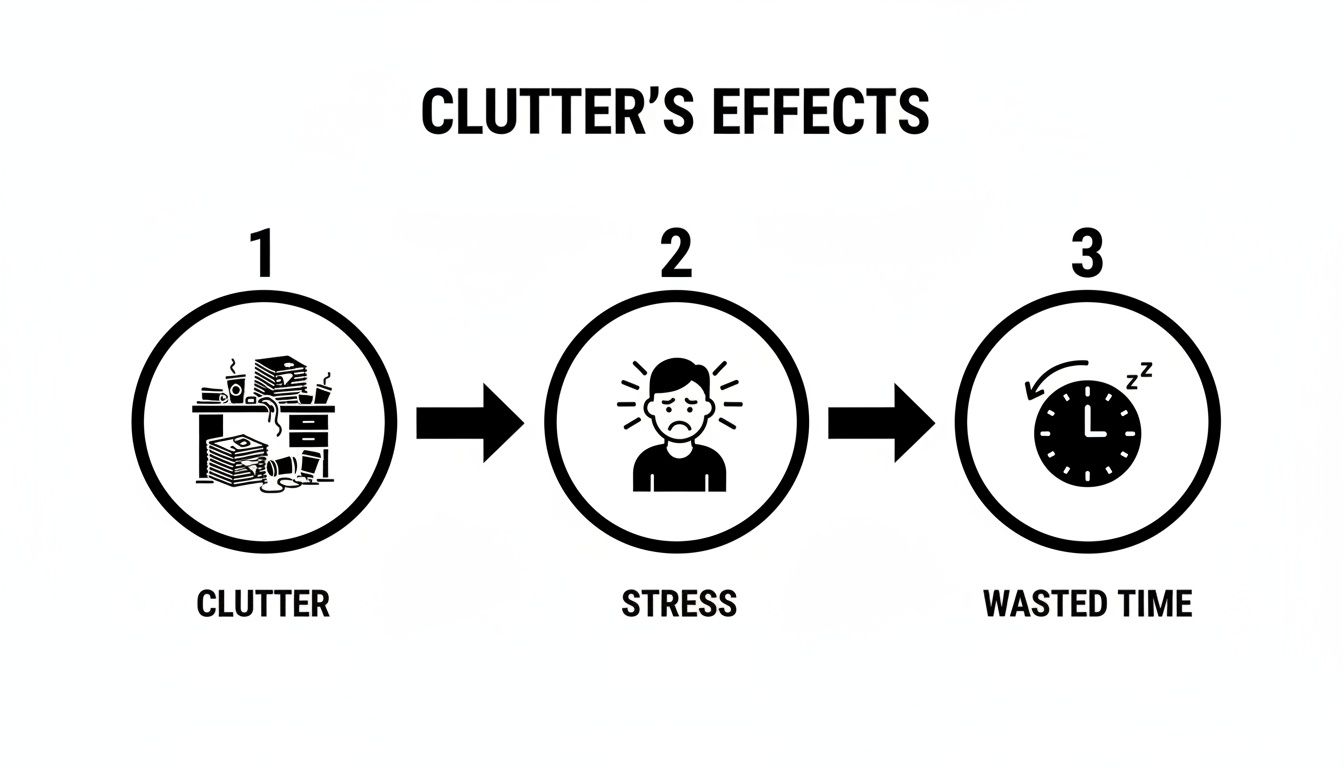
The real takeaway here? Clutter isn't just a passive mess. It’s an active thief of your mental resources and precious minutes.
With a clear space, you can start thinking like a designer. Your desk isn't just one big, flat surface—it’s a landscape with distinct neighborhoods, each with its own job. This simple concept, called zoning, is the secret to making organization stick.
"Your desk should be a reflection of your workflow. By creating designated zones, you build muscle memory, making it effortless to find what you need and, more importantly, put it back."
Grab a piece of paper and sketch a quick map of your desk. Think about how you work and divide the space into logical areas that match your daily tasks.
Every productive desk has a few fundamental zones. Creating them minimizes unnecessary movement and keeps your most-used items within arm's reach, removing little bits of friction all day long.
Digital Zone: This is your command center, right in the middle. It's home to your computer, monitor, keyboard, and mouse. The goal here is to keep this area as clear as possible to help you stay focused on the screen.
Analog Zone: Here's where you handle your non-digital tasks. If you're right-handed, this is usually on your right side; lefties, on the left. This spot holds your notepad, pens, and any papers you're physically working on right now.
Reference Zone: Positioned a bit further back or off to the side, this area is for things you need but don't use every single minute. Think of your planner, your phone stand, or a small file sorter holding key documents.
This simple layout creates an intuitive flow. For example, when you finish marking up a report in your analog zone, its next home is naturally the filing system in your reference zone—not a random pile in the middle of everything.
By giving every item a home, you eliminate the guesswork that leads to clutter. If you're looking for more inspiration, explore our guide packed with home office organization ideas. This strategic setup transforms your desk from a chaotic mess into a high-performance tool, ensuring your environment is finally supporting your productivity instead of sabotaging it.
You’ve done the hard part. Your desk is clear, your zones are mapped out, and you’re looking at a clean slate—a space just humming with potential. This is where the fun really begins. It's time to select the tools that will bring your vision to life, creating a system that’s not just functional but also a true reflection of you.
Think of your organizers as the architecture of your productivity. They're what give your workspace structure, turning a simple surface into a high-performance command center. The goal isn't just to buy a few bins; it’s to strategically choose pieces that solve specific problems and make you want to sit down and get to work.
One of the biggest mistakes I see people make is only thinking horizontally. Your desk's surface is prime real estate! The secret to keeping it clear is to build upwards. This is where tools like file sorters, monitor stands, and magazine holders become your best friends.
Instead of letting active project files sprawl across your desk, a vertical file holder keeps them neatly contained and easy to grab. A teacher, for example, could use a durable desktop file organizer to sort lesson plans for each day of the week, making Monday morning prep completely painless.
A well-chosen organizer does more than just store your things; it actually supports your habits. The right tool makes it effortless to put items back where they belong, stopping clutter before it even starts.
Ready to think vertically? Here are a few game-changers:
Magazine Holders: These aren't just for magazines! They're perfect for corralling notebooks, planners, or thin binders you need to access regularly.
Vertical File Sorters: Ideal for keeping current project papers, invoices, or client files neatly segmented and always in sight.
Monitor Stands: This is a non-negotiable for small desks. A good monitor stand lifts your screen to a comfortable, ergonomic height while creating a brand-new storage cubby underneath for your keyboard or other daily essentials.
Even in our digital world, paper has a sneaky way of multiplying. Incoming mail, reports to review, and stray notes can quickly descend into chaos. A simple, dedicated paper tray system is the single most effective way to manage this flow and make sure nothing important gets lost in the shuffle.
The two-tray system is a classic for a reason: it just works. Label one tray "Inbox" for all new documents and a second "Action" for anything that needs your attention. The moment a piece of paper lands on your desk, it has a home. This one small system brings a sense of calm and order to the constant stream of paper.
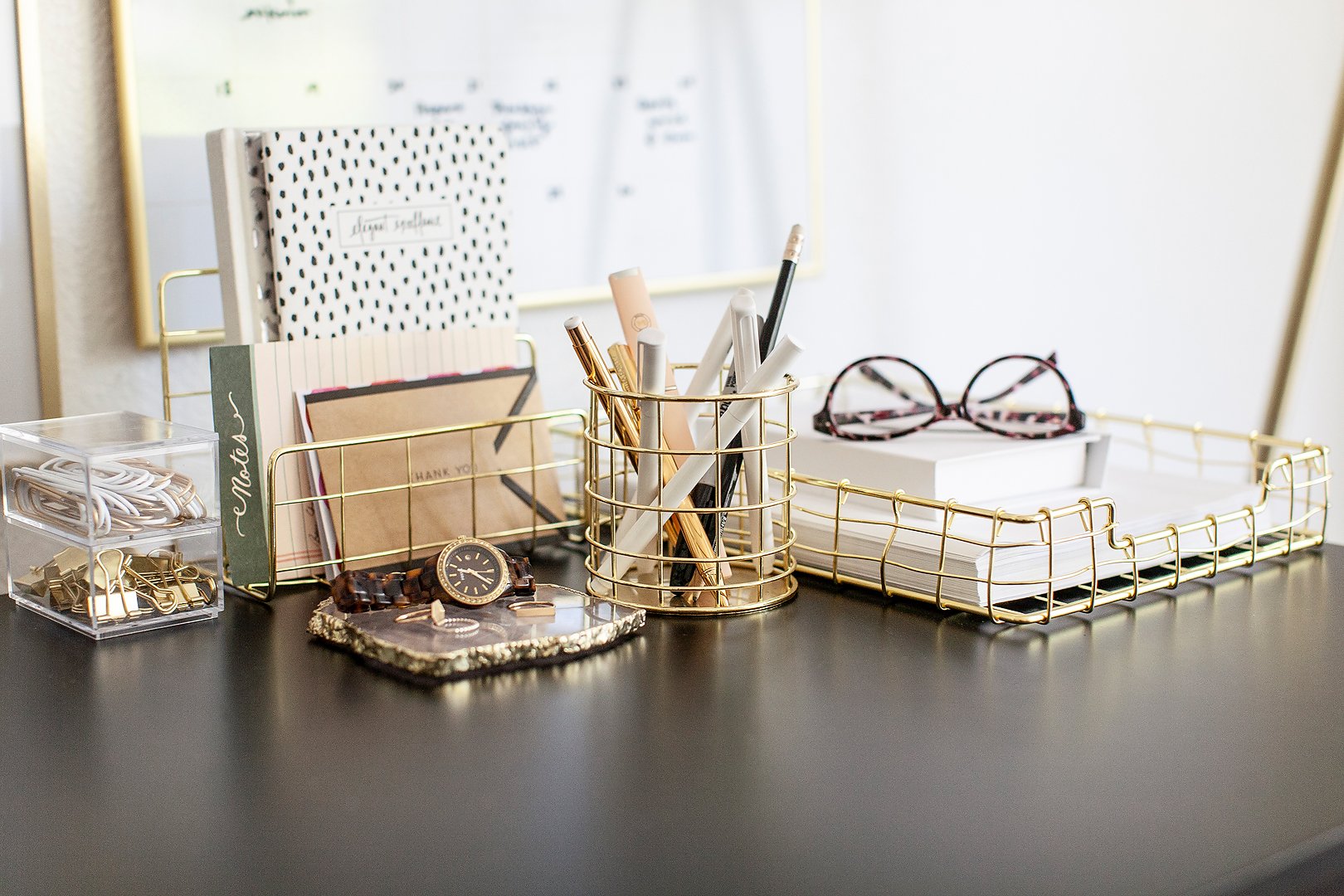
Pens, paper clips, sticky notes, charging cables—they're the tiny culprits of clutter. On their own, they seem harmless, but together they create a visual static that distracts your eye and disrupts your focus. The ultimate solution? A cohesive desk organizer set.
Picture a remote worker carving out a small office corner. A compact, multi-piece set with a pen cup, a sticky note holder, and a tray for clips and staples can instantly bring harmony to their workspace. It gives every small item a specific home, making things easy to find and even easier to put away.
Choosing a matching set also does wonders for the look and feel of your space. Whether you love the modern appeal of black mesh, the chic elegance of rose gold, or the calming vibe of natural wood, a coordinated look reduces visual noise. It creates a polished, professional atmosphere that feels intentional. You can explore a wide variety of beautifully crafted desk organizers to find a style that truly clicks with your personality.
Let's be honest: the most beautiful organizer in the world is useless if it doesn't actually fit the way you work. Before you add anything to your cart, take a quick moment to think about your daily tasks.
Are you constantly printing and signing documents? A paper tray and pen cup should be front and center. Are you a designer who needs quick access to a whole rainbow of markers? A multi-compartment caddy is probably your best bet.
To make it even easier, here’s a quick guide to help you match your needs with the perfect tools.
Finding the right pieces can feel overwhelming, but it's all about matching your unique needs with the perfect solution. This table will help you pair your biggest organizational challenges with the Blu Monaco collection that will solve them with style.
| Organizational Need | Recommended Blu Monaco Product | Ideal For | Collection Spotlight |
|---|---|---|---|
| Managing incoming mail and active papers | Stackable Letter Trays | Professionals handling daily paperwork | Mesh or Gold Wire Collections |
| Keeping project files and reports accessible | Desktop Hanging File Organizer | Teachers, project managers, and anyone juggling multiple tasks | Classic Wood or Modern Metal |
| Taming small supplies like pens and clips | 5-Piece Desk Organizer Set | Everyone—from students to remote workers | Rose Gold or Rustic White Collections |
| Storing notebooks, catalogs, or planners | Stylish Magazine Holders | Creatives, researchers, and avid note-takers | Faux Leather or Two-Tone Wood |
By thoughtfully selecting tools that not only look incredible but also serve a distinct purpose in your daily routine, you're doing more than just organizing your desk. You’re designing an environment that’s truly engineered for your success. Your workspace becomes a place of inspiration, where every single element works together to help you achieve your goals.
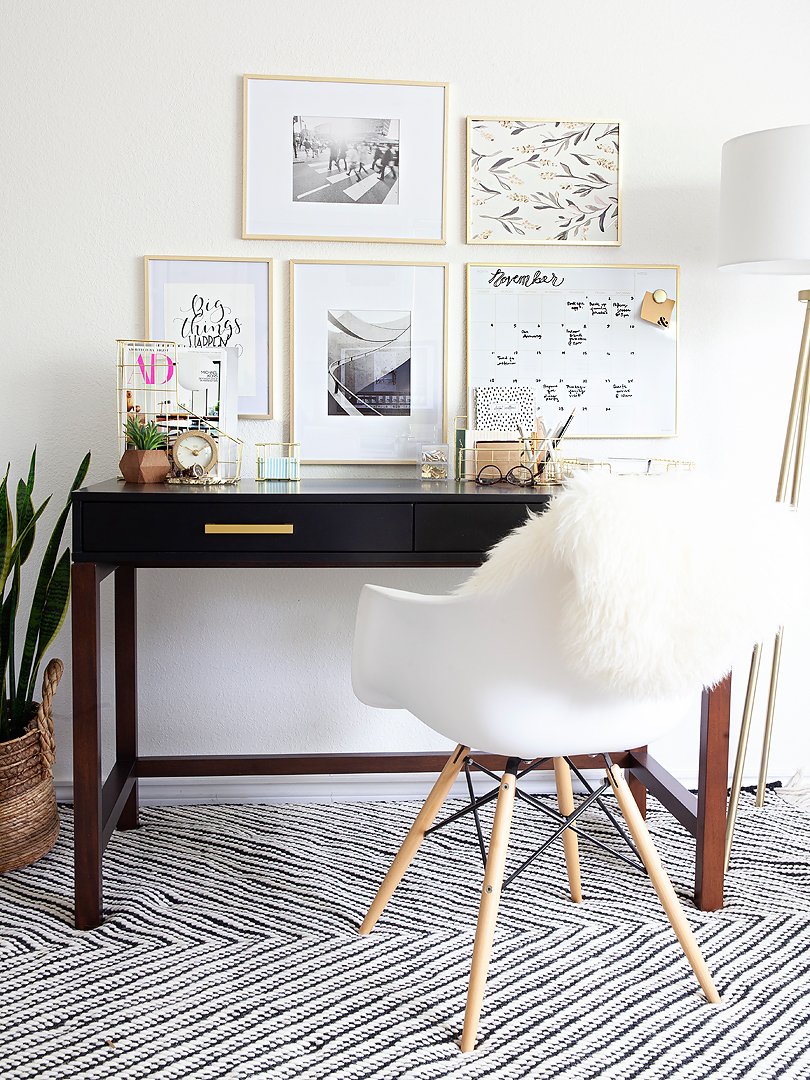
This is where the magic really happens. A truly organized desk is more than just a tidy surface; it's a carefully crafted environment that supports your health, focus, and productivity. Now that you've decluttered and chosen your tools, it's time to fuse stunning aesthetics with smart ergonomics to build a setup that feels as good as it looks.
The goal? A workspace that keeps you energized and free from strain all day long.
This isn't just a nice idea—it's backed by some serious results. The famous 'Coding War Games' study by Tom DeMarco and Timothy Lister found that software developers with quiet, organized spaces were almost twice as productive. More recently, another study revealed that workers with ergonomically arranged standing desks were a staggering 46% more productive. To see even more data on the link between office setup and performance, you can discover more insights on this topic at BostitchOffice.com.
Before we place a single organizer, let's get your physical setup right. An ergonomic workspace is a system where your desk, chair, and equipment work in harmony with your body, not against it. Nailing this is a total game-changer for preventing the aches and pains that kill focus.
Here are the non-negotiables for a healthy posture:
Monitor at Eye Level: Your screen should be straight ahead, with the very top of it at or just below your eye level. A monitor stand or even a sturdy stack of books works wonders to stop you from hunching over and straining your neck.
The Perfect Chair Height: Sit down with your feet flat on the floor. Are your knees at a 90-degree angle? Perfect. Your chair should also give you solid lumbar support to maintain your spine's natural curve.
Keyboard and Mouse Placement: Keep your elbows at a comfortable 90-degree angle, close to your body. Your wrists should be straight, not bent up or down. This neutral position is your best defense against repetitive strain injuries.
"Your best posture is your next posture. An ergonomic setup makes it easy to maintain a healthy position, but remember to move, stretch, and change it up throughout the day to keep your body happy."
With your ergonomic base set, it's time to place your organizational tools to complement this healthy flow. This is where your zones meet the principles of good posture. The main objective is to minimize any awkward reaching or twisting that can undo all your hard work.
Think of it like setting up a chef's kitchen—you want your most-used spices and oils right by the stove, not across the room.
Prioritize Your Dominant Side: Place the items you grab most often on your dominant side. If you're right-handed, your pen cup, phone stand, and go-to notebook should be within easy reach on your right. This simple habit stops you from constantly reaching across your body.
Create a Workflow Direction: Arrange your paper trays to match your process. For instance, an "Inbox" tray could sit on the left, and an "Action" tray on the right. This creates a natural, left-to-right flow for handling paperwork, just like reading a book.
Distance for Less-Used Items: Things you only use occasionally—like a stapler, tape dispenser, or a vertical file holder with reference documents—can be placed a bit further away. This keeps your immediate work zone clear and gives you a good reason to get up and move every once in a while.
Finally, let's bring your workspace to life without accidentally re-cluttering it. Good lighting is absolutely essential. If you can, position your desk to take advantage of natural light. A good desk lamp is also a must-have to reduce eye strain, especially if you work into the evening.
Now, add a few personal touches that genuinely inspire you—but be selective. A single, beautiful plant, a framed photo, or a favorite piece of art can do wonders for your mood. The key is intention. Choose one or two items that bring you joy, not a dozen that just create visual noise.
This is how you transform your desk from a mere workstation into a personal haven for creativity and peak performance.
You did it. You tackled the clutter, created smart zones, and curated a desk that’s both beautiful and functional. But let’s be real for a moment. An organized desk isn’t a one-and-done project. It’s a habit. Without a little daily attention, that peaceful oasis can quickly devolve back into chaos.
This is where the real magic happens. We’re shifting from a big project to a simple, daily practice. The secret is to build a small ritual that’s so quick and easy it becomes second nature. This isn’t about adding another chore to your list; it’s about protecting your focus and your sanity for the long haul.
The single most powerful habit for staying organized is what I call the '5-Minute Wind-Down.' Think of it as the closing ceremony for your workday. Before you shut down your laptop, take just five minutes to consciously reset your space for tomorrow. This tiny investment pays off big time in morning productivity and a calmer state of mind.
So, what does this actually look like?
Clear the Decks: Grab that coffee mug, the snack wrapper, and any other random items that have landed on your desk and put them back where they belong.
Reset Your Zones: Tuck your pens back into their holder, slide loose papers into your "inbox" tray, and put your notebook away. This simple action reinforces the system you worked so hard to create.
Wipe It Clean: A quick once-over with a microfiber cloth does more than just clean the surface. It’s a physical cue that the workday is officially over, helping you mentally disconnect.
This daily ritual stops tiny messes from turning into a monster pile of clutter. It guarantees that you walk into a welcoming, ready-to-go workspace every single morning, instead of a problem you have to solve before you can even start.
While the daily wind-down keeps surface clutter at bay, a quick weekly review is your secret weapon against deeper buildup, especially when it comes to paperwork. Just block off 15 minutes every Friday afternoon for a "Weekly Tune-Up." It's not a deep clean, just a focused reset.
Here’s what to focus on:
Tackle the Inbox: Go through your "Inbox" paper tray. File what you need to keep, shred what you don't, and add any new tasks to your to-do list.
Restock Your Tools: Are you low on pens? Sticky notes? Printer paper? A quick check now saves you from frustrating interruptions in the middle of a busy day next week.
Plan Your Attack: Take a moment to glance at the week ahead. A dedicated task planner is perfect for this, helping you map out your priorities so you can hit the ground running on Monday. This Daily Planner To-Do List Notepad is a fantastic tool for making this step concrete and effective.
The goal isn’t perfection; it’s consistency. A few dedicated minutes each day are far more powerful than a massive, soul-crushing cleanup once a month.
This consistent rhythm makes organization feel almost effortless. Your desk transforms from a temporary win into a permanent source of calm and focus. And this isn't just about looks—the effect on your performance is huge. Research shows that 94% of employees feel more productive in a clean workspace, with 77% reporting they can concentrate better. It makes sense, right? Organization eliminates the tiny distractions that steal your time. In fact, people in cluttered offices can lose up to an hour a day just looking for things. You can learn more about how a clean workspace boosts productivity. By turning organization into a simple ritual, you’re not just tidying up—you’re actively building a more successful and less stressful work life.
Even the most well-thought-out plan can hit a snag. Maybe you're wrestling with a desk the size of a postage stamp, a jungle of tangled wires, or a paper problem that just won’t quit. Let’s tackle some of the most common desk organization questions I hear, with real-world solutions that actually work.
When you're short on space, every inch counts. The single biggest shift you can make is to stop thinking out and start thinking up. Going vertical is the secret weapon for small desks.
Use a simple vertical file holder or a few wall-mounted shelves to get papers and supplies off your precious desktop. A monitor stand with drawers underneath is another one of my favorite tricks—it instantly creates a new storage cubby for your keyboard or notebook without taking up any new real estate.
In a small space, you have to be ruthless. Only the absolute essentials you touch every single day should earn a spot on your desk. Everything else needs a different home.
Multi-functional organizers are your best friend here. Look for a single piece that does the job of three, like a unit that holds your pens, props up your phone, and has a little drawer for paperclips. One smart item can replace a ton of clutter.
Nothing makes a clean desk look chaotic faster than a nest of tangled wires. The good news is that taming the cable spaghetti is surprisingly simple once you have the right tools.
Your first move? Grab some velcro ties and bundle related cords together. It’s a cheap and easy win. But for the biggest impact, get a cable management box. This is basically a simple container that sits on the floor or under your desk, hiding your power strip and all that extra wire completely out of sight. It's a game-changer.
If you want that super-clean, pro-level look, use some adhesive cable clips along the back edge of your desk. You can guide individual cords neatly along the frame, making them almost invisible. A dedicated charging station is also a great move to consolidate all your device chargers into one tidy hub.
Ah, the million-dollar question. Lasting organization isn't about one big clean-up; it's about building small, sustainable habits that prevent the mess from ever coming back.
The most powerful habit you can build is the '5-Minute Reset'. Before you clock out for the day, take just five minutes to put everything back where it belongs. This single ritual is what separates the temporarily tidy from the permanently organized. It stops tiny messes from snowballing into a weekend-long project.
Your system also has to be easy. If it’s a pain to put something away, you just won’t do it. Make sure every item has a logical, easy-to-reach home. Finally, book a 15-minute “weekly reset” with yourself on your calendar to file away any stragglers and give things a quick refresh. Consistency is everything.
Paper clutter is public enemy number one for a tidy desk. The best way to fight back is to adopt an aggressive 'one-touch' rule.
The moment a piece of paper hits your desk, you have to decide its fate. You have three choices: act on it, file it, or recycle it. That’s it. Don't even think about creating a "to-do" pile—that's just a clutter pile with a fancy name.
A simple two-tray system can work wonders for managing the flow:
Tray 1: Inbox - This is the landing pad for every new piece of paper.
Tray 2: Action - Things that require you to do something live here until you've done it.
Once you’ve handled an item from the "Action" tray, it goes straight to your filing cabinet or into the recycling bin. A desktop file sorter is perfect for keeping your most active project folders close by but neatly contained, so they don’t take over your entire workspace.
Ready to create a desk that truly inspires you every single day? At Blu Monaco, we believe your workspace should be both beautiful and functional. We design stylish organization tools to help you build a desk you absolutely love. From chic rose gold sets to modern black mesh, we have the perfect pieces to match your style and help you conquer clutter for good.


