No products in the cart.


Here’s the secret to conquering the chaos of incoming mail: handle every single piece of paper the moment it enters your home. Don't let it touch the kitchen counter. Don't let it get lost in a pile on the dining table. Instead, you need a daily “triage” system to sort everything immediately.

That endless stream of paper can feel like a losing battle, can't it? The real secret to winning isn't some complex filing cabinet system or spending hours sorting. It’s all about creating a simple daily habit and making decisive, split-second choices to stop the piles before they even have a chance to form. This immediate sorting routine is your best defense against clutter.
The very first step is to establish a dedicated "landing zone" for all incoming mail. This is one single spot—and only one spot—where every envelope, catalog, and flyer must go before it gets processed. Think of it as your own personal control checkpoint for paper.
Your mail's landing zone shouldn't be a forgotten corner of the kitchen counter. Make it an intentional space that feels good to use. A beautiful wall-mounted organizer by the door or a chic Blu Monaco letter tray on an entryway table can transform this daily task from a chore into a truly satisfying ritual.
Imagine using a stunning rose gold sorter from our Fontvielle collection to visually separate urgent bills from magazines. It makes the whole process feel empowering and even looks great. For more ideas, you can explore our guide on choosing the best desk paper trays at https://www.blumonaco.com/blogs/content/desk-paper-trays.
Key Takeaway: The goal is to touch each piece of mail only once. By immediately deciding its fate—Action, File, or Recycle—you eliminate the mental energy wasted on reshuffling the same stack of papers day after day.
Did you know the average American household receives about 454 pieces of marketing mail annually? That’s 1-2 items every single day, on top of the 113+ emails we’re already managing. This constant flow is exactly why a quick, reliable sorting method is so essential for keeping both your physical and digital life in order.
Once your mail is in its landing zone, it’s time to apply the "3-Second Sort Rule." This is all about making a quick decision and moving on. You’ll categorize everything into three distinct piles, and it should only take a few seconds per item.
This quick reference guide will help you instantly sort incoming mail and prevent paper pile-ups right at the source.
| Category | What It Includes | Immediate Action | Blu Monaco Product |
|---|---|---|---|
| Action | Bills to pay, RSVPs, forms to sign, time-sensitive offers. | Place in your designated "Action" tray or folder. | 3-Tier Paper Tray |
| File | Paid bill stubs, bank statements, tax documents, receipts. | Put in a "To-File" folder to process weekly. | Vertical File Holder |
| Recycle | Junk mail, flyers, catalogs you won't read, empty envelopes. | Toss directly into the recycling bin. Be ruthless! | N/A (Your trusty recycling bin!) |
This simple, three-part system, paired with the right organizer, prevents paper from ever taking over your space again.
If you're looking to truly streamline your system and go digital, you can even explore using OCR recognition software to scan and digitize important receipts and invoices, further clearing the physical clutter from your home.
Okay, that "Action" pile from your initial sort? That’s your physical to-do list. Just leaving it in a chaotic stack on the counter is a surefire way to miss a due date and invite stress into your life. This is your chance to turn that pile into something inspiring—a true command center.
Think of it as a single, dedicated hub where every bill, form, and RSVP gets the attention it deserves. This isn't just about finding a place to stash papers; it's about building a system that nudges you to take action. This is where the real work happens, transforming a cluttered corner into a spot of serene efficiency.
The secret to taming that "Action" pile is breaking it down. A single, monolithic stack of "stuff to do" is intimidating. When you subdivide it, you instantly clarify what needs to happen next.
I always suggest starting with these three core categories:
Bills to Pay: Pretty straightforward. This is for any invoice or statement that needs a payment. I like to keep them ordered by due date, with the most urgent ones right up front.
Follow-Up: This is the holding pen for things that need a phone call, an email, or more info before you can move forward. Think insurance claims you need to check on, a query for a doctor's office, or a rebate form you need to mail.
To File: This is the finish line! These are the documents you've already handled—paid bills, processed forms—that are just waiting to be put away in your long-term filing system.
Just separating your papers into these groups makes your workload feel so much more manageable.
Imagine this: Instead of staring at a scary, mixed-up pile of paper, you see three utility bills in your "Pay" slot and one insurance statement in your "Follow-Up" section. The whole task immediately feels less overwhelming and totally doable.
The actual organizer you choose is the foundation of your command center. It absolutely has to be practical, but it should also be something you love looking at. When you have a beautiful, well-designed piece, it turns a chore into a more pleasant ritual.
A multi-slot desktop organizer is a fantastic all-in-one solution. You can label each slot—"Pay," "Follow-Up," "File"—and know exactly where everything lives at a glance.
If you deal with a higher volume of paperwork, like if you run a small business or you're a parent juggling endless school forms, a desktop hanging file organizer might be a better fit. It gives you room for more detailed categories. You could create dedicated folders for your main utilities (gas, electric) or a separate folder for each kid's school stuff.
Having this one central spot is a game-changer. You’ll never again have that frantic, last-minute hunt for a bill you know you saw somewhere. Every important document has its home. You can find some incredibly stylish options to build your system, like this white wood desk organizer with a drawer. It perfectly blends elegance with function, giving your essential papers a beautiful home while they wait for your attention.
Okay, so you’ve got your mail sorted and a neat little pile of bills sitting in your command center. That’s a huge first step, but let's be honest—it’s still just a pile. The real game-changer is creating a simple, repeatable routine that gets those bills paid and filed away without a second thought.
This isn’t about adding another huge task to your plate. It's about carving out a small, dedicated chunk of time to stay ahead of the game, so you never have to stress about a missed due date again.
Find just 15-30 minutes once a week and block it out on your calendar. Treat this "money meeting" with yourself as seriously as you would any other appointment. This is your time to open the mail in your "To-Do" tray, schedule payments for the coming week, and file away anything that’s been handled.
Making this a consistent habit is what stops the frantic, last-minute bill-paying scramble. It puts you squarely in control. Think about it: research shows a piece of direct mail can hold our attention for up to 132 seconds. If you don’t have a system, you waste that focus just trying to figure out what to do next. A weekly routine makes every one of those seconds count.
Before you know it, this simple rhythm will transform bill management from a chore you dread into a calm, empowering habit.
The easiest bill to pay is the one you don’t have to think about, right? For all your fixed, predictable expenses—like your mortgage, car loan, or Netflix subscription—automation is your best friend. Just set up autopay directly with the company or through your bank’s bill pay service and let them run in the background.
But I wouldn't recommend putting everything on autopilot. For bills that change from month to month, like your credit card or utility bills, you want to keep your eyes on them. This gives you a chance to catch weird charges, spot errors, and just generally keep a pulse on your spending.
Here’s a simple flow that works beautifully for these variable bills:
Review: As soon as the bill comes in, give it a quick scan. Does everything look right?
Schedule: Pop into your online banking app and schedule the payment for a few days before it’s actually due.
Confirm: Once it's paid, I like to jot a quick note right on the paper bill, like "Paid 10/25," before filing it. If it's a digital bill, I just drag it into a "Paid" folder in my email.
If you really want to level up your organization, check out the best recurring task apps. They can send you reminders for everything from paying your electric bill to remembering to change the air filter.
Pro Tip: For every variable bill, I immediately create a reminder in my phone's calendar for two days before the due date. It’s a simple digital nudge that acts as a fantastic safety net, ensuring nothing ever slips through the cracks, no matter how chaotic the week gets.
This little flow chart breaks the process down into three simple, memorable steps to tackle during your weekly finance time.
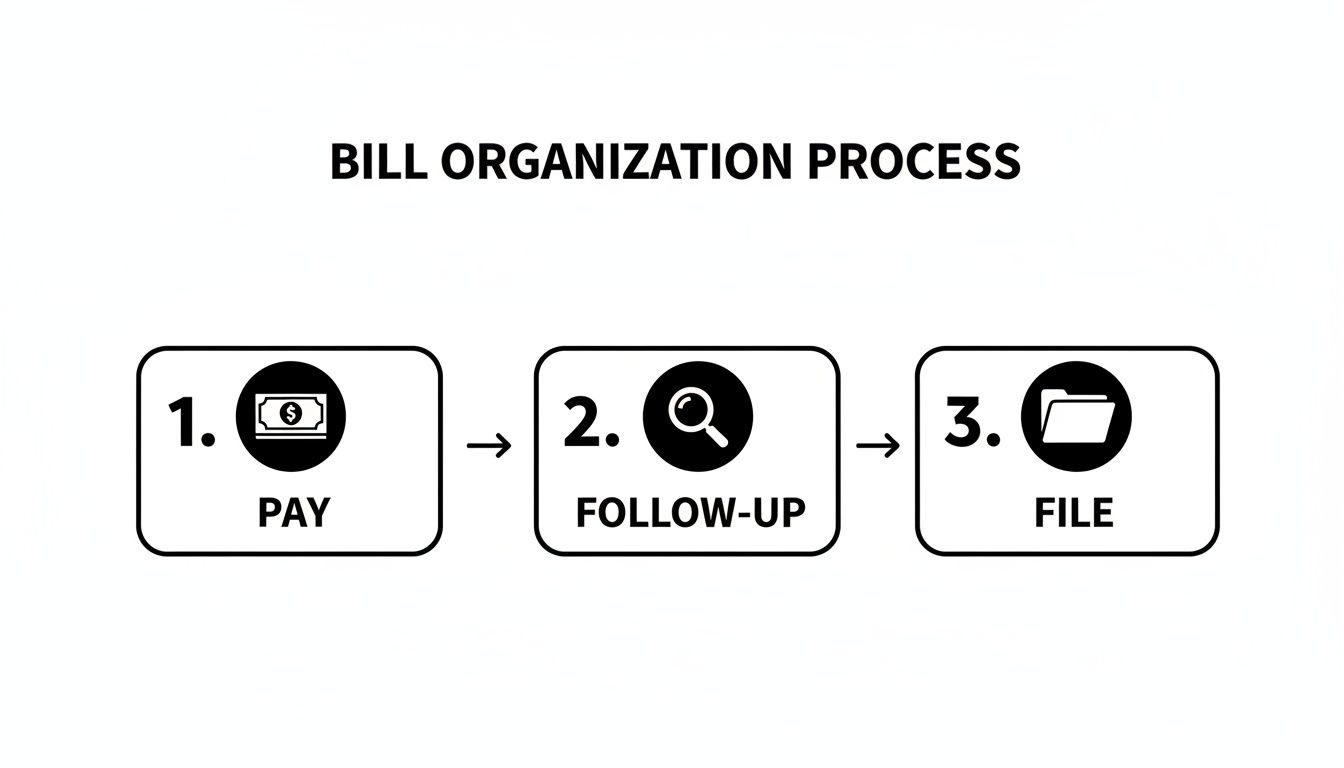
Ultimately, it all comes down to this: Pay, Follow-Up, and File. Make that your mantra, and you’ll be on the path to total financial clarity.
So, you’ve paid the bill and handled the immediate task. Now what? Just shoving that paper into a drawer might feel like a win, but it’s really just pushing the clutter problem down the road. The final, most rewarding step is creating a simple, reliable home for all your important documents. This is how you build a true archive for your life—a go-to spot for everything from tax records to appliance warranties.
Your long-term system doesn't need to be a complex beast. In fact, the simpler it is, the more likely you are to stick with it. For those with a bit of space, a classic filing cabinet using a color-coded system is a game-changer. Imagine assigning green for all things financial, blue for household papers, and red for medical records. It makes finding exactly what you need, when you need it, practically second nature.
The great debate: what do you keep in paper form versus what can you scan? There’s no single right answer, but a hybrid approach usually offers the best of both worlds. You can create a lean digital archive for everyday papers while keeping the truly critical documents in their original physical form.
Here’s a quick breakdown to help you decide:
Keep Physical Copies: These are your "forever" documents. Think birth certificates, social security cards, marriage licenses, property deeds, and vehicle titles. They need a safe, secure home.
Scan and Shred: Most of the monthly paper trail falls here. Utility bills, credit card statements, pay stubs, and bank statements can all be digitized once you’ve confirmed everything is correct.
Keep for a Limited Time: Tax records are the big one. The standard advice is to hold onto them, along with all supporting documents, for at least seven years. A clearly labeled file box tucked away in a closet is perfect for this.
If you're looking to tackle the entire paper mountain, our complete guide on how to organize paperwork at home is a fantastic resource.
A Proactive Mindset: Try to think of your filing system not as a dusty old storage unit, but as your personal life library. Every file holds a piece of your story and provides the information you'll need later. Keeping it organized is truly an act of kindness to your future self.
You absolutely do not need a dedicated home office to create a brilliant filing system. With the global urban population expected to hit 6.5 billion by 2030, our living spaces are getting cozier, making clever, compact solutions more important than ever.
Instead of a bulky cabinet, think differently. An elegant magazine holder, like one from Blu Monaco’s Riviera collection, can blend right into your bookshelf decor. It’s the perfect size to hold a year's worth of essential files. When the year is over, simply archive that folder, start a new one, and enjoy a living space that feels serene, uncluttered, and totally under control.

So, you’ve built a beautiful, functional system for your mail and bills. That’s a huge win! But here’s the truth I’ve learned over years of helping people get organized: even the most perfect setup will crumble without one key ingredient. Maintenance.
The secret to making this actually last isn’t some massive, soul-crushing seasonal overhaul. It's a small, consistent weekly reset. Think of it as a quick tune-up that keeps your system running like a well-oiled machine.
This isn't about adding another chore to your already packed schedule. Frame it as a 15-minute ritual of self-care for your space and your mind. It’s your dedicated time to hit the reset button, ensuring the peace and clarity you’ve worked so hard to create becomes a permanent part of your home’s atmosphere. This small investment of time is what prevents those little molehills of mail from turning back into mountains of clutter.
To make this routine stick, you have to keep it simple and almost ridiculously easy. Grab your favorite coffee or tea, put on some music you love, and just work through this quick checklist. Remember, the goal here is progress, not perfection.
Tackle the Command Center: Start with your "Action" tray. Pay any bills that are due soon, make those quick follow-up calls you’ve been meaning to, and move the paid statements over to your "To File" folder.
Process the New Arrivals: Go through any new mail that’s landed in your intake zone since your last daily sort. Make those quick decisions: Action, File, or Recycle. Don't overthink it.
File and Archive: Now, grab everything from your "To File" folder and put it away in your long-term filing system. This is the final step that officially closes the loop on that piece of paper. Ah, satisfaction!
Shred and Recycle: Get the shredder going for any documents with sensitive information you no longer need. Toss all the junk mail and catalogs from the week into the recycling bin and enjoy the empty space.
This proactive approach is what truly separates a temporarily tidy desk from a permanently peaceful one.
Make It a Ritual You Love: I've found that the most successful habits are the ones we genuinely enjoy. Try pairing your weekly reset with something you look forward to—that first sip of coffee on a Saturday morning, your favorite podcast, or just 15 minutes of quiet solitude before the house wakes up. When the routine feels like a reward, it becomes effortless.
It might seem like a simple habit, but its impact is profound. Unorganized mail isn't just a visual nuisance; it’s a major source of mental and operational drag. It’s not just you—real-world data shows that manual paper piles are a key reason why 93% of executives struggle to keep up with demand.
By adopting a simple weekly sort—bills in one tray, junk in the recycle bin—you can reclaim hours every month. It’s the same principle that helps professional teams save an average of 20 hours monthly just by using better organizational tools. You can dig into more of the fascinating data behind mail by exploring these direct mail statistics.
When you turn maintenance into a simple, weekly habit, you ensure your beautifully organized workspace remains a true source of productivity and inspiration, not stress. You’re not just managing paper; you’re cultivating a lifestyle of clarity and control. And that feels amazing.
Starting any new system is going to bring up questions. That's a good thing! It means you're really thinking about how to make this work for you and your life, which is the secret to building a habit that actually sticks.
Let's walk through some of the most common sticking points people run into when they first start wrangling their paper clutter. Think of this as the final polish on your new, peaceful system.
This is the number one question I hear, and the answer is probably a relief: not as long as you think. For most of your regular household bills—we're talking electricity, water, internet, that kind of thing—you don't need to keep the paper copy forever once it's paid.
A great rule of thumb is to hang onto them for one year. This gives you a full 12-month cycle to look back on if you ever need to question a charge or just compare your usage year-over-year. After that? Feel free to shred away.
The only big exception here is for bills related to tax deductions (like property taxes) or major purchases, such as a big home improvement project. Those should be filed away with your tax documents for a solid seven years.
The never-ending flood of junk mail can feel totally defeating. The trick is to be absolutely ruthless and completely guilt-free about it. Its only job is to get your attention, and you have zero obligation to give it any.
Your daily sorting routine is your best weapon. The second you recognize something as junk, it goes straight into the recycling bin. Don't even let it land on the counter.
For those pesky catalogs or mailers that show up like clockwork, take 30 seconds to call the company or find the "unsubscribe" link on their website. It feels like a tiny action, but it pays off big time in stopping the clutter before it even starts.
A Little Perspective: The USPS delivers mail in just 2.6 days on average, so things pile up fast. But here's the good news: thanks to better practices, 87% of marketing mail is now recycled. The real game is just quickly telling the difference between what matters and what doesn't. You can dig into more of these fascinating direct mail insights if you're curious.
Making the switch from paper to a digital system can feel like a massive project, but it doesn't have to be. The secret is to start small—you're not trying to digitize your entire financial history in one weekend.
Here’s a simple, bite-sized approach to get you started:
Pick Just One Bill: Seriously, just one. Choose something easy, like your cell phone bill or a streaming service. Log into their website and switch on paperless billing and autopay.
Make a Digital "File Cabinet": In your email, create a new folder. Call it something simple like "Paid Bills." Now, every time you get that payment confirmation email, just drag it into that folder. Done.
Grow From There: Once you feel good about that one bill, add another one next month. And then another. Before you know it, you'll have drastically cut down the paper coming through your door, all without that feeling of being totally overwhelmed.
Ready to build a command center that brings you a sense of calm and control? The beautiful and practical organizers from Blu Monaco are designed to help you turn any surface into an inspiring, productive space. Find the perfect pieces to fit your style and finally win the war on paper clutter at https://www.blumonaco.com.


