No products in the cart.

Let’s be honest: a truly organized home office isn't about looking perfect. It's about creating a space that works for you, a personalized system designed around your unique workflow. The secret lies in a simple process: first, get real about your daily tasks and work style, then clear the clutter, create functional zones, and finally, bring in storage solutions that actually support the way you get things done.
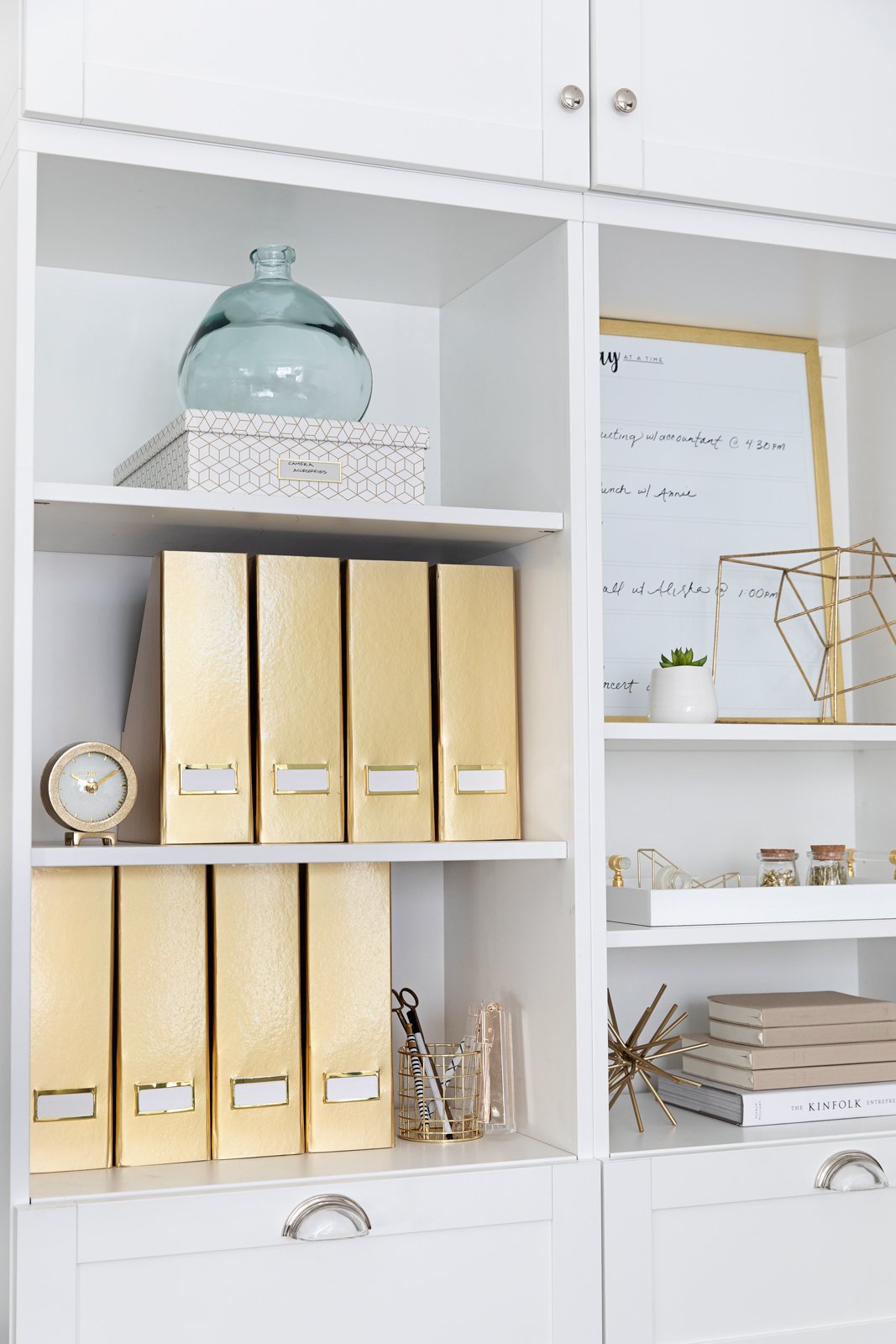
Before you even think about buying a single storage bin or moving furniture, we need to start with you. The most important step is simply understanding yourself. A space that’s genuinely organized doesn’t just look tidy—it’s an environment designed to anticipate your needs and remove those little bits of friction that derail your day.
Think of it like drawing up a blueprint for a house. You wouldn’t just start hammering without figuring out where the kitchen or bedrooms should go, right? Your office needs that same intentional planning, built entirely around your personal habits and professional demands.
Let's start with an honest audit of your current workspace. What are the things that constantly drive you crazy or slow you down? Naming these frustrations is the first real step toward fixing them for good.
Paper Overload: Is your desk drowning in piles of mail, invoices, and random notes? If you’re always searching for a specific document, it’s a clear sign you need a solid paper management system, like dedicated letter trays or a trusty vertical file holder.
Cable Chaos: Take a peek behind your monitor. Is it a tangled mess of wires? This isn’t just an eyesore; it can be a genuine hazard. Your new plan needs to include a strategy for taming those cables.
Supply Scramble: How much time do you waste digging through a junk drawer for a pen, a paperclip, or a sticky note? This tells me your everyday tools aren’t where they need to be—within easy reach.
Your goal isn't just to clean up. It's to create a system so intuitive that finding what you need feels automatic, keeping you in the zone. That's the heart of a truly productive workspace.
Once you’ve identified the pain points, it’s time to get to know your work style. The way you work is the single biggest factor in determining the kind of organization you need. There’s no magic one-size-fits-all solution here; what works for a creative artist will be completely different from what an accountant requires.
Which of these common work styles sounds most like you?
The Minimalist: You do your best work in a clean, uncluttered space with zero distractions. For you, it’s all about having only the absolute essentials on display. Your dream setup probably involves sleek, concealed storage and wide-open surfaces.
The Creative Collaborator: Your work is dynamic, messy, and project-based. You need your supplies, samples, and inspiration boards right where you can see them. Your space will come alive with open shelving, wall grids, and maybe even a mobile storage cart.
The Power User: Technology is your world. You’re surrounded by multiple monitors, a dozen peripherals, and all the latest gadgets. For you, the top priorities are rock-solid ergonomics and brilliant cable management to keep your tech hub humming.
Knowing your style is a game-changer because it helps you prioritize. A minimalist might invest in a set of matching desk accessories to keep the look cohesive, while a creative collaborator might go for a colorful pegboard to keep tools visible and ready.
When you analyze your own habits, you can build a space that works with your natural tendencies instead of fighting against them. This self-awareness is the foundation for creating a more productive environment and learning how to improve workplace efficiency from the inside out. A little planning now ensures every choice you make later is a powerful step toward a more focused, fulfilling workday.
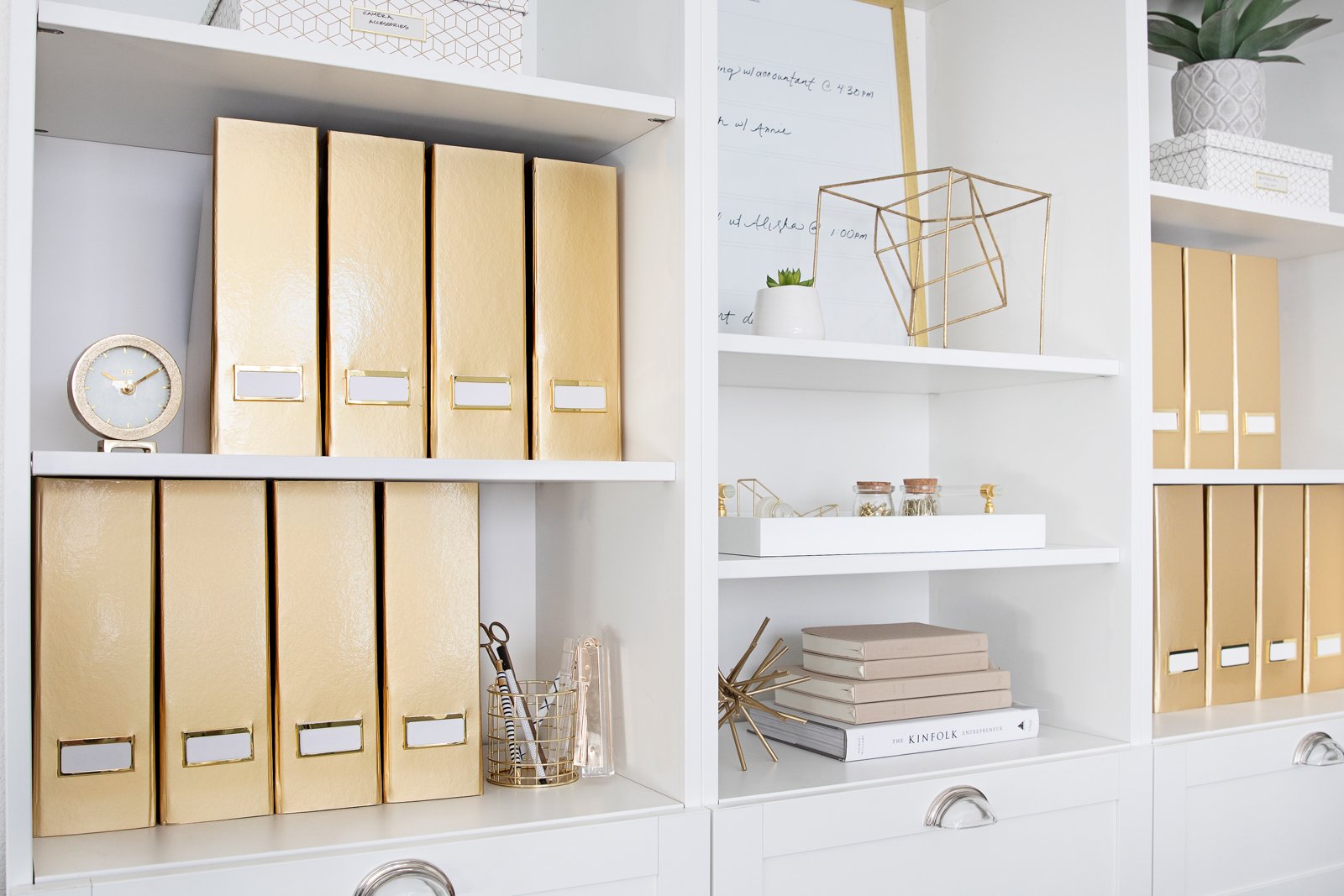
Let's be real—the thought of decluttering can feel like standing at the base of Mount Everest. But I promise you, conquering that initial chaos is the single most powerful thing you can do to reclaim your focus and create a home office you actually love working in.
This isn't just about tidying up. It's about making intentional choices that clear out both your physical space and your mental clutter. We're going to break this down into a process that feels less like a chore and more like a fresh start. Forget vague advice. Let’s get specific about auditing your supplies, taming the paper monster, and finally figuring out what to do with that tangled drawer of mystery cables.
The key to avoiding overwhelm is to start small. Instead of trying to boil the ocean by tackling the whole room at once, just focus on one category: your office supplies. That’s it. Pull every single pen, paperclip, binder, and sticky note out of its hiding spot and pile it all up.
Now comes the fun part. It’s time to get brutally honest.
Test every pen. If it’s scratchy or dried up, it’s out. No second chances.
Consolidate duplicates. Seven half-used notepads? Combine them into one solid stack. How many staplers does one person really need?
Question everything. That label maker you bought with the best of intentions three years ago? If it's still in the box, it’s just taking up precious real estate.
There's something so satisfying about this process. You aren't just getting rid of junk; you're curating a toolkit of items you genuinely use and trust. The goal is a streamlined arsenal of reliable tools, ready for action whenever inspiration strikes.
Decluttering isn’t about what you get rid of. It's about what you choose to keep. Surround yourself only with the tools that support your best work.
An organized workspace is no longer a luxury—it's a necessity. Experts predict that by 2026, a staggering 32.6 million Americans will be working remotely as more companies embrace flexibility. While leaders worry about things like cybersecurity, simple physical clutter remains one of the biggest silent killers of at-home productivity.
If there's one villain in the story of office clutter, it's paper. It shows up uninvited every single day and, if you let it, will quickly morph into anxiety-inducing piles on every flat surface. The only way to win is to create a system that stops paper in its tracks.
The secret? A simple but powerful habit I call the "one-touch rule." Every piece of paper that crosses your threshold gets handled only once before it lands in its final destination. No more "I'll get to this later" piles.
To make this happen, you just need a simple command center:
An "Inbox" Tray: This is the official landing zone for all mail, notes, and documents.
A Vertical File Sorter: For active projects or papers that need attention this week.
A Shredder: Keep it within arm's reach to immediately destroy junk mail and unneeded sensitive documents.
The moment a document hits your inbox, you make a decision: Act on it, File it, or Shred it. That’s the whole system. This tiny habit prevents the pile-up and keeps your desk clear for the work that actually matters.
Ready for a game-changer? Go digital. So many of the documents we hang onto "just in case" can be scanned and stored securely in the cloud, freeing up an unbelievable amount of physical space.
Just think about all the paper currently taking up residence in your office: old utility bills, notes from past projects, tax receipts, user manuals. Most of it can go.
Use a simple desktop scanner or even a high-quality scanning app on your phone to create digital copies. Organize them into clearly labeled folders on your computer or a cloud service like Google Drive or Dropbox. Suddenly, you have a searchable, secure digital filing cabinet that doesn’t require a single bulky piece of furniture.
And as you clear your main desk area, don't forget about those other clutter hotspots, like the office closet. If you need a battle plan, here's a great guide on how to tackle organizing an office closet without the overwhelm. By the time we're done, you'll have a beautifully clear space and a system to ensure the clutter never comes back.
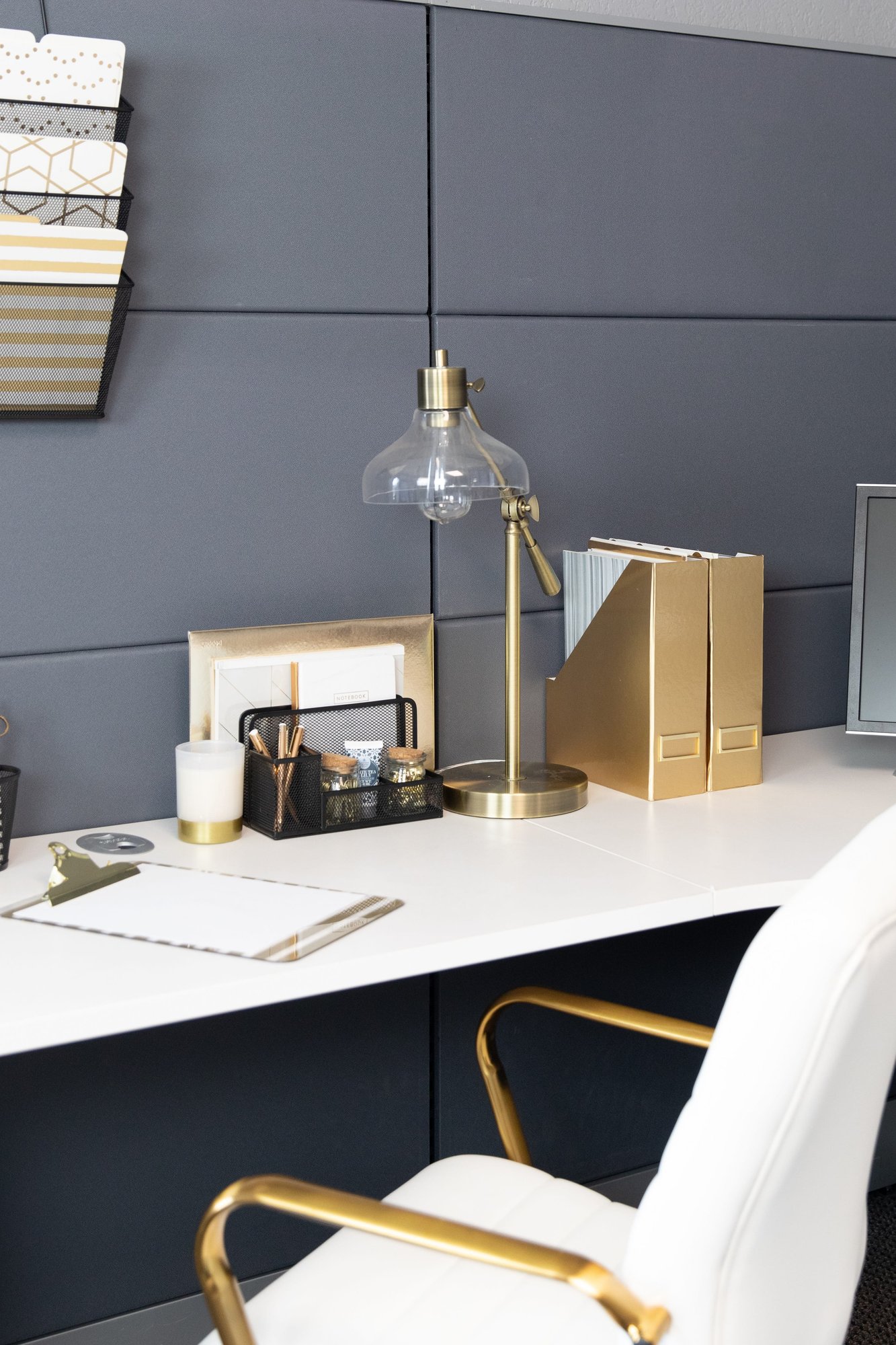
Alright, with the clutter cleared, it’s time for the fun part: bringing a sense of logic and effortless flow to your workspace. A truly great office feels intuitive, like an extension of your own mind where everything you need is exactly where you’d expect to find it.
This is where the magic of "zoning" comes into play. It’s a simple but powerful idea: you strategically divide your space into distinct areas based on the kind of work you do there.
Think of it like setting up your own personal command center. No more frantic searches for a stapler while on a video call or digging through piles for that one client file. The goal is a seamless workflow, letting you grab what you need without ever breaking your focus.
No matter how big or small your office is, every single one can benefit from having at least three main zones. These are the building blocks of a hyper-efficient space, designed to group related tasks and tools together so you’re not crisscrossing your office all day.
The Computer Zone: This is your digital hub, the epicenter of your work. Keep it clean, ergonomic, and focused on your essential tech—monitor, laptop, keyboard, and mouse. By making this area a screen-only space, you instantly minimize distractions.
The Reference Zone: This is for all the things you need to look at but don't use every minute of the day. Think binders, project files, textbooks, or manuals. The ideal spot is on a nearby shelf or in a cabinet—easily accessible but not taking up prime real estate on your desk.
The Supply Zone: Here’s where all your analog tools live. Pens, paper clips, sticky notes, staplers—you name it. A sharp desk organizer set or some smart drawer dividers will keep these items contained and ready for action.
The real power of zoning is how it builds muscle memory. When your hand instinctively knows where the scissors are, you shave precious seconds off your tasks. Those seconds add up to a whole lot of time and mental energy saved over the course of a week.
Creating these distinct areas is what transforms a room with a desk into a high-performance workspace. It's a small change in how you think about your office that delivers massive returns in productivity.
To help you map this out, here’s a quick guide to what goes where.
This table breaks down the most common zones to help you visualize how to create a system that works for your specific tasks and tools.
| Zone | Primary Function | Key Items | Suggested Organizer Style |
|---|---|---|---|
| Computer Zone | Digital tasks, communication, deep work | Monitor, laptop, keyboard, mouse, docking station | Minimalist stand, cable clips |
| Reference Zone | Quick access to physical documents & info | Binders, project files, manuals, textbooks | Vertical file holders, magazine racks |
| Supply Zone | Housing for everyday office tools | Pens, paper clips, stapler, sticky notes, scissors | Multi-compartment desk organizers, drawer trays |
| Creative Zone | Brainstorming, planning, and ideation | Whiteboard, corkboard, sketchpads, markers | Wall-mounted organizers, pinboards |
Use this as a starting point. Your personal zones might include a dedicated "Shipping Station" or a "Reading Corner," so feel free to adapt it to your unique workflow!
Now that you've defined your zones, the next step is arranging them for pure efficiency. It’s so important to understand how to plan a room layout to get the most out of your square footage and create a natural path of movement. The right layout just makes everything easier.
For instance, your Reference Zone, with those frequently used project binders, should be within arm’s reach of your chair. A shelf right behind you is perfect. This simple placement stops you from having to get up and break your train of thought every time you need to grab a file.
Another pro tip? Position your supply organizers on your dominant-hand side. If you're right-handed, having your pen cup and sticky notes on the right side of your desk just feels right and eliminates any awkward reaching. It’s these tiny ergonomic tweaks that make a huge difference.
Zoning isn’t just about cold, hard function—it’s a fantastic opportunity to inject your personality into the space. A great way to do this is by using color-coordinated accessories to visually signal what each zone is for.
Imagine a sleek black mesh organizer set for your Supply Zone and matching black file holders for your Reference Zone. It creates a polished, intentional aesthetic that looks amazing and also provides subconscious cues to your brain.
When you start to associate "gold accessories" with "writing tools," you build a faster, more intuitive connection with your workspace. This visual harmony has a real impact on your mood and motivation.
Don't be afraid to get creative, especially in smaller spaces. A wall-mounted grid organizer can pull double duty as a vertical Supply and Reference Zone, getting essentials off your desk but keeping them in sight. A rolling cart is another brilliant solution, acting as a mobile zone that follows you where the work is.
The whole point is to adapt these principles to your space and your style, creating an environment that feels both incredibly organized and deeply inspiring. Digging into the psychology behind home office color schemes can take this to the next level, helping you design a space that truly works for you.
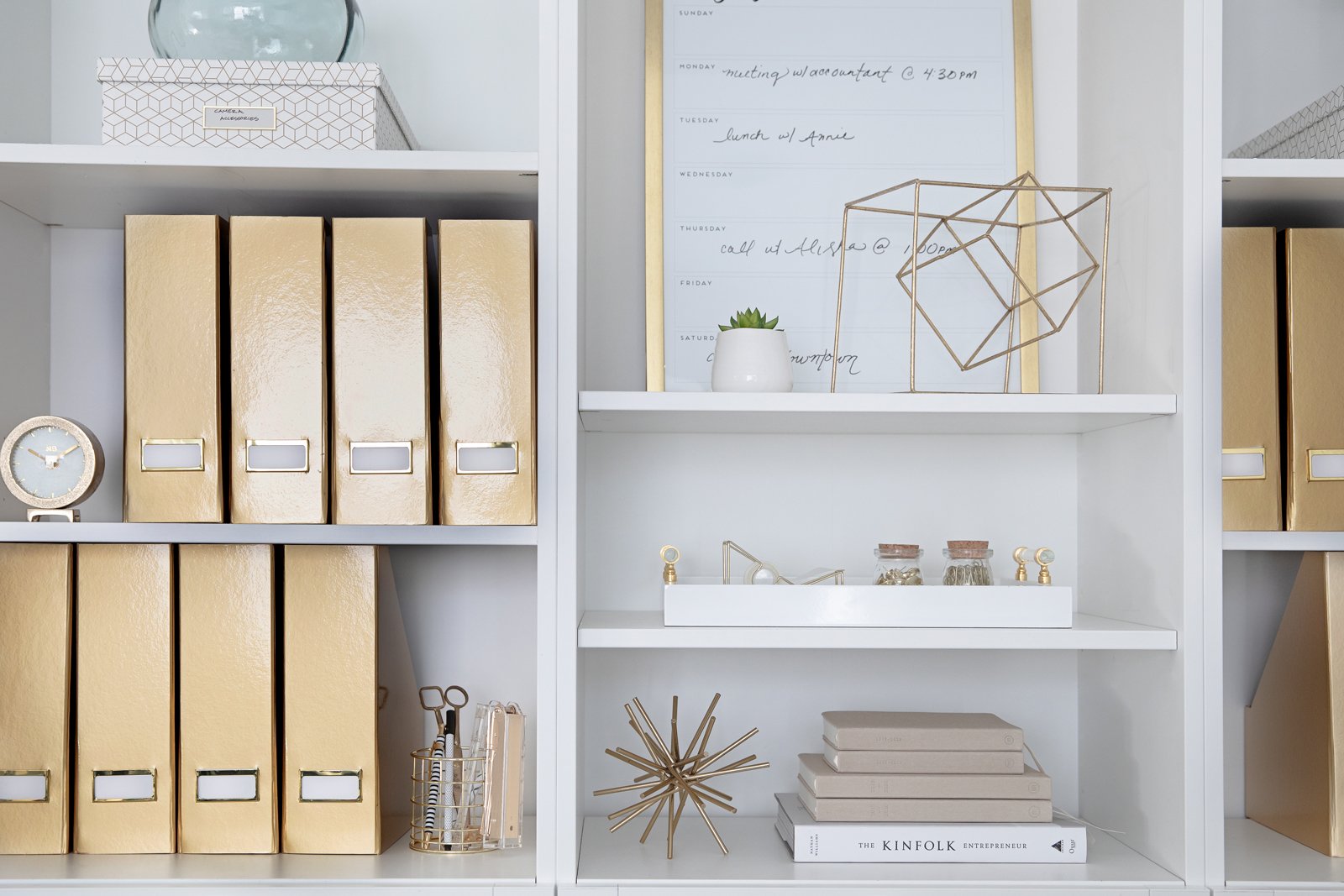
Okay, this is where the real fun begins. You've done the hard work of clearing the decks and mapping out your zones. Now it's time to choose the tools that will not only keep everything in its place but also make you feel genuinely excited to get to work.
This isn’t just about buying boxes or bins. It's about curating an environment that reflects who you are and what you want to achieve. Let’s move past the purely functional and find storage solutions that feel like an extension of your style, turning your office from a place you have to be into a space you truly want to be in.
The secret to a beautifully organized office is visual harmony. When your storage solutions look like they belong together, it creates an instant sense of calm and intention. This is your chance to pick an aesthetic that really motivates you.
Are you drawn to a sleek, modern vibe? A matching set of black or white metal mesh organizers can create that clean, minimalist look. Or maybe you prefer a touch of warmth and elegance? A curated collection in gold or rose gold can instantly elevate your desk, making everyday tools feel a little more luxurious.
Think of your organizers as decor. A stylish file holder isn't just a place for papers; it’s a design element that contributes to the room's overall feel.
Choosing a color story for your accessories is one of the easiest ways to make your space feel professionally designed. It ties everything together and turns a collection of individual items into a purposeful, inspiring system.
A unified look reduces visual noise, which helps quiet mental clutter. When your eyes aren’t jumping between mismatched items, your brain can more easily settle into deep focus. It's a small detail with a surprisingly big impact on your productivity.
One of the biggest mistakes I see people make is forgetting to look up. Your walls are some of the most valuable, underused real estate in your office. Taking your storage vertical is an absolute game-changer, especially if you're working in a smaller area.
By moving items off your desk and onto the walls, you reclaim that precious surface area for the tasks that actually matter. It instantly makes your workspace feel bigger, brighter, and more focused.
Here are a few powerful vertical storage options to consider:
Wall Grids: These are incredibly versatile. You can attach small baskets for pens, clips for important notes, and even tiny shelves for plants or personal items. They keep your most-used supplies visible and within arm's reach without cluttering your desk.
Floating Shelves: Perfect for your Reference Zone, floating shelves can hold binders, books, or stylish magazine holders. Staggering them at different heights can also create a dynamic, interesting display.
Hanging File Organizers: A wall-mounted file sorter is a brilliant way to manage active projects. You can label each slot for different clients or tasks, keeping your workflow visible and your desk surface completely clear.
Getting things off your desk isn't just a practical move; it’s a psychological one. A clear desk signals a clear mind, ready to tackle the day.
The best storage solutions are the ones designed around your specific habits. Before you add anything to your cart, think back to the workflow you mapped out earlier. Your tools should solve your unique organizational challenges.
For example, if you realized that piles of paper are your biggest pain point, don't just buy a random bin. You need a system. A desktop paper tray is perfect for creating a simple "inbox" and "outbox," while a matching vertical file sorter keeps active projects upright and easy to grab.
If your struggle is with all the little things—paper clips, sticky notes, pens—a multi-piece desk set is your best friend. Look for sets that include a pen cup, a sticky note holder, and a small sorter for mail. For those tiny items that always get lost in the shuffle, a simple gold metal desk drawer organizer tray can bring order to even the most chaotic drawer.
This level of personalization has never been more critical. Research shows that by 2026, an incredible 52% of the global workforce will be remote, a huge leap from just 20% before 2020. With so many of us relying on our home setups, a disorganized space is a direct threat to performance. It’s no wonder that 45% of business leaders cite cluttered workspaces as a key productivity concern.
Ultimately, your goal is to make good organizational habits feel effortless. When every item has a logical, beautiful home, putting things away stops feeling like a chore and becomes a natural part of your daily rhythm. This is how you build a space that not only looks inspiring but actively helps you do your best work, day in and day out.
You did it. You’ve conquered the clutter, carved out your work zones, and everything has a home. Before you do anything else, just take a second to soak it in. This is a huge win. You’ve built a space that’s ready to support your biggest goals.
But here’s the secret the super-organized know: getting organized is the project, but staying organized is the practice.
This isn’t about marathon cleaning sessions. It’s about building a few simple, almost effortless habits that keep the chaos from creeping back in. Think of it like making your bed in the morning—small actions that create a ripple effect of calm and control throughout your day.
If you take only one piece of advice from this guide, let it be this: end your workday with a 5-Minute Reset. It’s non-negotiable, like your morning coffee. This tiny habit is the single most powerful thing you can do to maintain your sanity and your beautiful new office.
Right before you shut down your computer for the day, set a timer for five minutes. That's it. In that time, just fly through these little tasks:
Surface Sweep: Put pens back in their holder and notebooks on their shelf.
Paper Check: Drop any loose papers into your inbox tray. Don’t sort them now, just contain them.
Quick Wipe: Give your desk a quick once-over with a cloth.
Ready for Tomorrow: Straighten your keyboard and mouse so they’re waiting for you.
This simple ritual does something amazing. It draws a clear line in the sand between "work time" and "you time," helping you mentally clock out and truly relax. You leave the day behind and get to walk into a fresh, inviting workspace every single morning.
"An organized space is a clear mind. By committing to a brief daily reset, you're not just cleaning your desk—you're clearing your head for tomorrow's challenges."
Instead of letting little things pile up into a Friday afternoon monster-mess, you’re handling them in tiny, manageable bites. It takes way less energy and keeps your office looking just as good as it does right now.
While the daily reset keeps things tidy on the surface, the Weekly Tidy is your command center check-in. Just block off 15-20 minutes on your calendar—maybe Friday afternoon before you sign off for the weekend. This isn’t about deep cleaning; it’s about making sure your systems are still working for you.
Here’s what your quick weekly review could look like:
Clear the Inbox: Go through that inbox tray you've been using all week. Pay the bills, file the reports, and handle anything that needs a response.
Digital Declutter: Is your computer desktop a mess of screenshots and downloads? Drag everything into the right folders. It takes two minutes but makes a world of difference.
Supply Scan: Running low on ink or sticky notes? Add them to your shopping list now so you aren't scrambling for them mid-project next week.
Think of it as preventative maintenance for your productivity. By weaving these simple habits into your routine, you’re guaranteeing that your home office remains a source of inspiration and focus, not a source of stress. Your future self is already thanking you.
Even with a solid game plan, you're bound to hit a few snags. That's totally normal! Let's walk through some of the most common questions that pop up when you're trying to create a workspace that actually works, so you can push past those final hurdles.
When you’re short on square footage, the only way to go is up. The mission is to reclaim your desk surface by thinking vertically. Wall-mounted shelves, hanging file holders, and even a simple monitor stand with drawers underneath can make a huge difference.
Look for furniture that pulls double duty and be absolutely ruthless about what earns a spot in your space. A matching desk organizer set is perfect for corralling all those little odds and ends into one neat footprint, instantly making a cramped corner feel more open and under control.
The most powerful weapon against paper piles is the "one-touch" rule. The moment a piece of paper lands in your hands, decide its fate. Stop letting documents linger without a purpose. All you need is a simple system: an inbox tray for things that require action and a vertical file holder for current projects.
Keep a shredder within arm's reach to deal with junk mail and old documents immediately. For everything else, ask yourself if it can be digitized. Scanning receipts, notes, and reference materials is an incredible way to clear out physical clutter while creating an easily searchable digital archive.
By creating a system where paper has an immediate destination—act, file, or shred—you eliminate the decision fatigue that leads to piles. This simple habit keeps your desk clear for the work that truly matters.
Ah, the dreaded cable spaghetti. It’s a universal problem, but thankfully, the fix is surprisingly simple. Start by grouping related cords together with velcro ties or a flexible cable sleeve. Right away, you've turned a chaotic nest into a single, clean line.
Next, use adhesive clips to guide those bundled cables along the back of your desk or down a table leg. The real game-changer, though, is a cable management box. It’s a simple container that hides the entire power strip and all its bulky adapters, giving your workspace an instantly polished and professional feel.
The secret isn’t about finding more time to organize; it’s about building a system that’s easier to maintain than it is to let it get messy. This all comes down to giving every single thing in your office—from pens and paper clips to chargers and notebooks—a specific, intuitive home.
Then, build a "five-minute reset" into your end-of-day routine. Before you sign off, just take a few moments to put everything back where it belongs. This tiny habit is what prevents a little bit of daily chaos from turning into a weekend-long cleanup project, especially when work gets crazy.
Ready to bring that perfect blend of style and order to your workspace? The Blu Monaco collections have everything you need to build a cohesive, inspiring, and beautifully organized home office. Shop now and discover the perfect pieces to elevate your productivity.


